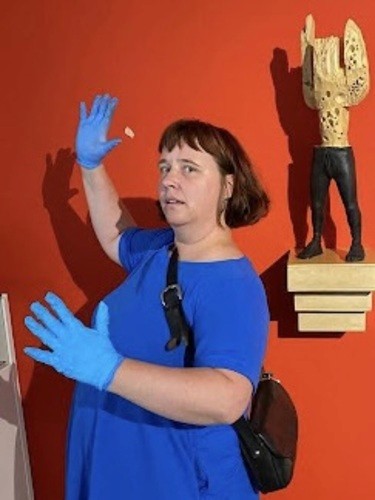
Prof. Alison Kearney
Prof. Ann-Marie Tully
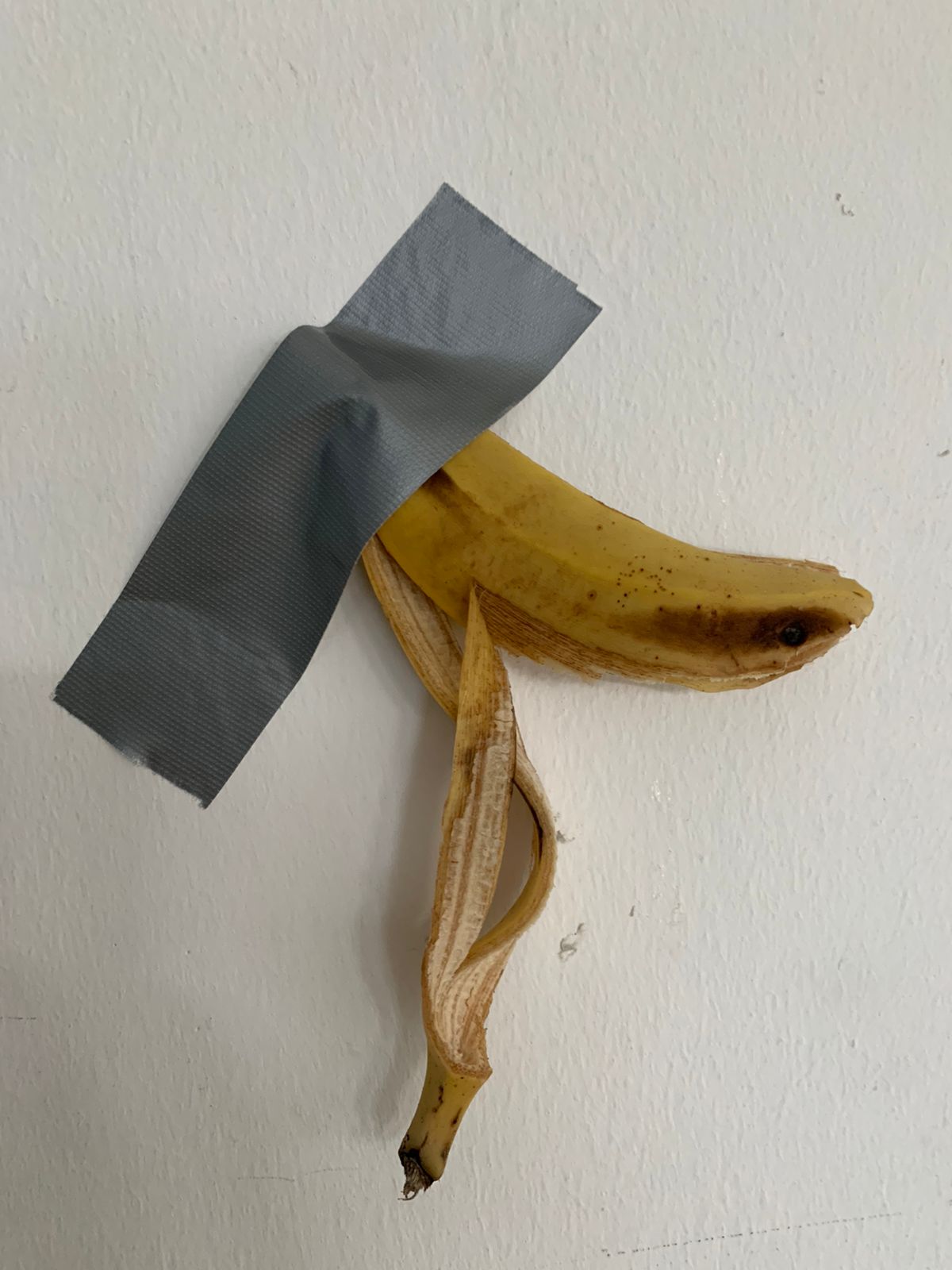
This Is Not a Banana!
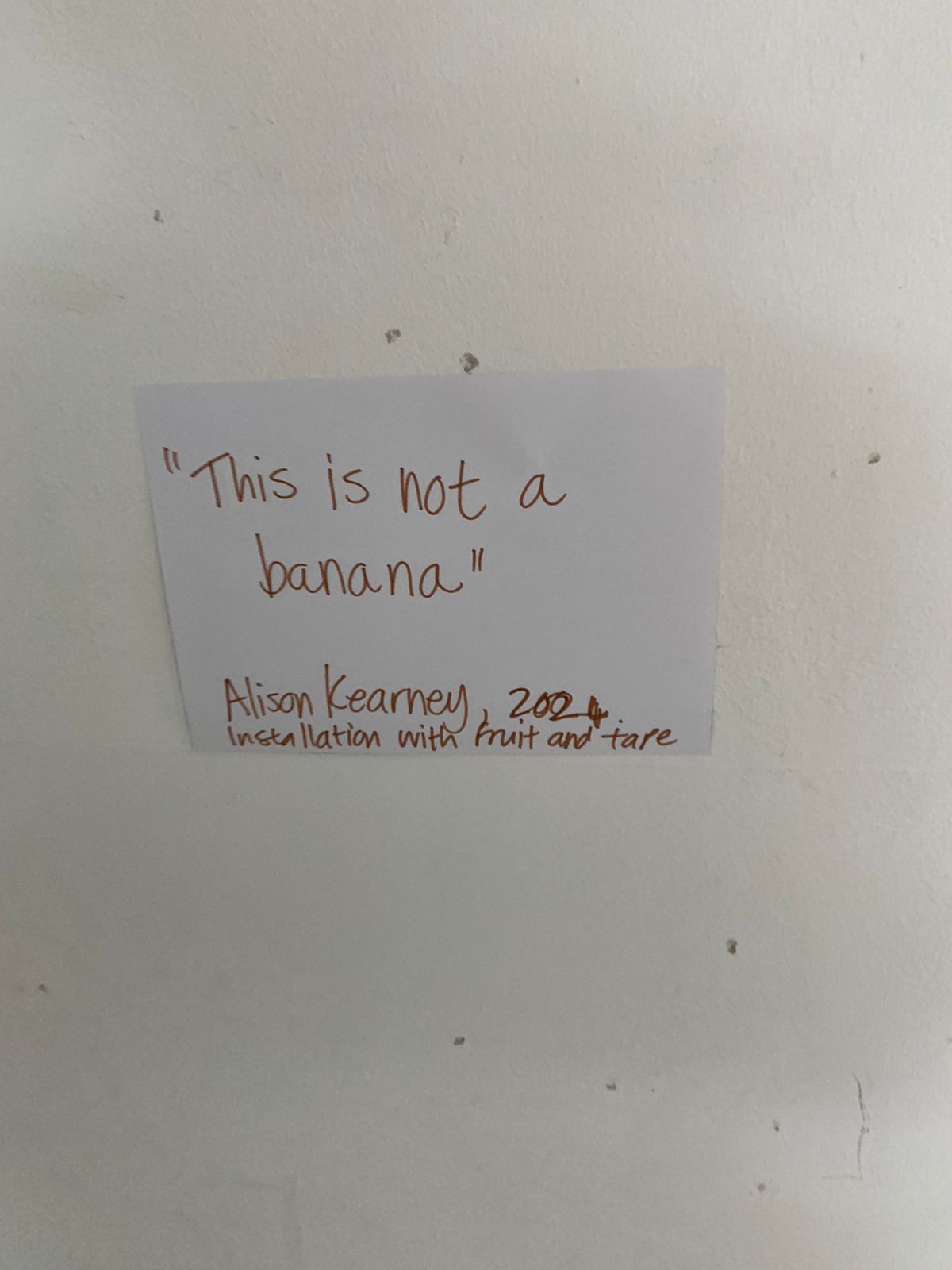
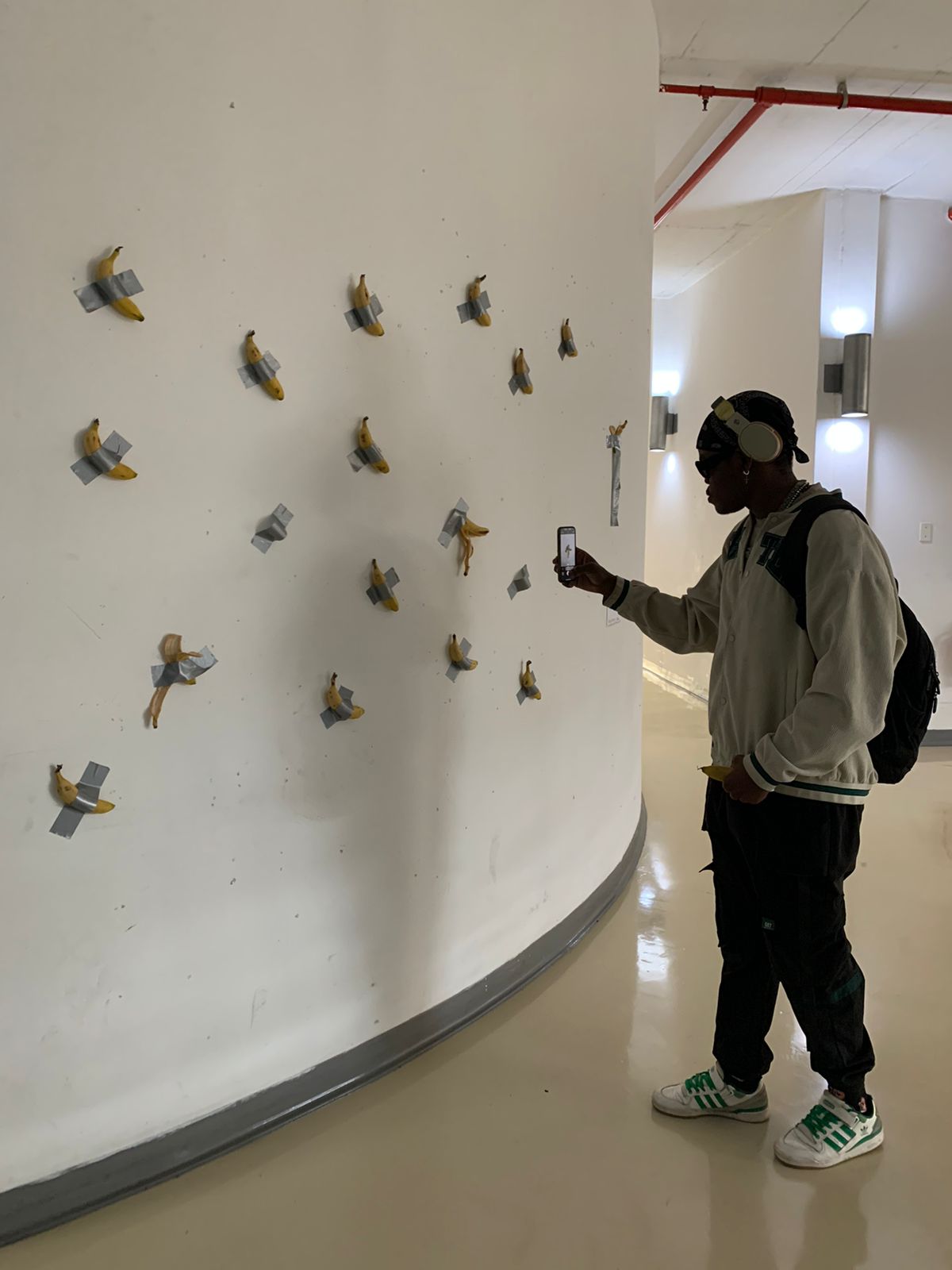
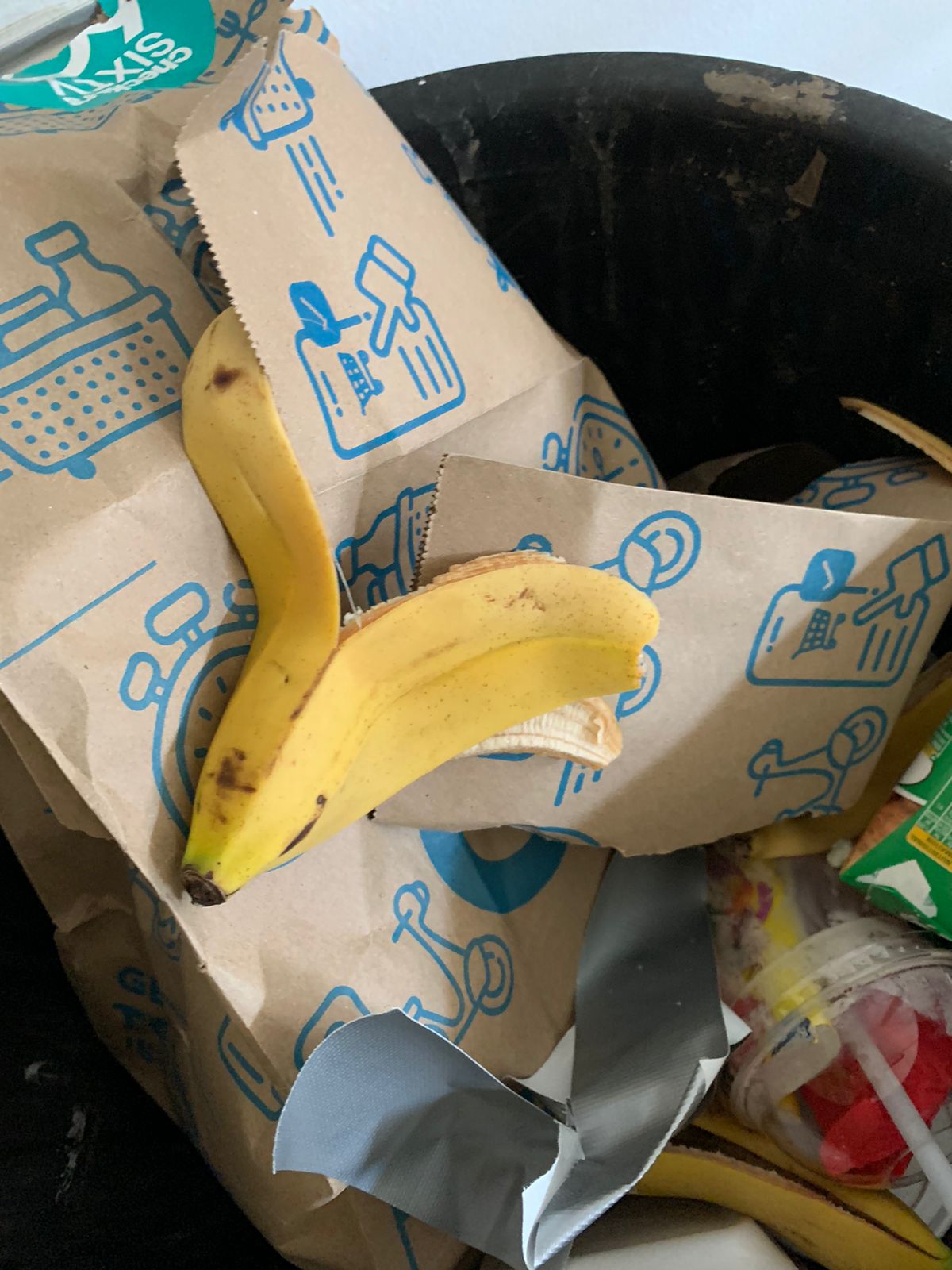
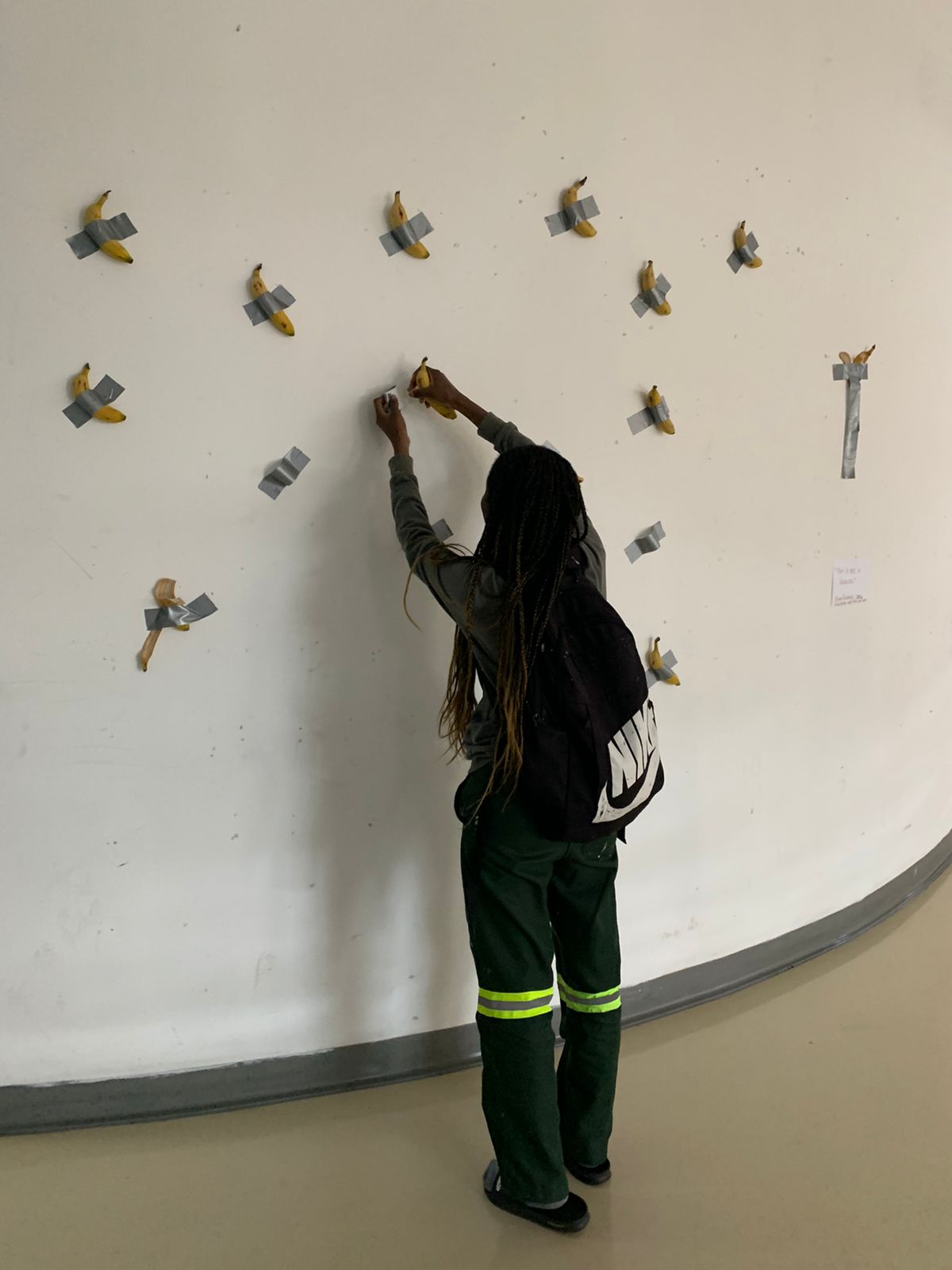
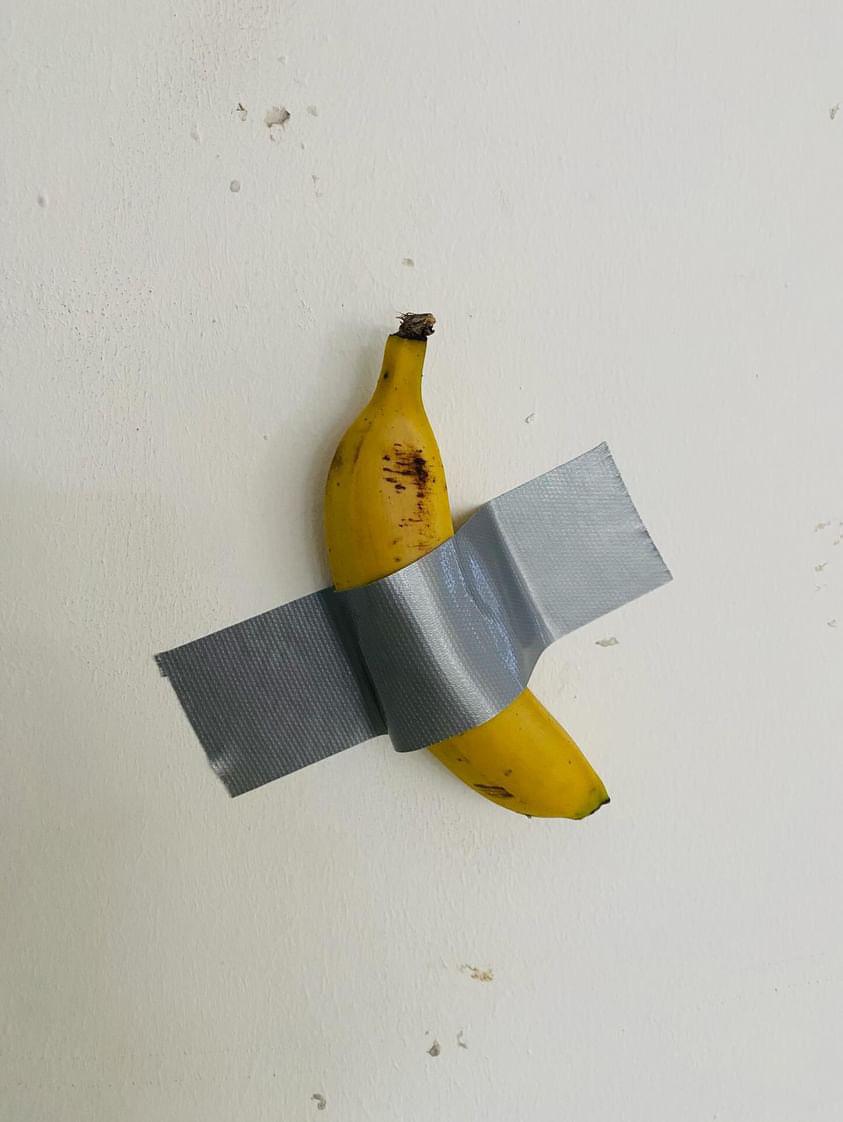
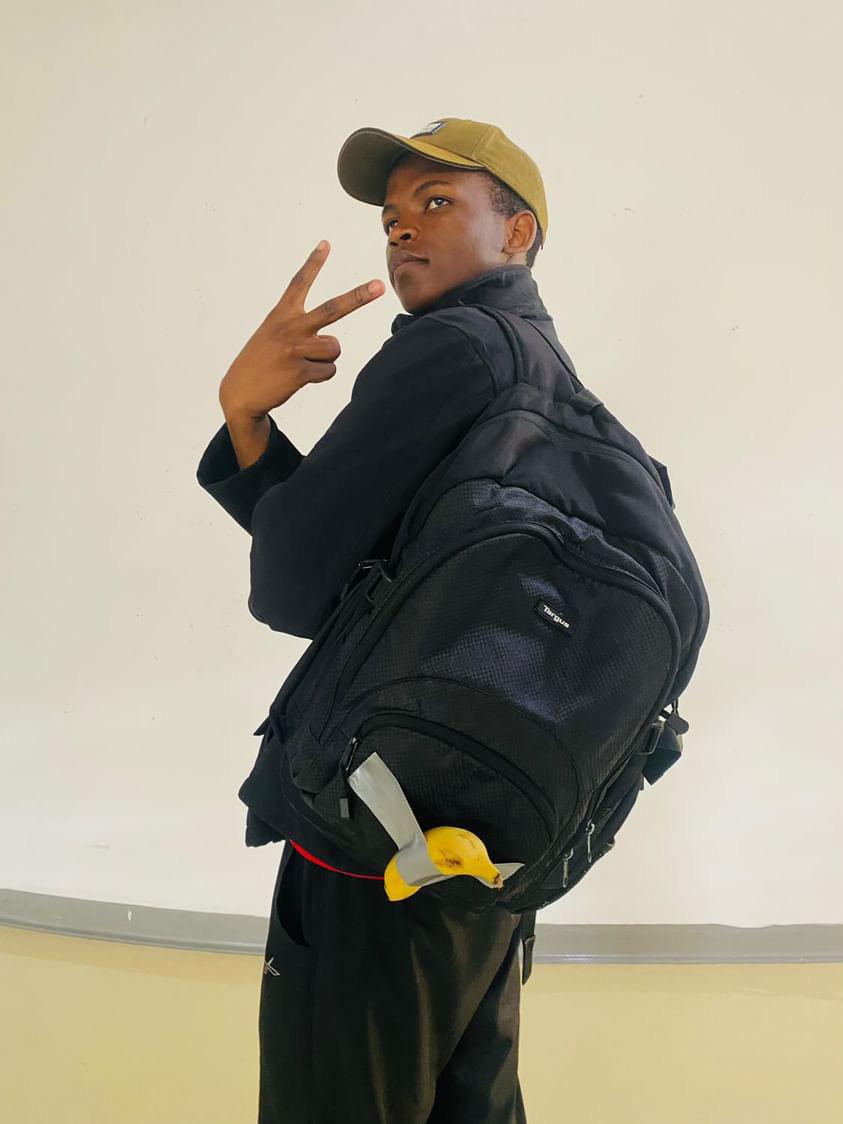
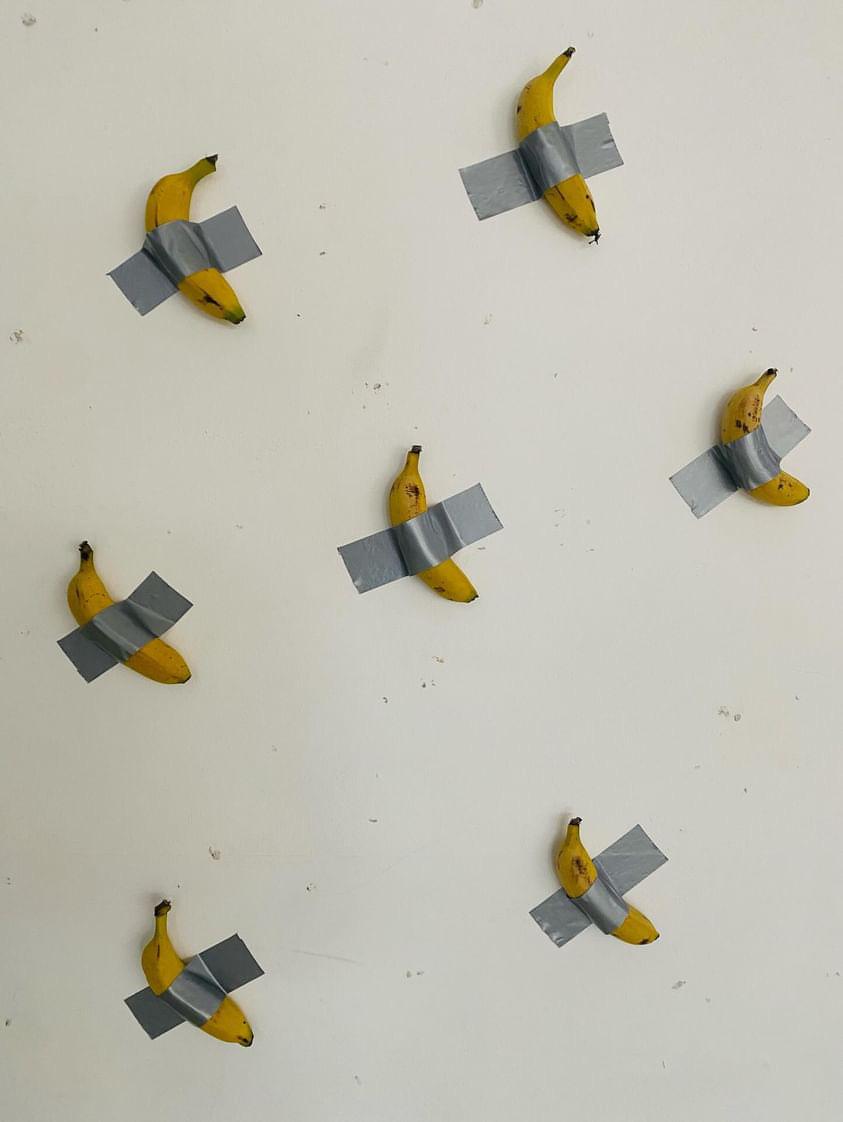
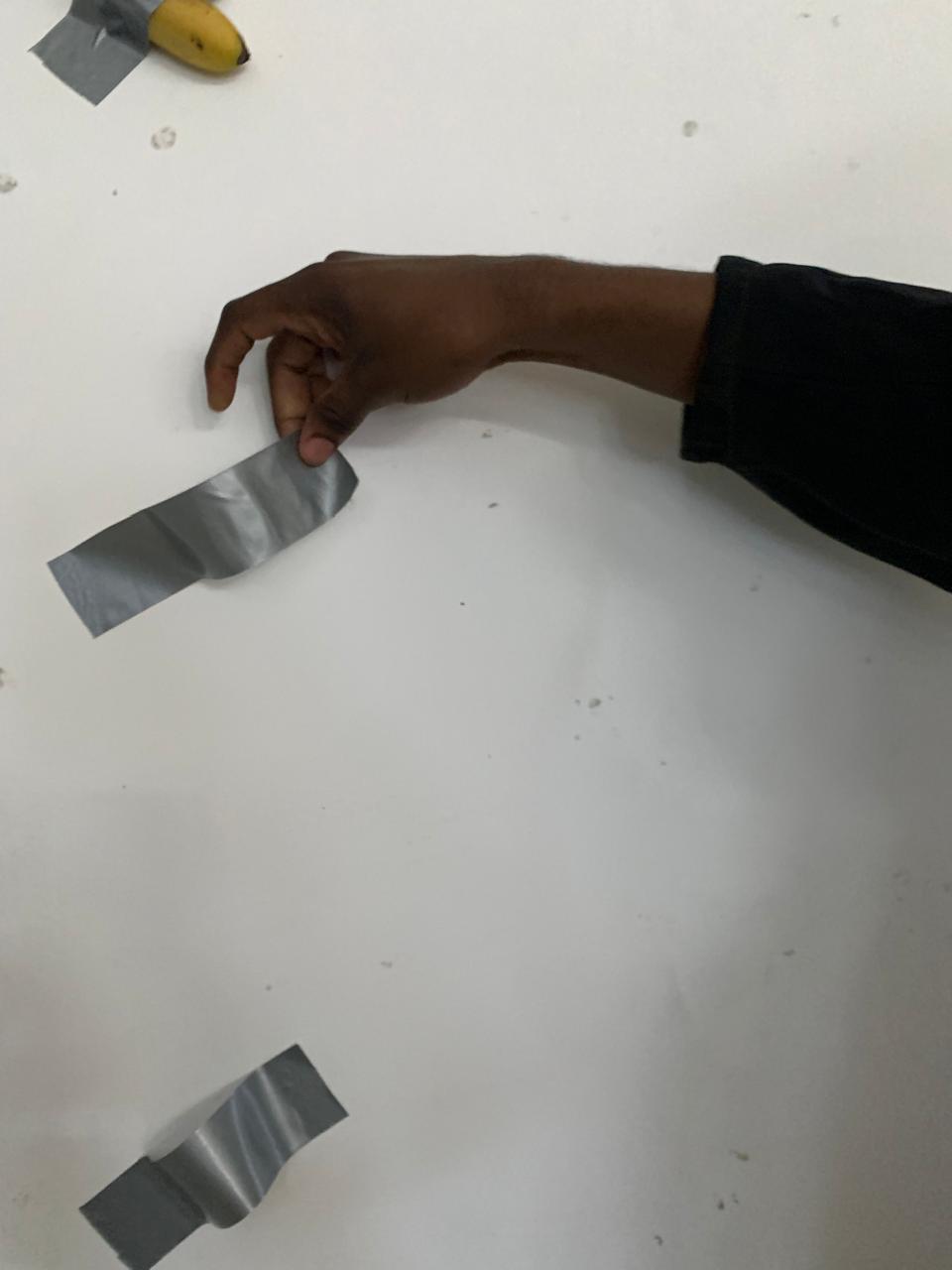
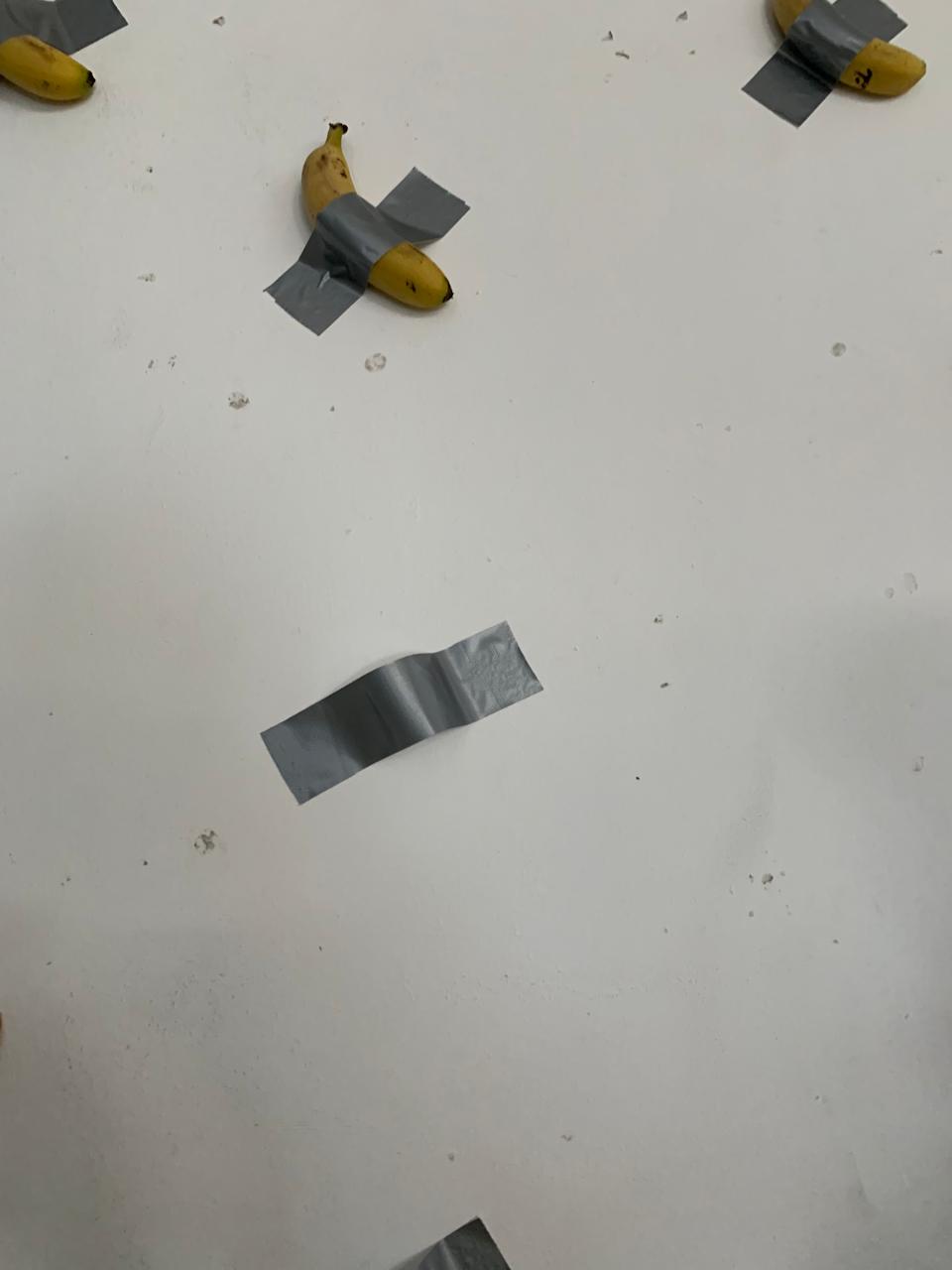
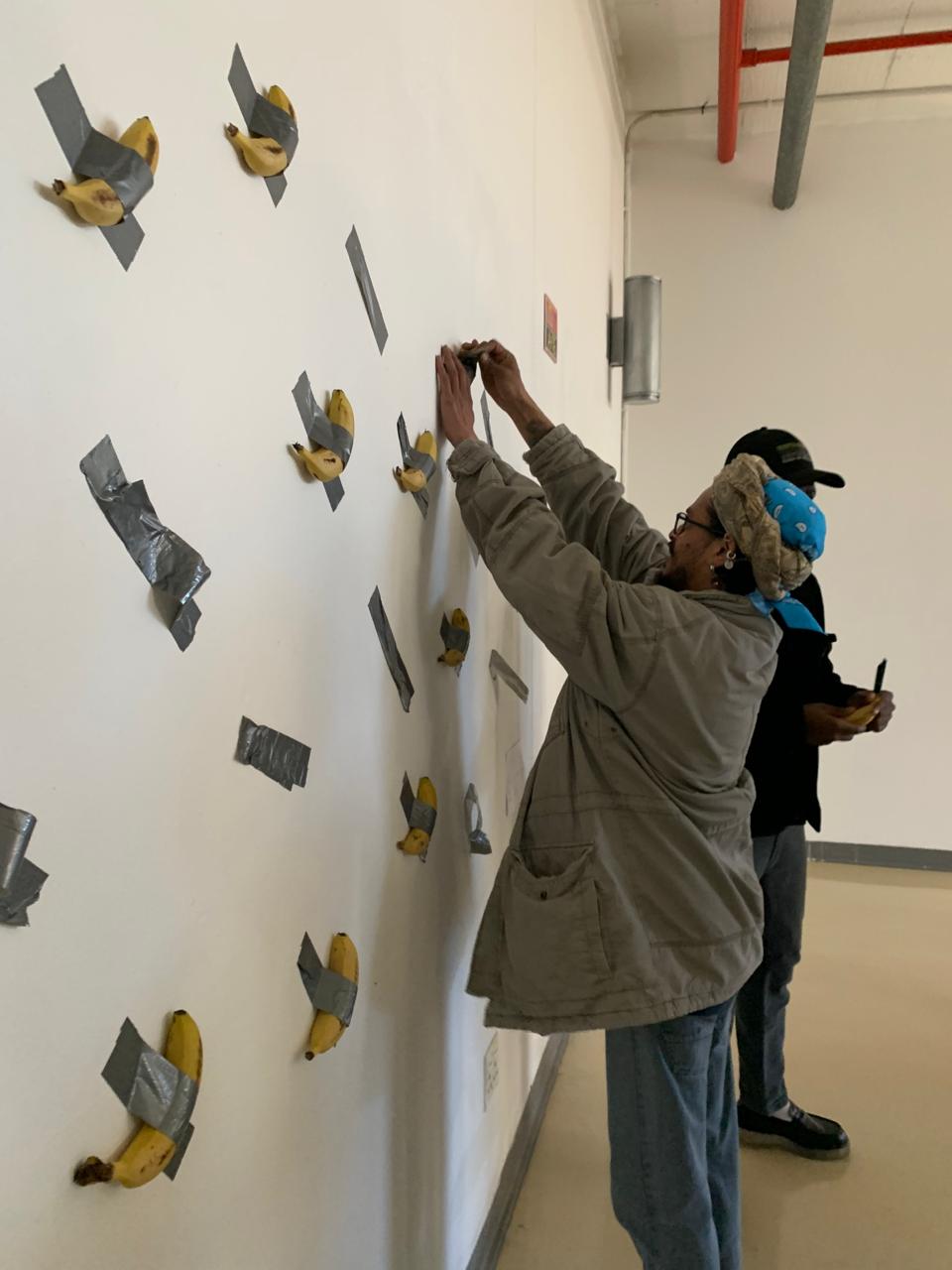
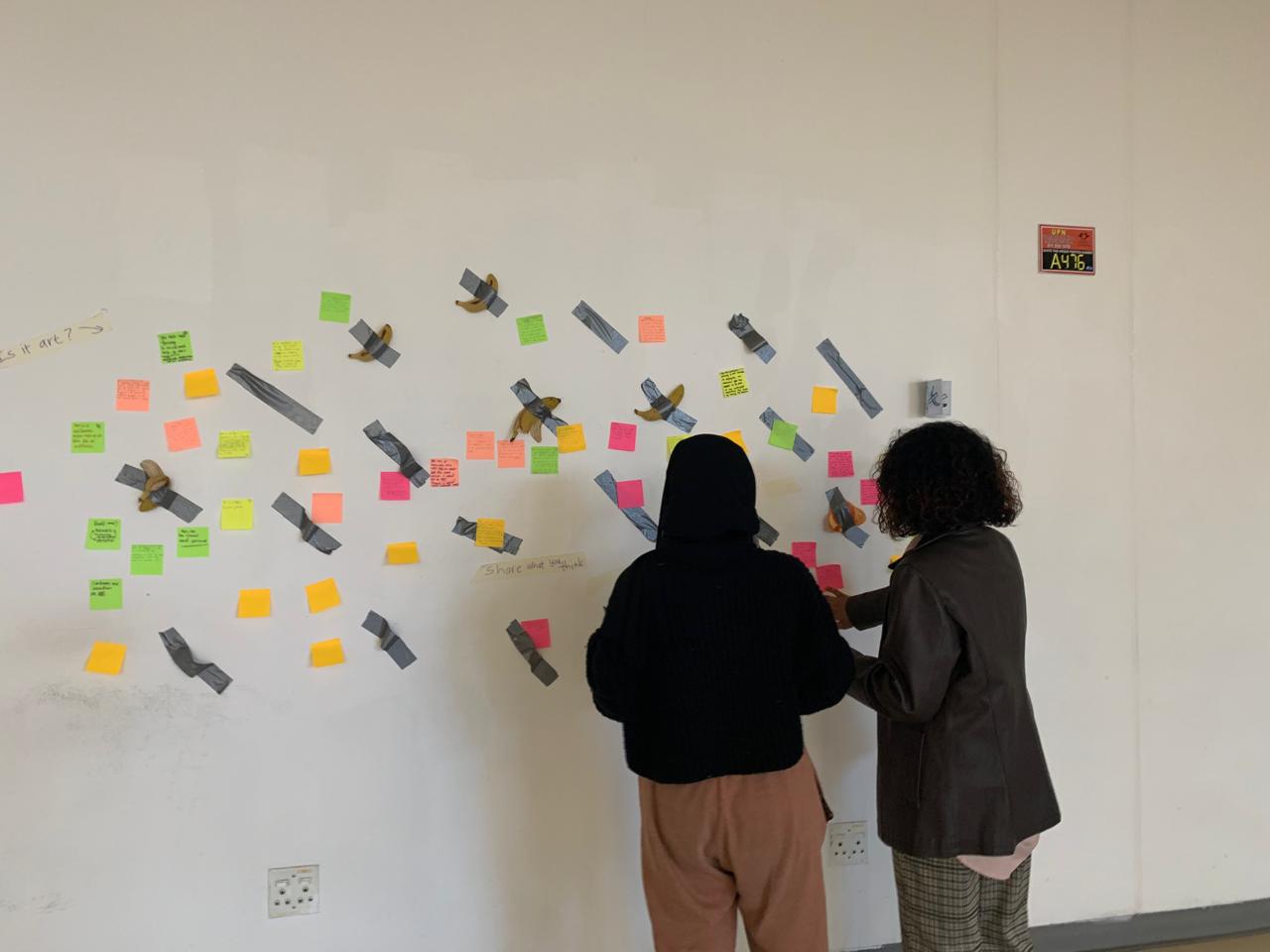
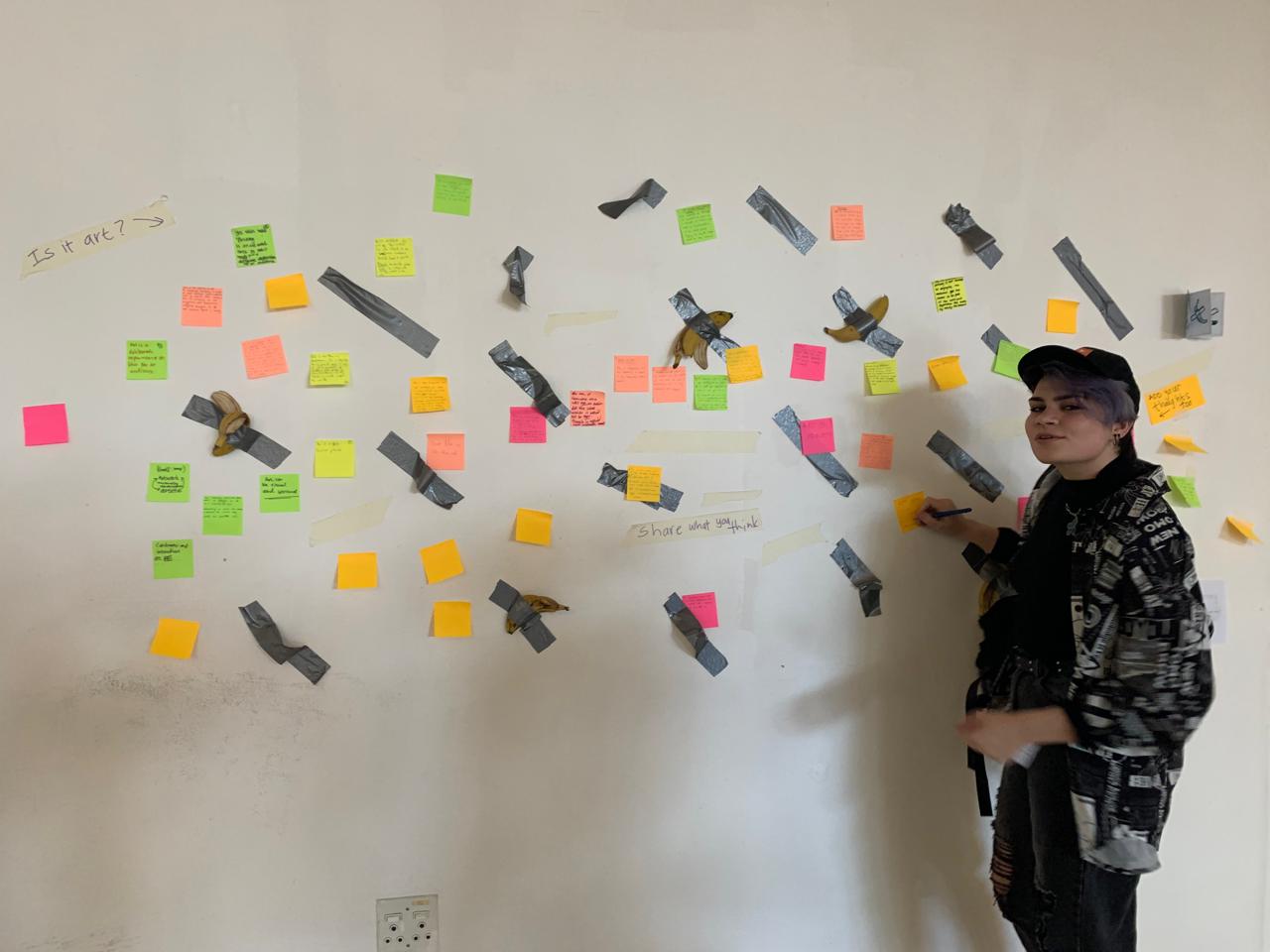
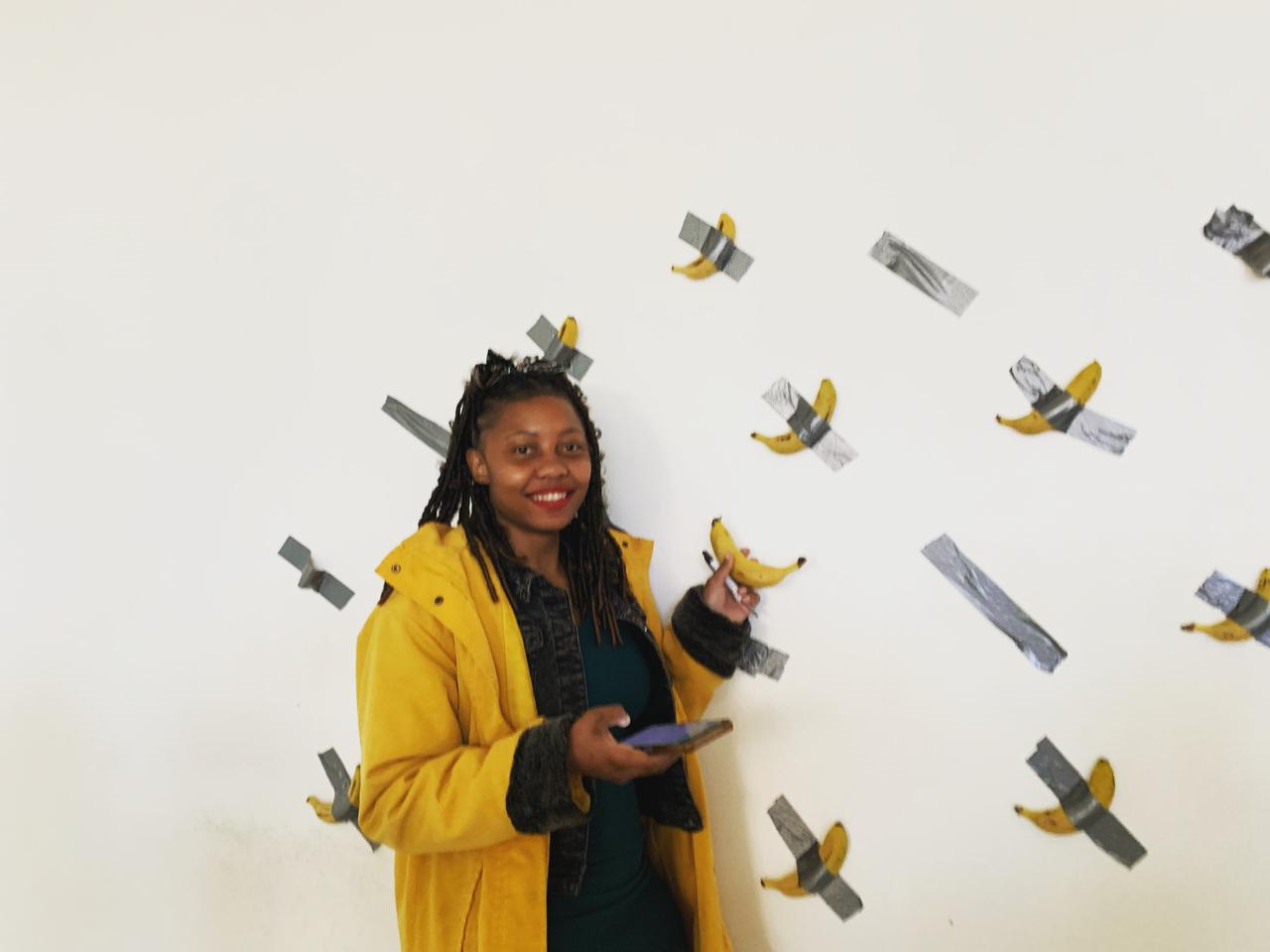
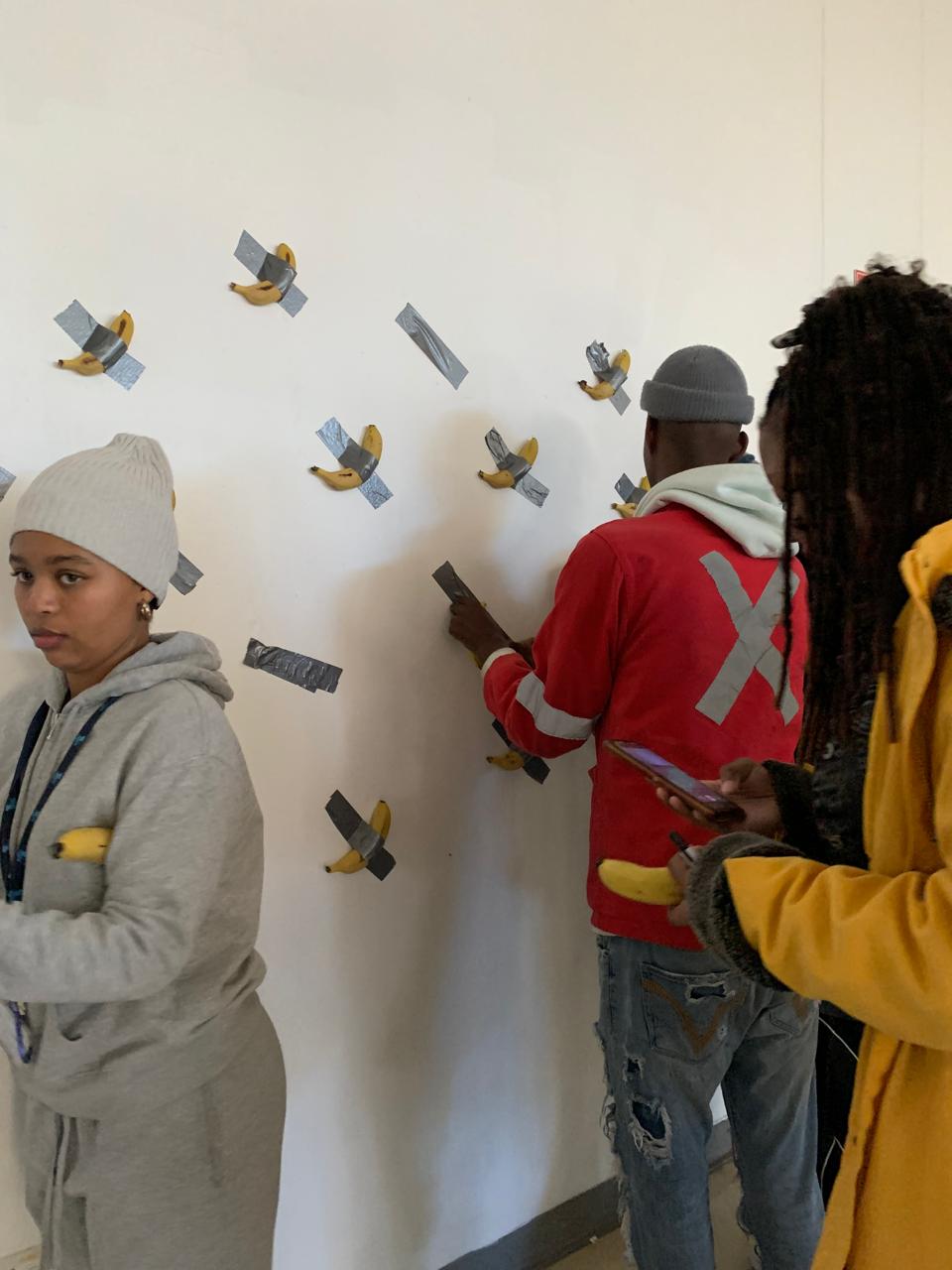
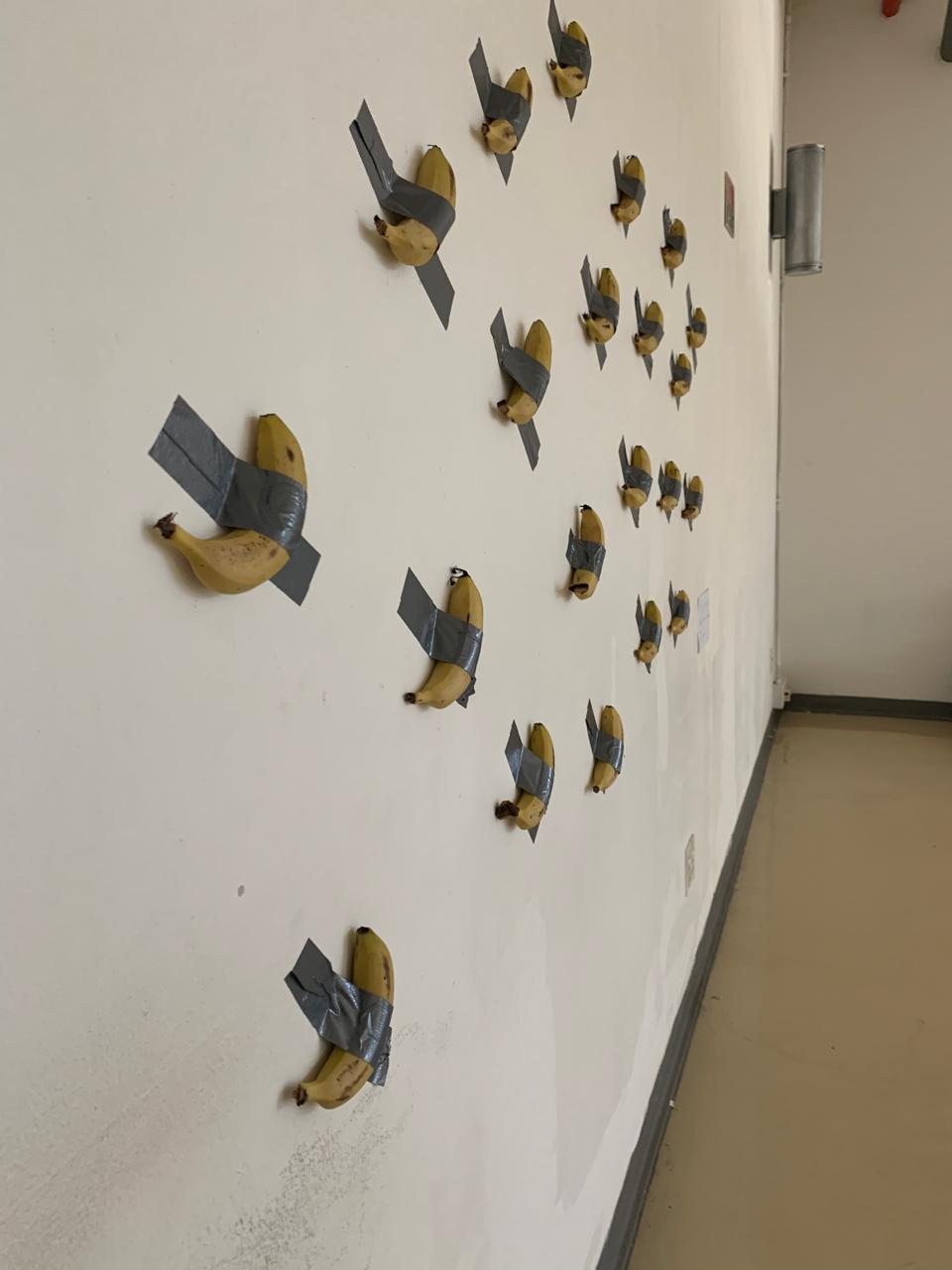
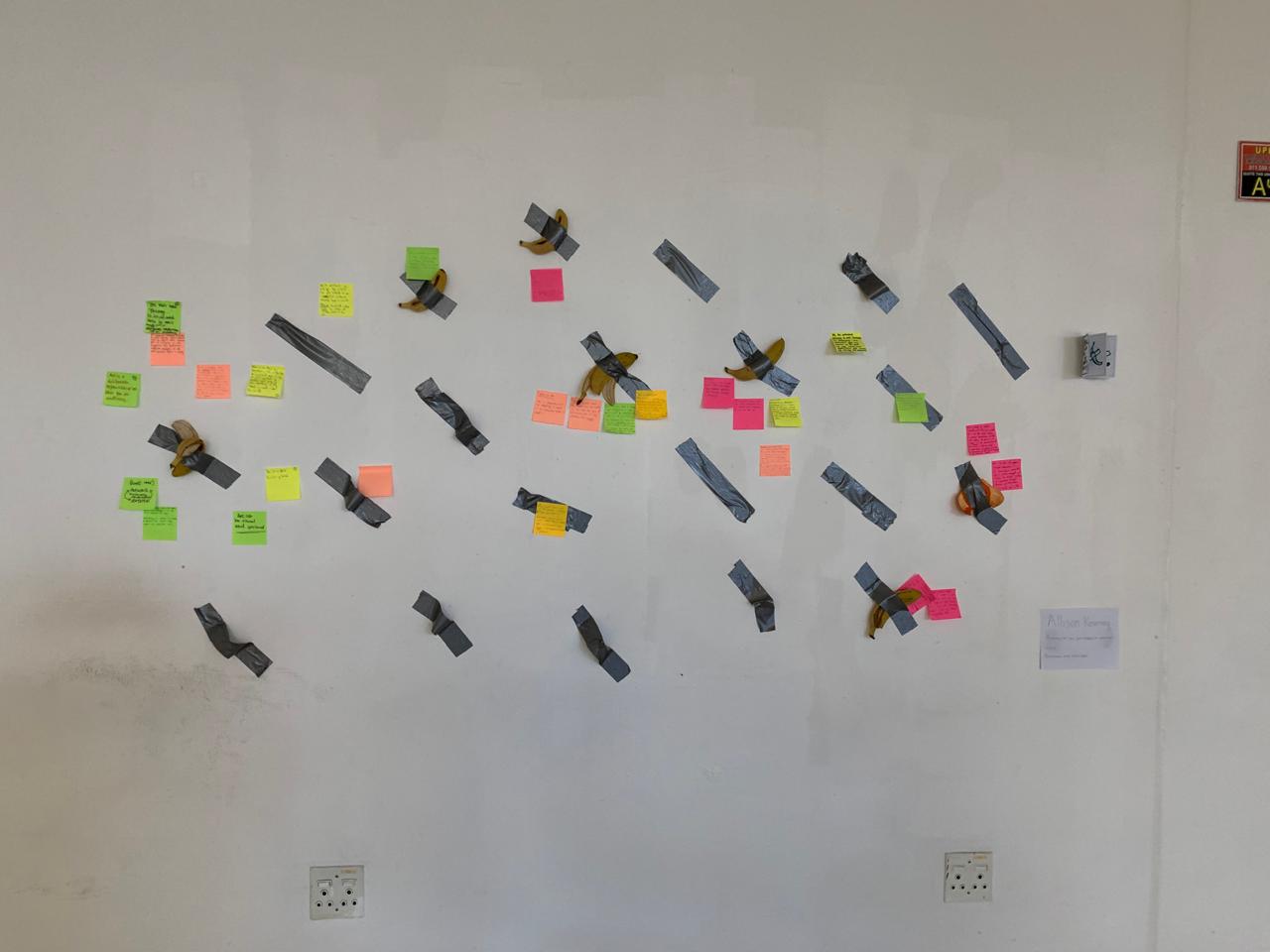
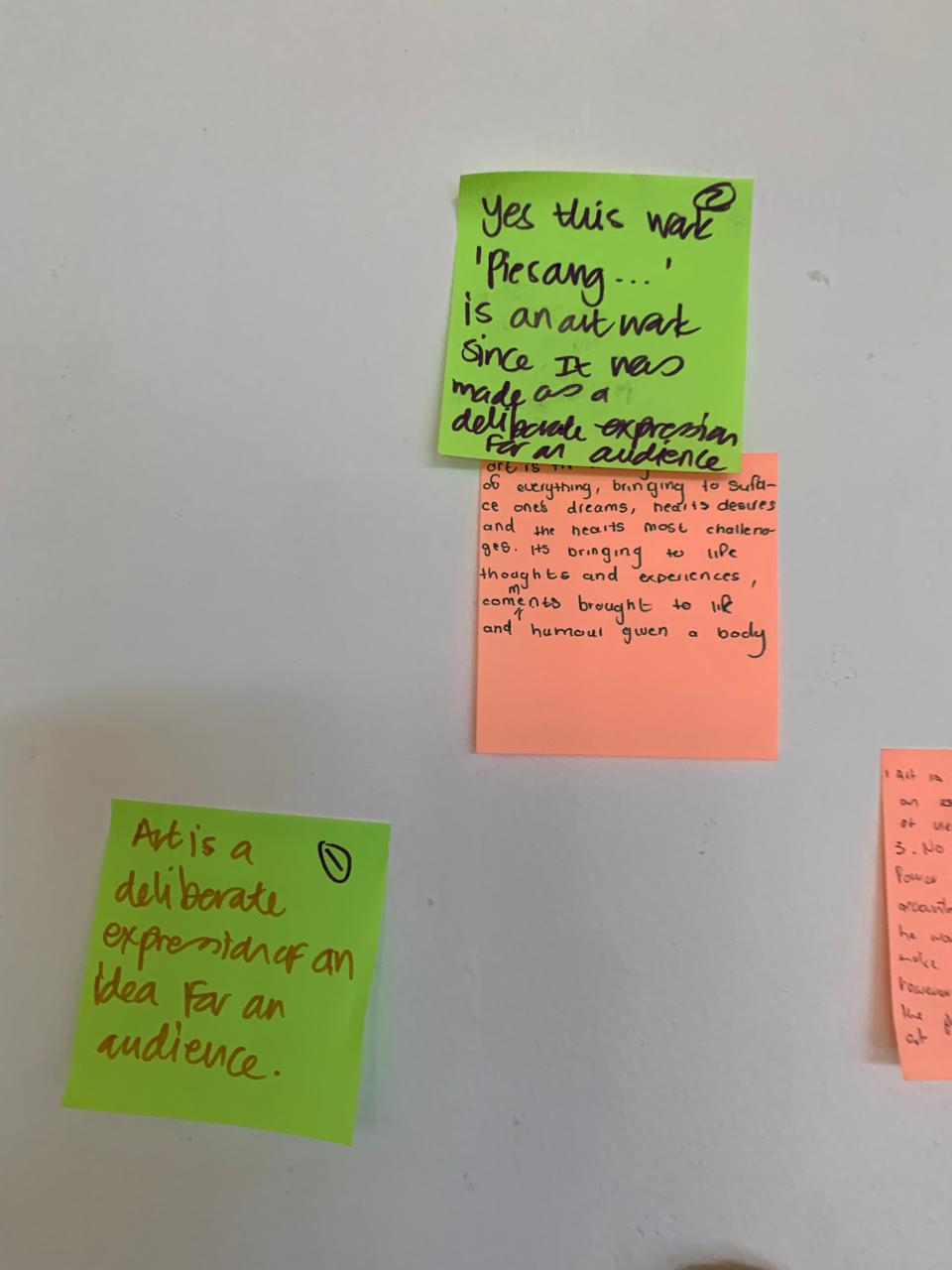
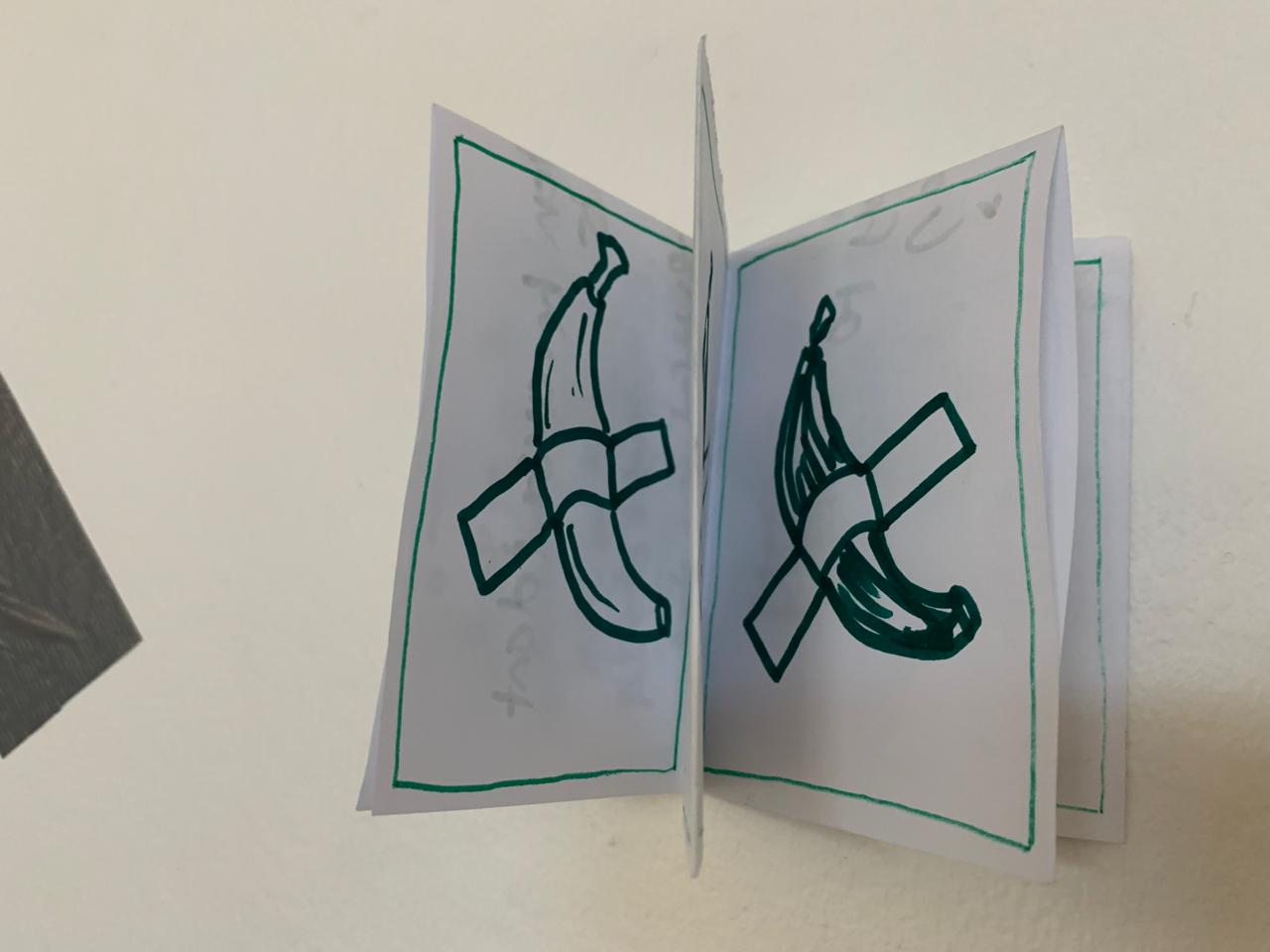
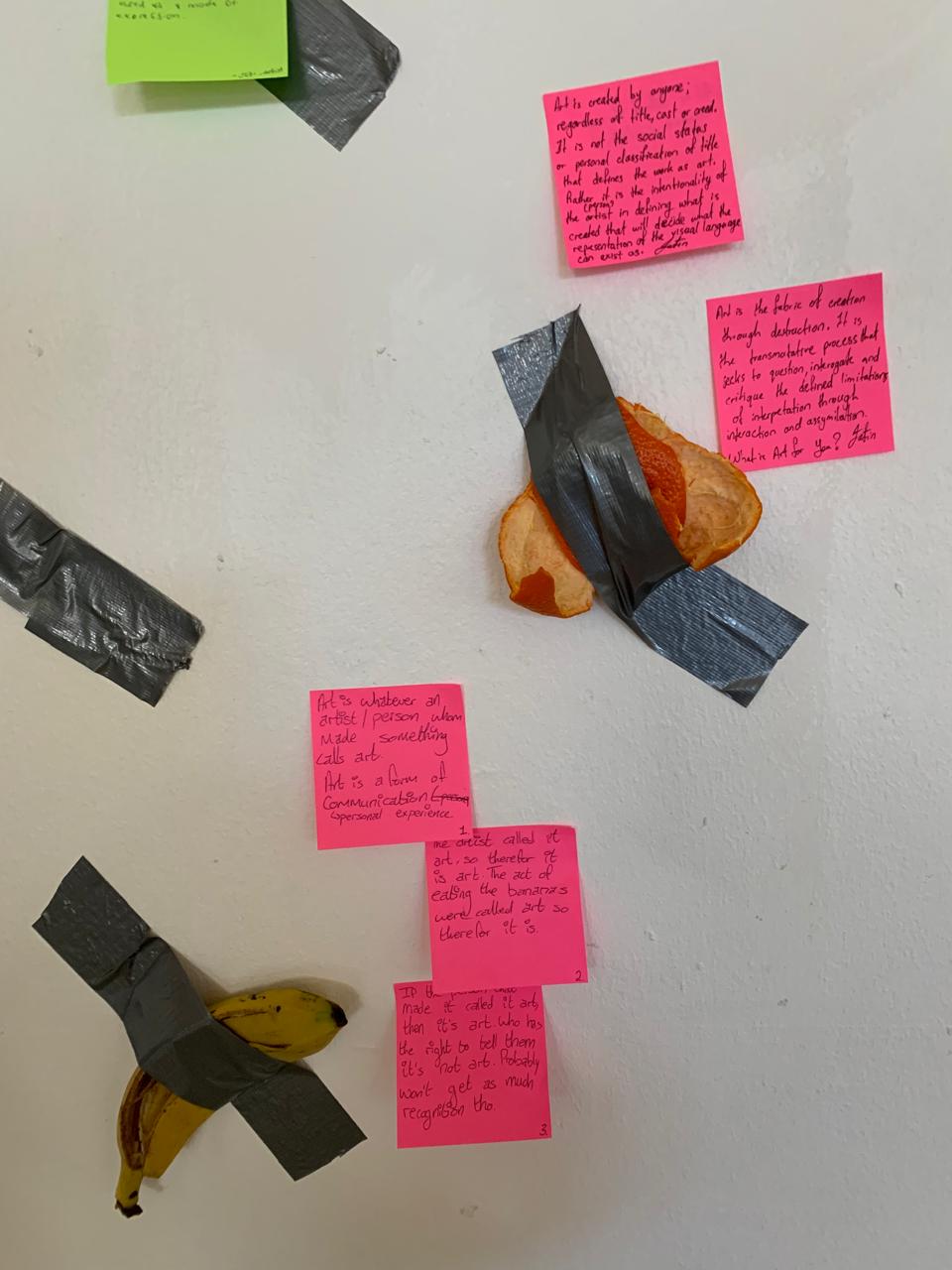
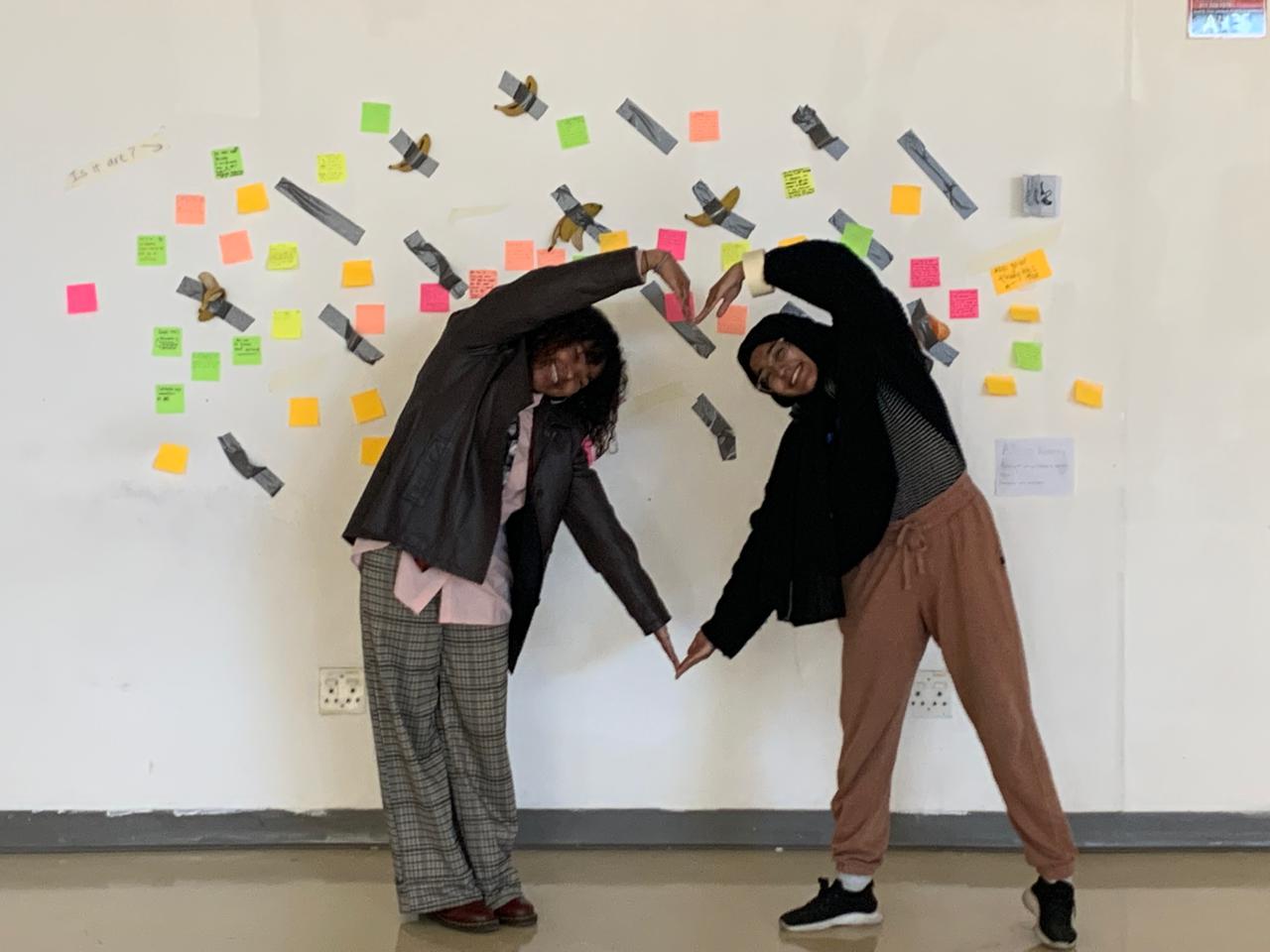
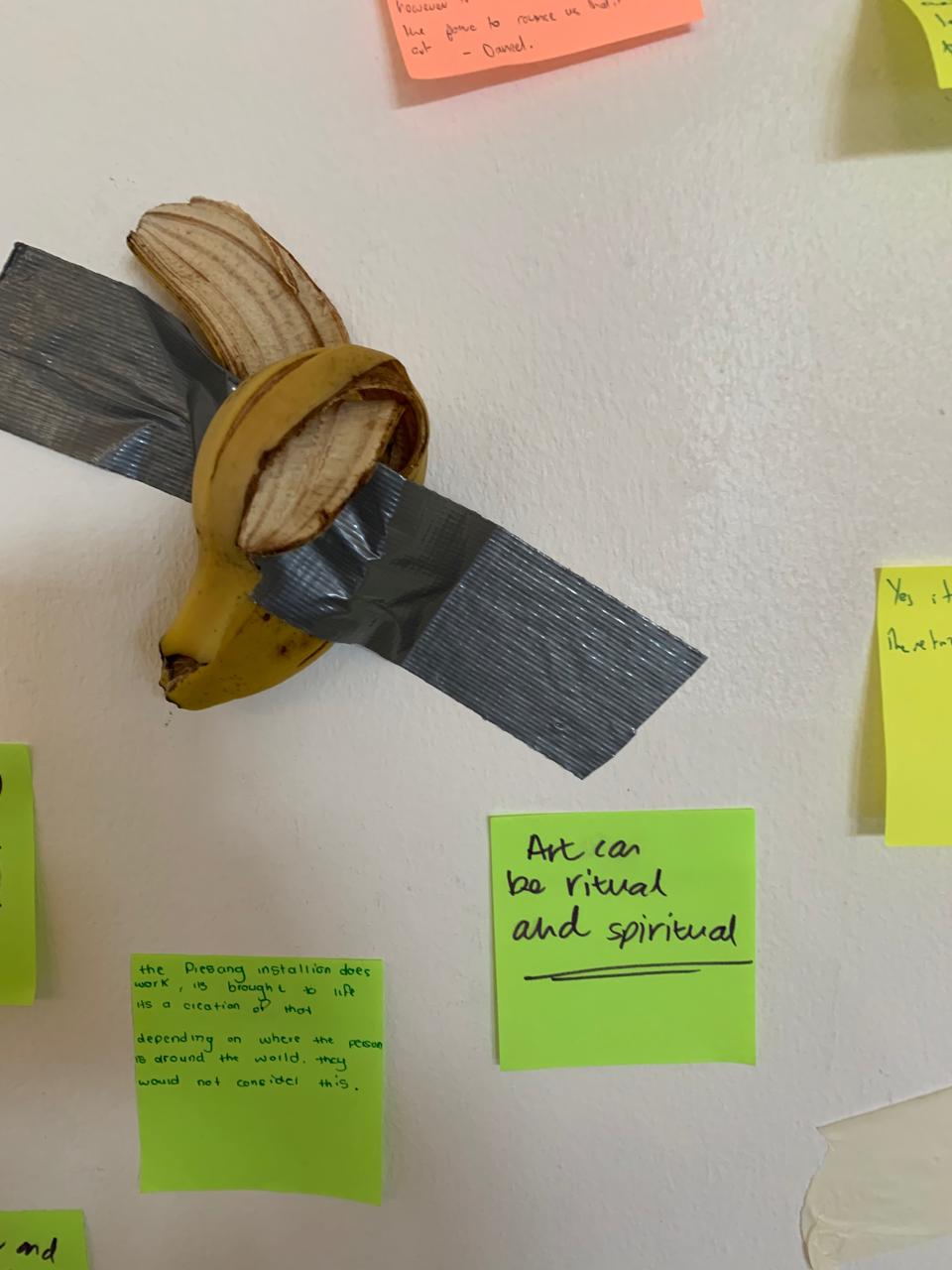
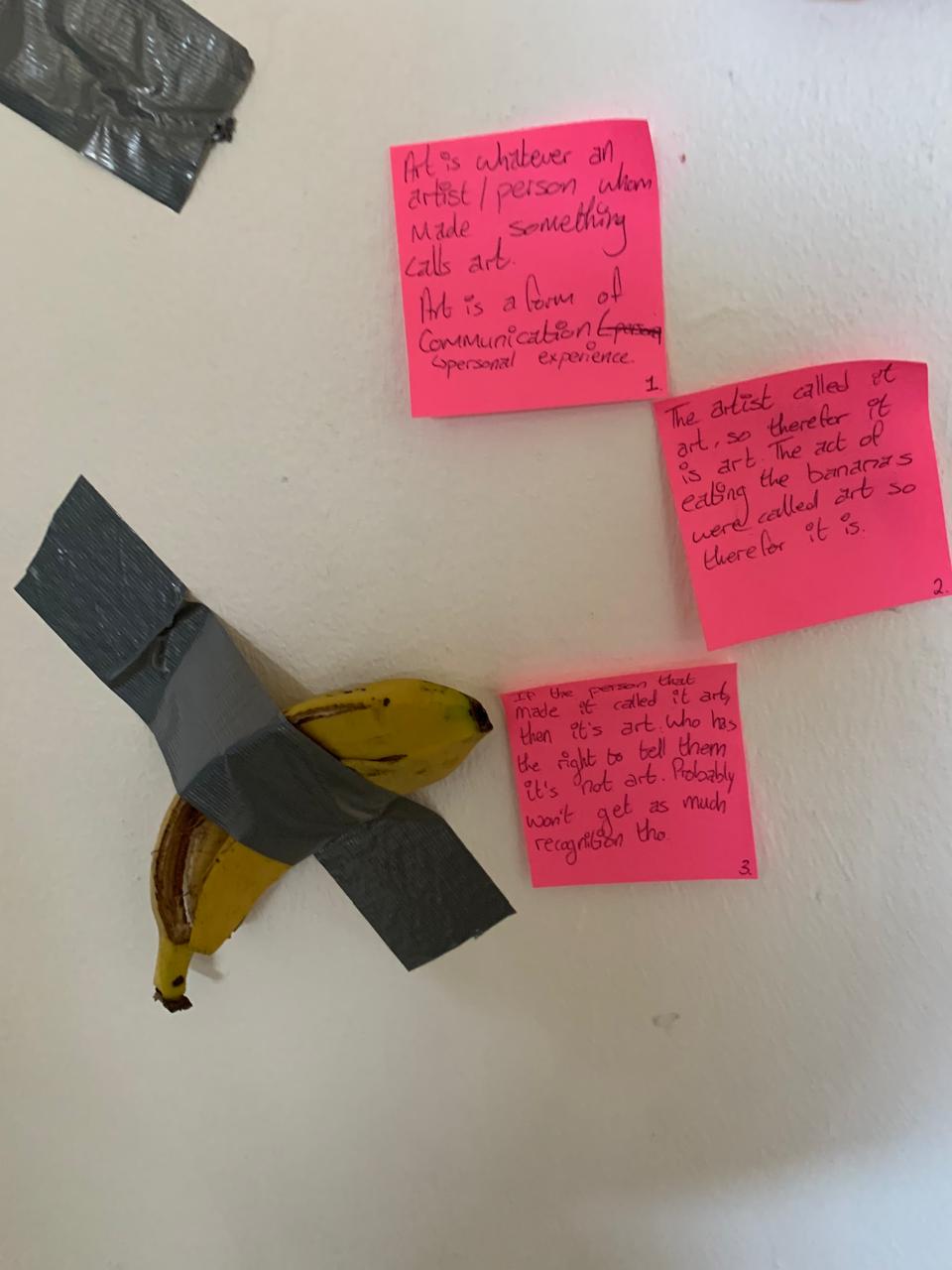
As part of her ongoing commitment to finding ways to investigate ontologies of art in the Art History and Theory classroom, Prof Alison Kearney created an installation with 30 bananas, and silver duct tape in a public space at the arts school where she teaches. The installation, titled “This is not a banana” referenced a number of Modernist avant-garde artists, as well as Mauritzio Cattalan’s recent “Comendian” (2019). Situating this artwork within the trajectory of the avant-garde enabled a discussion of the ways in which Modernist and postmodern artists have engaged with discourses of what art is. Participants were asked to write down and share their definitions of what art is, and explain whether Prof. Alison’s work counts as art or not on post-it notes. The inclusion of a tangible proposition of what art can be took our classroom discourse to a meta-textual level, revealing the ways in which art has become philosophy. It was also lot’s of fun to eat the artworks at the end of the lesson!
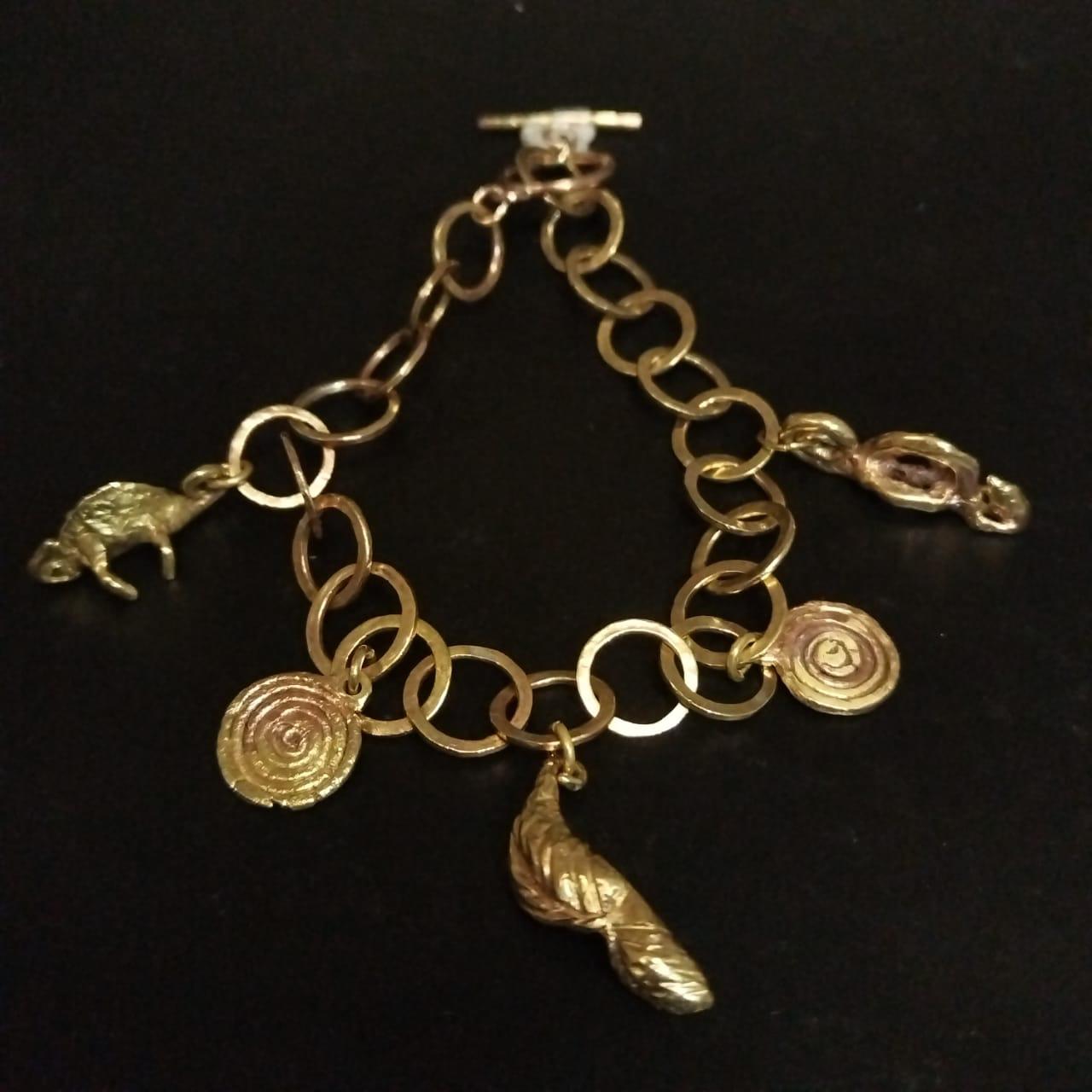
The Ashanti Charm Bracelet Practice as Research Project
‘The Ashanti Charm Bracelet Practice as Research Project ‘The Ashanti Charm Bracelet Practice as Research Project was developed and facilitated by Ann-Marie Tully (DUT) in response to the Encounters with the Immaterial exhibition (2023), curated by Prof Alison Kearney at the Wits Art Museum. The collection of Ashanti Gold Weights included in the exhibition, presented a rich educational opportunity for Jewellery Design students at the Durban University of Technology, proposing a project that focused on weight management for specific gravity in lost wax casting. The fact that many Ashanti Gold Weights speak to Akan proverbs, myths etc. suggested a further ‘rhetorical vehicle’ for meaning-making in the development of design thinking and content-to-image synthesis; applied in the student’s development of ‘charms’ informed by South African proverbs.
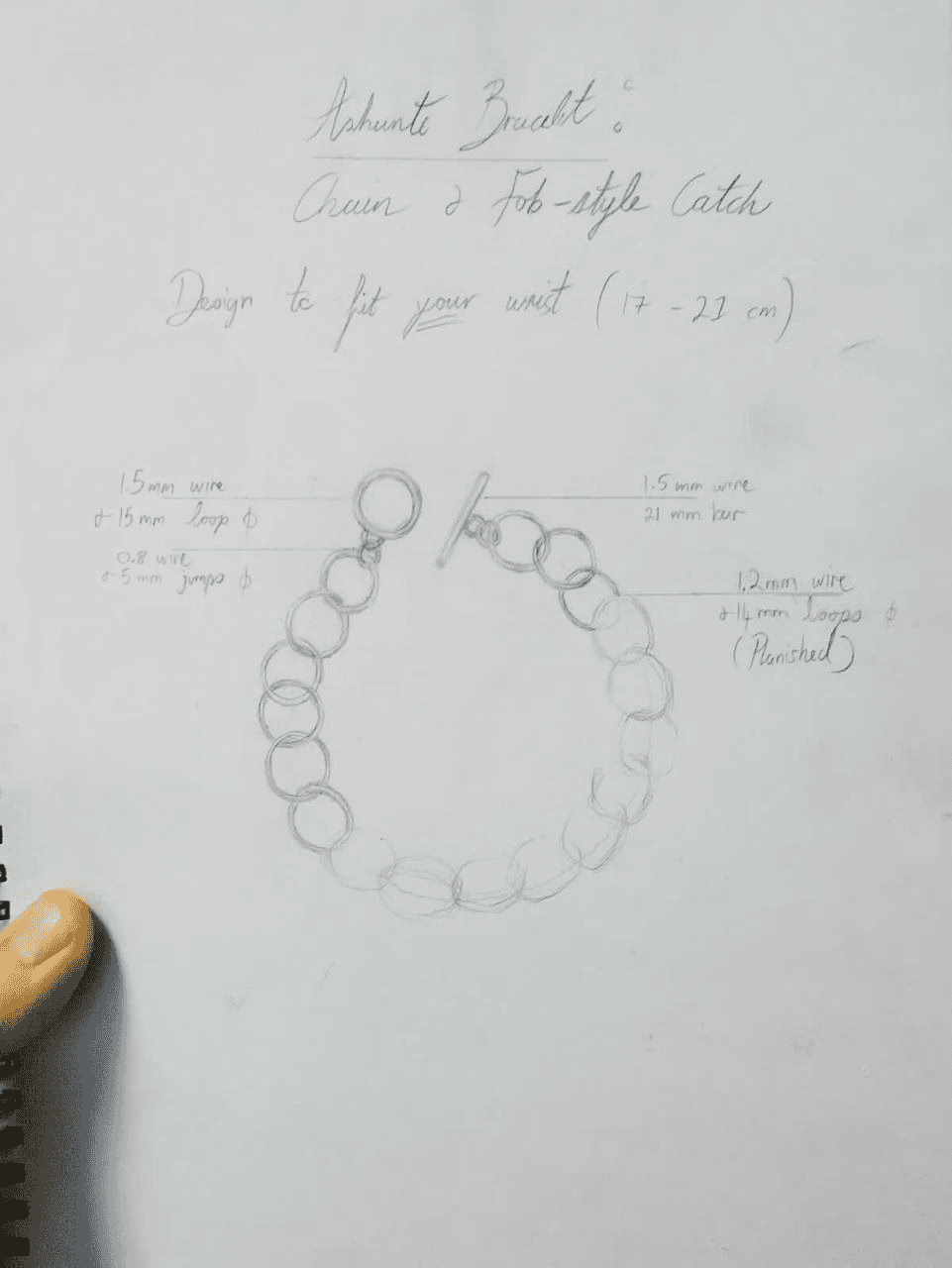
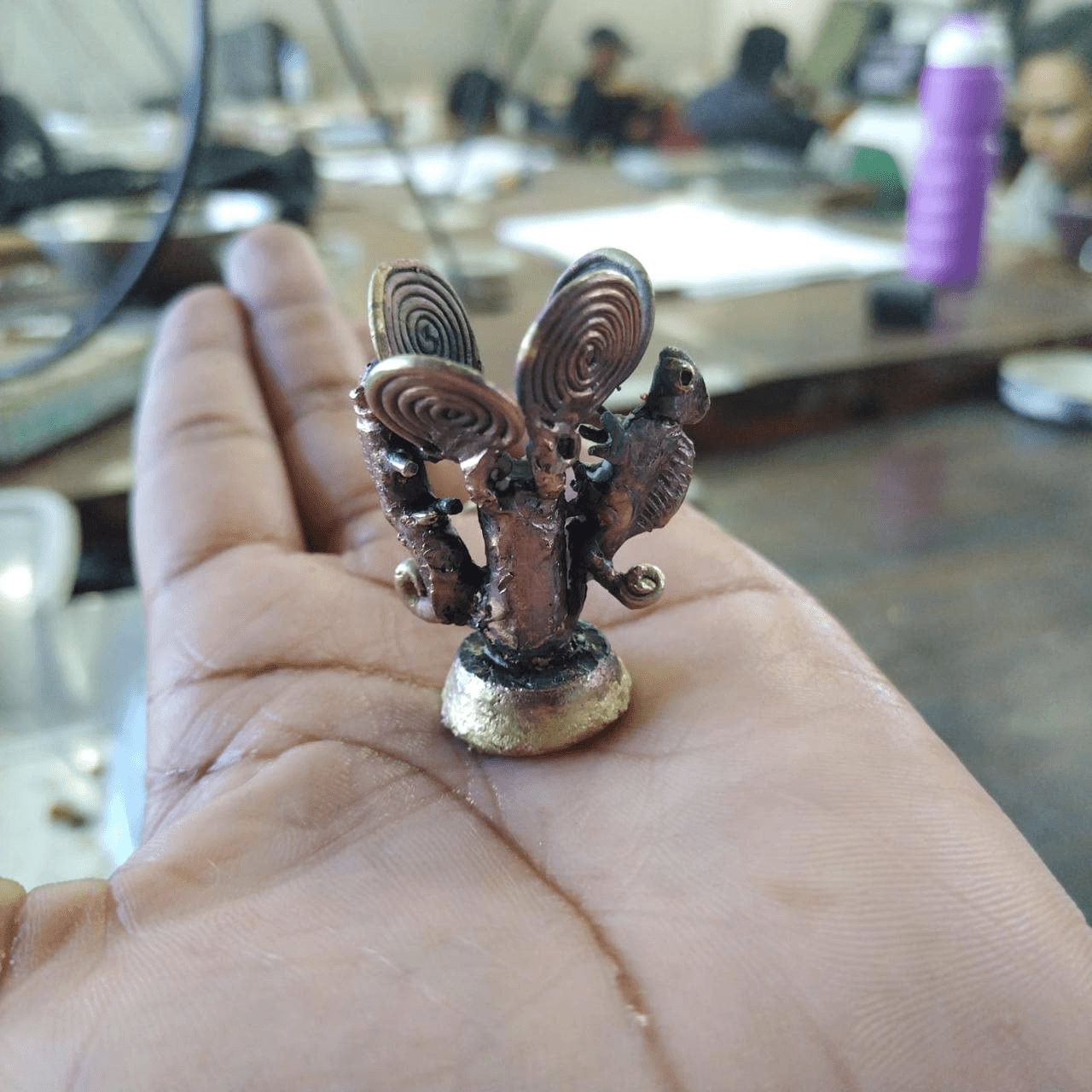
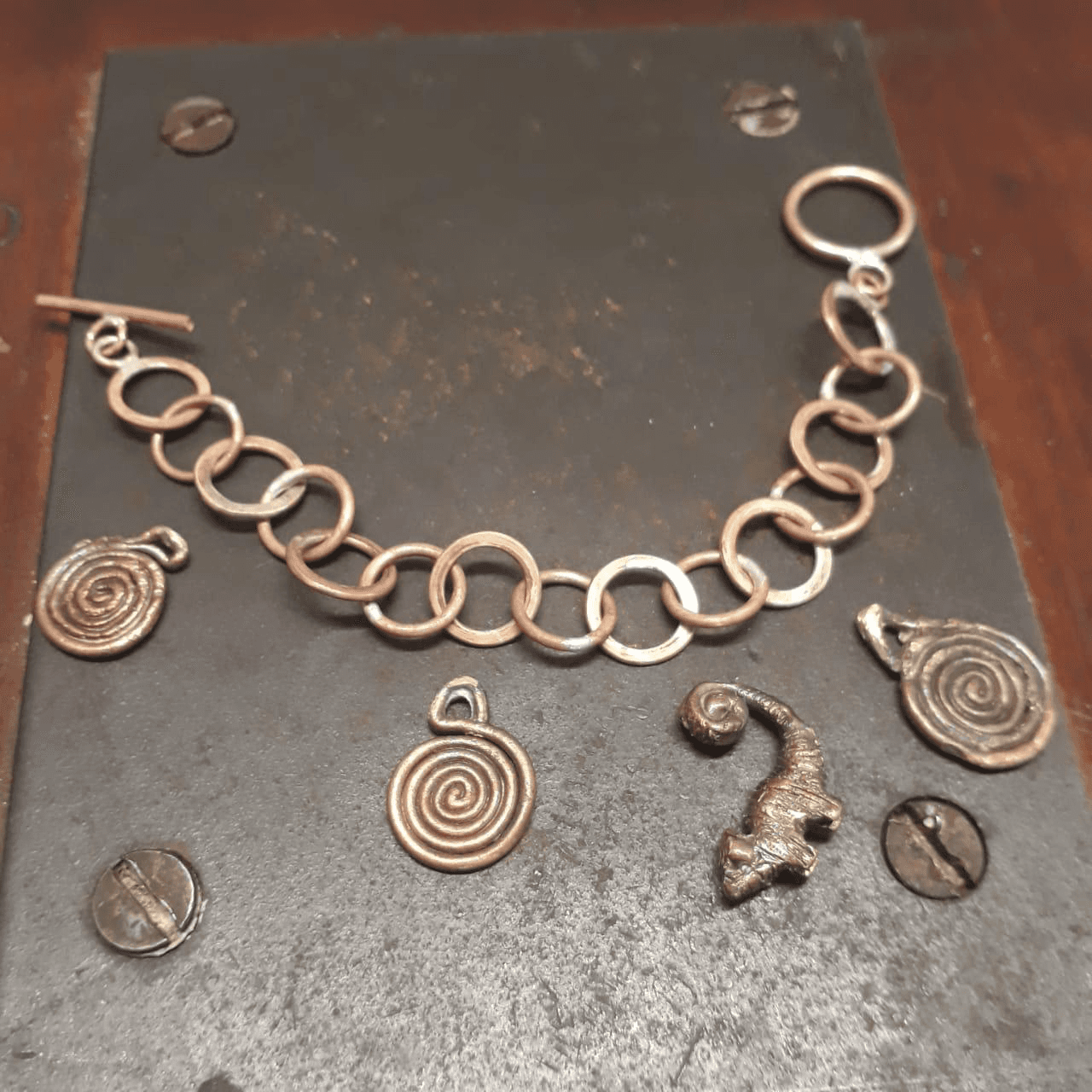
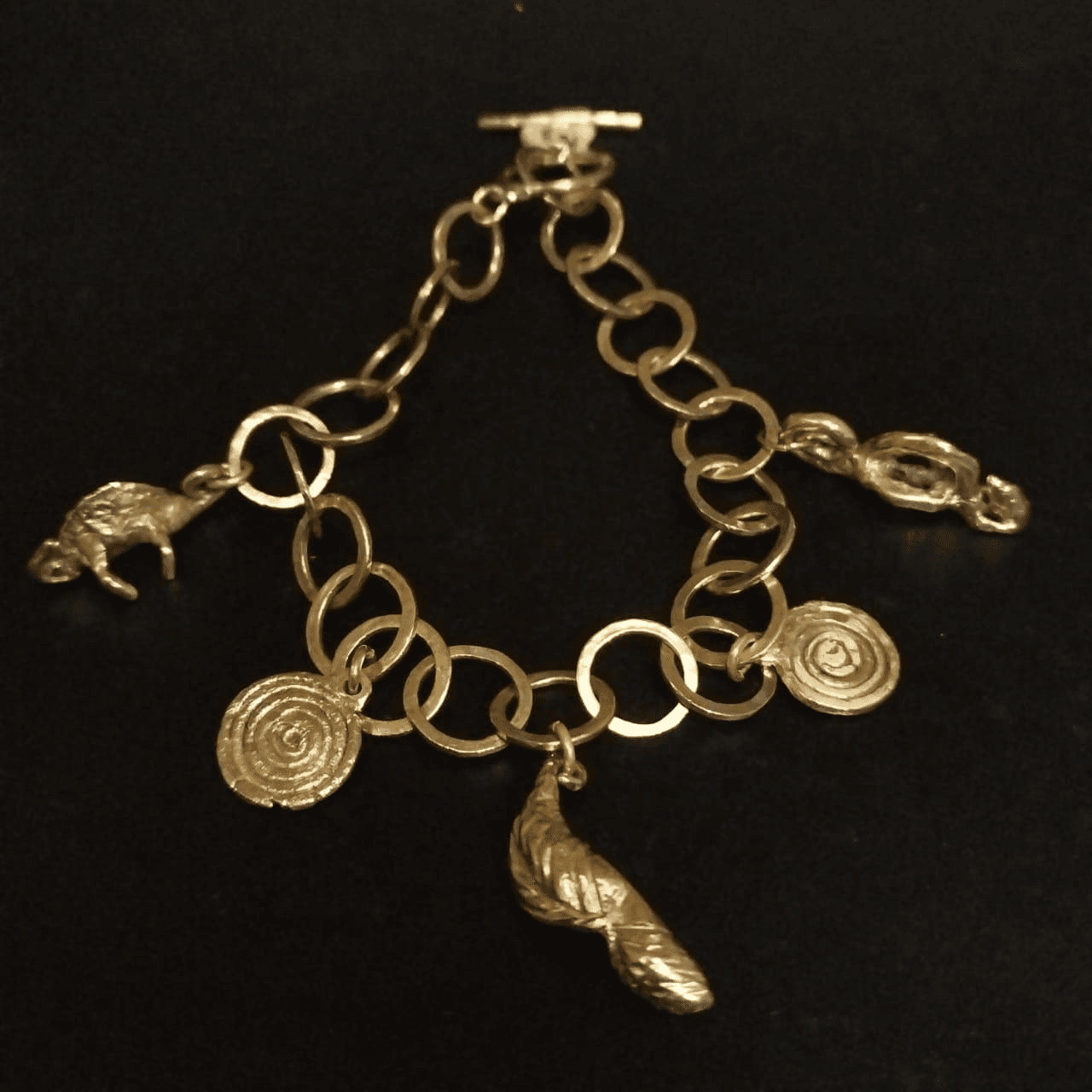
The student works were added to the Encounters with the Immaterial exhibition (July 2023) & were reflected on at the accompanying Material Encounters Symposium that was hosted jointly by the University of Johannesburg, Fine Art Department, and the Wits Art Museum, 18 – 20 July. The TRIP research collective was essential to this trans-institutional pedagogy, which not only served to develop divergent thinking and technical skill, but also acquainted students with professional academic practice, and exhibition culture beyond the scope of the classroom environment.’
The WAM Jam! (2023)
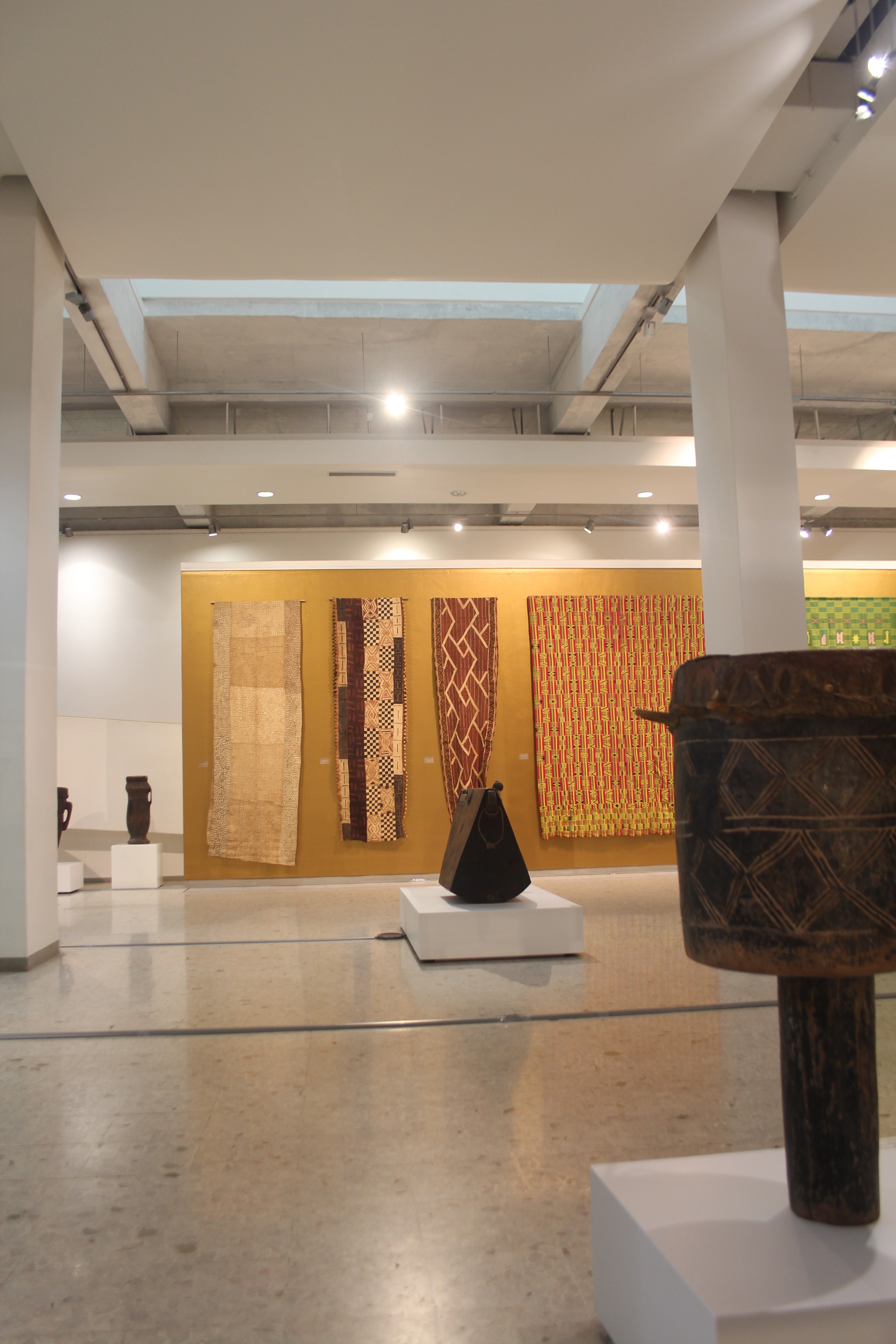
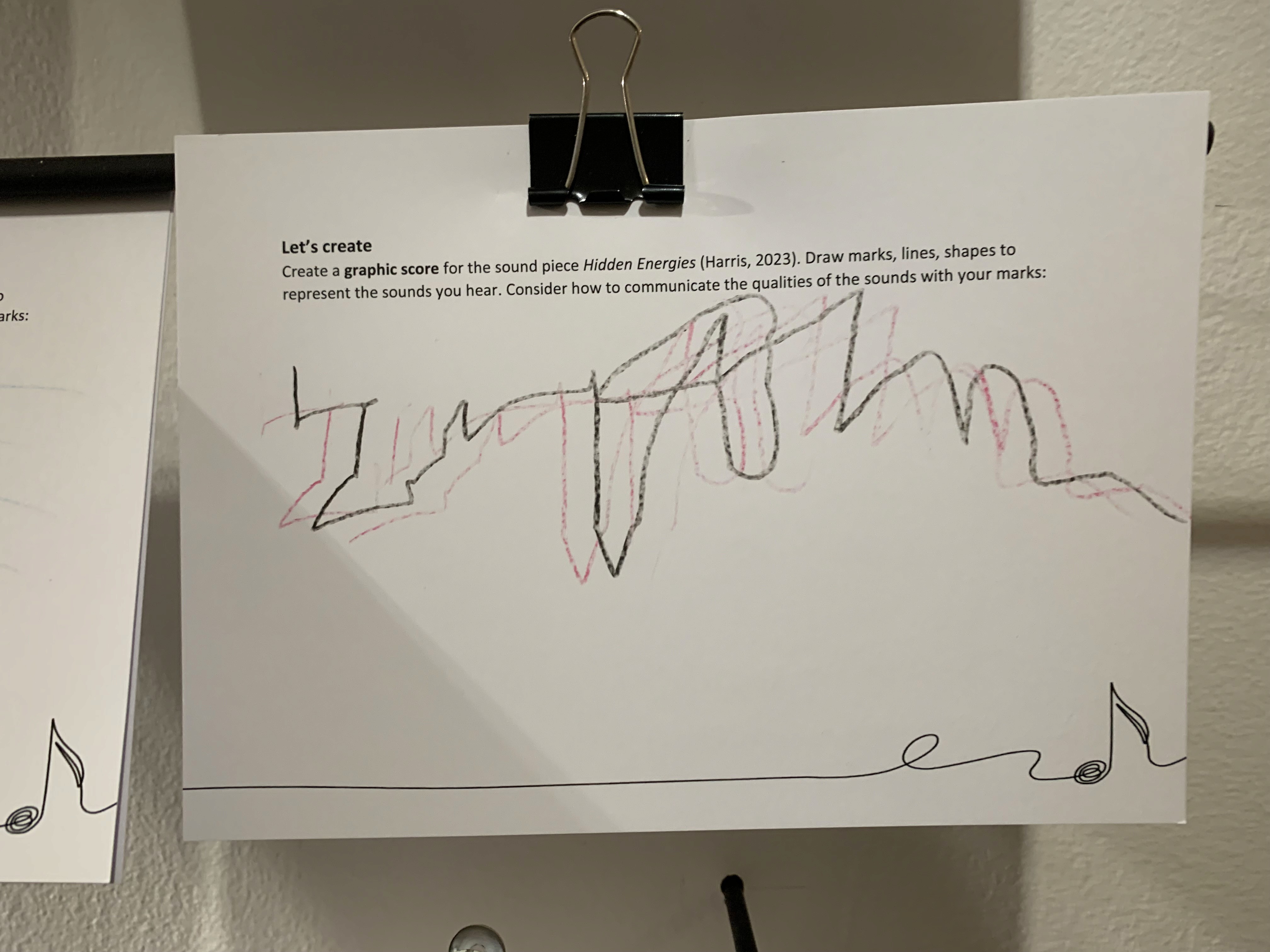
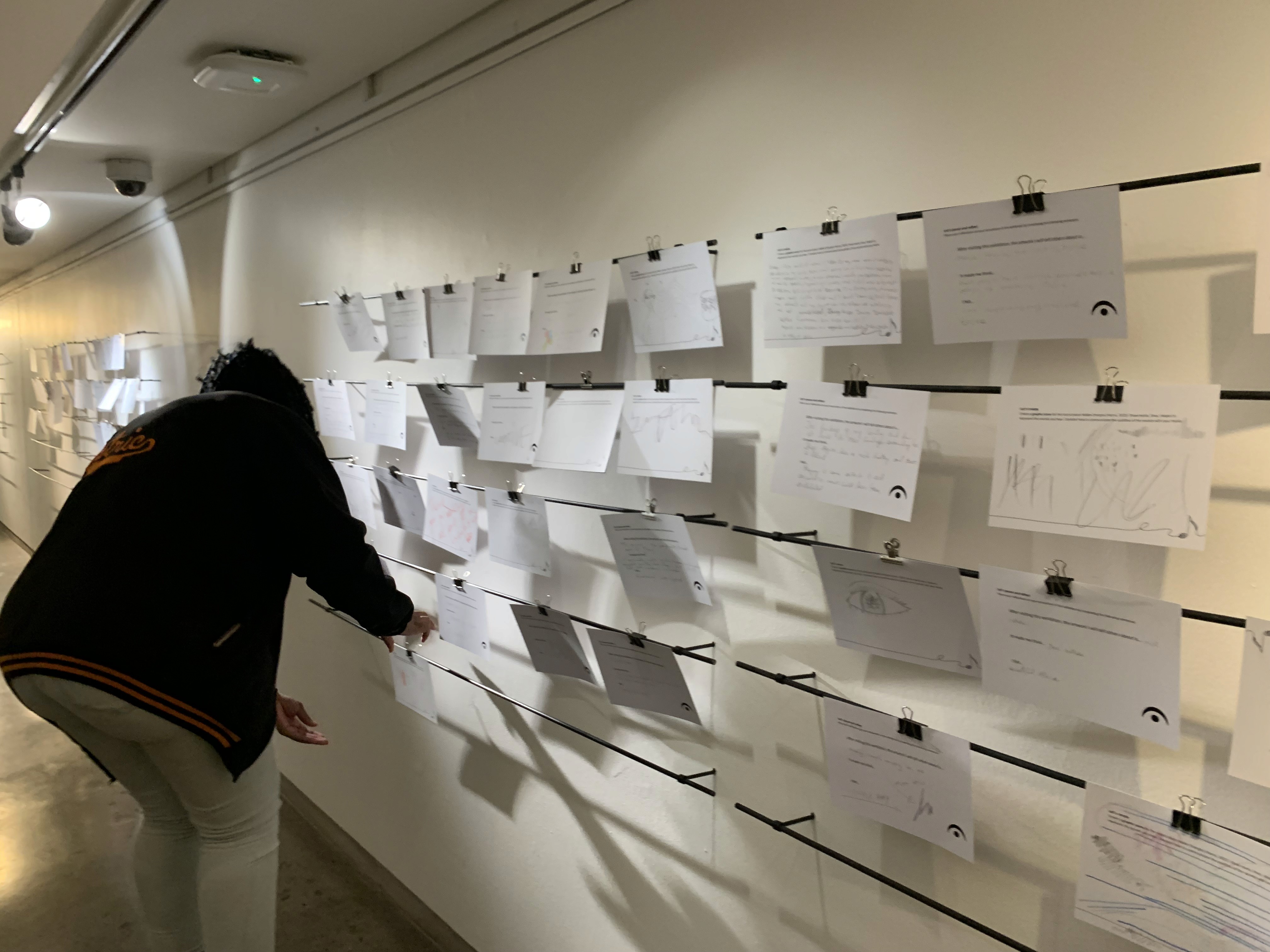
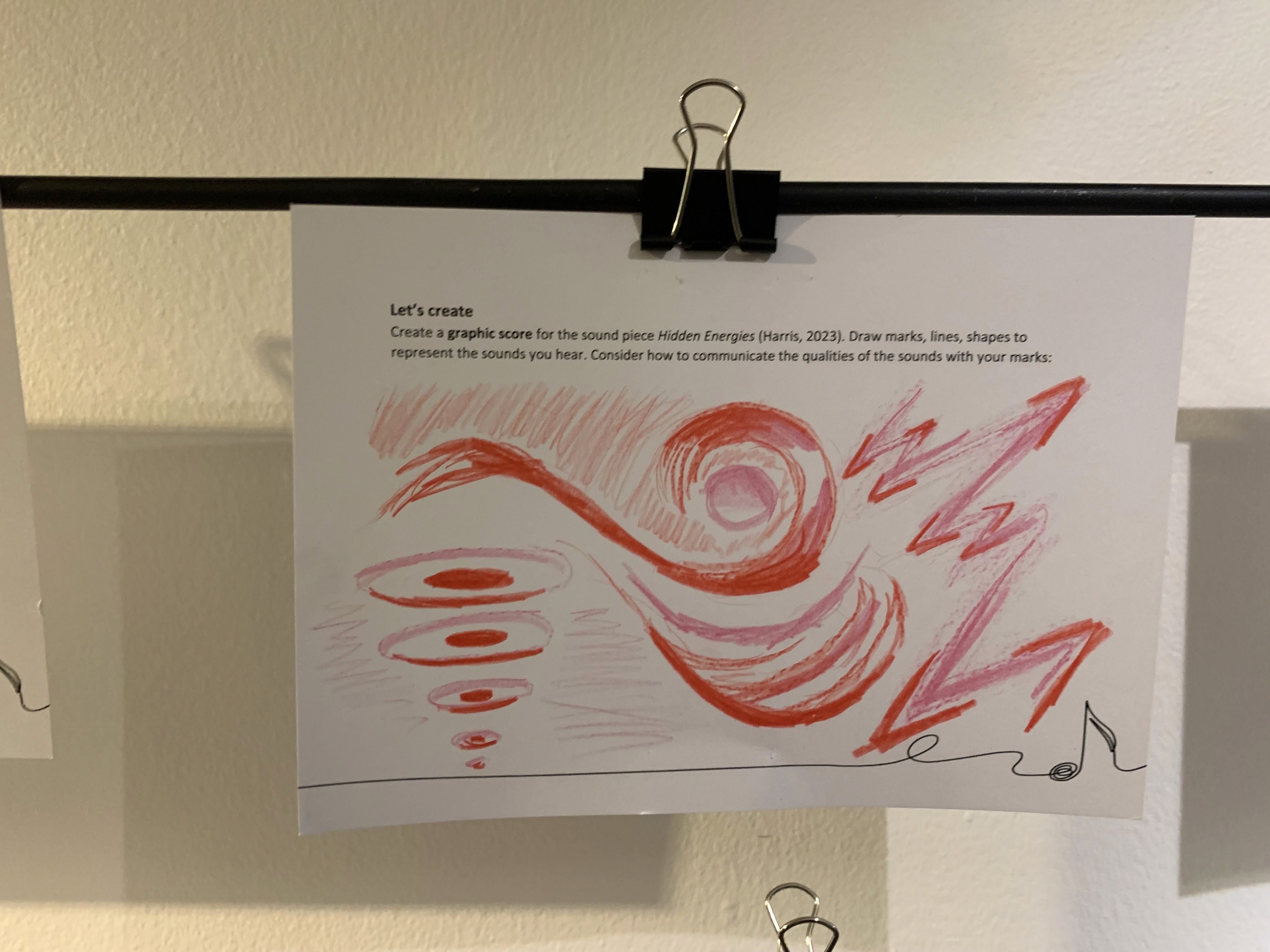
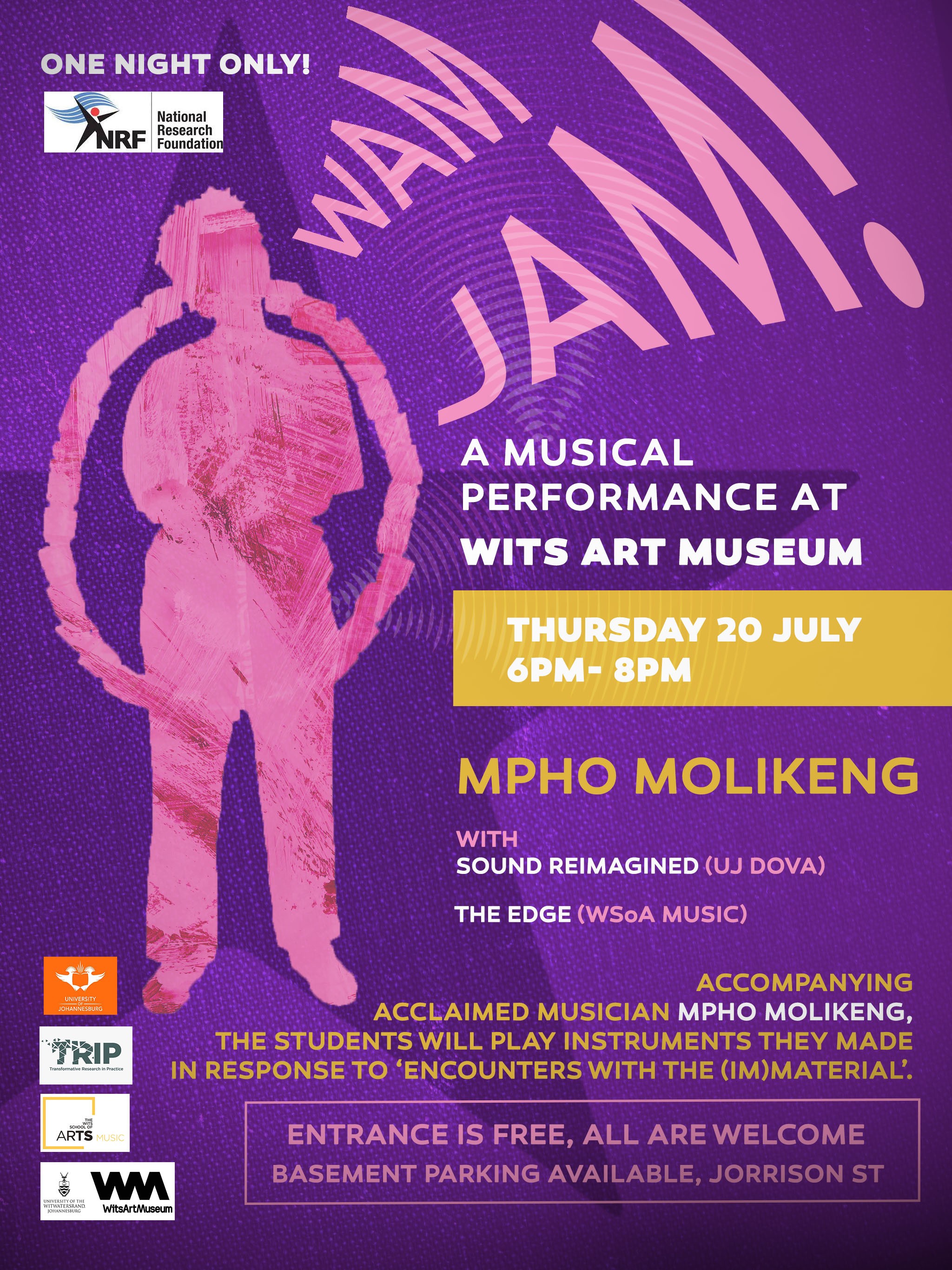
The 2023 WAM JAM Project, was developed by Prof Alison Kearney (UJ FADA), and Dr Cameron Harris (Wits, Music Department) with Alexa Pienaar (UJ DOVA). The project was one of several education projects created to engage students of different ages with the exhibition “Encounters with the (Im)Material, curated by Prof. Alison Kearney for the Wits Art Museum (WAM). The exhibition explored ways in which the material and immaterial are connected through highlighting the interrelations between artworks, other agents and sound. Artworks, understood here as the material expression of artists’ ideas, are the centre of this matrix. Traces of facture make the relationship between the artist and their thoughts visible. Audiences interpret art by engaging with the meanings that artworks hold for them, as well as the ideas presented through the curators’ arrangement. 168 artworks from WAM’s holdings were exhibited with 26 artworks made by UJ Visual Arts and DUT Jewellery Design students, in response to themes emerging from the exhibition’s concept.
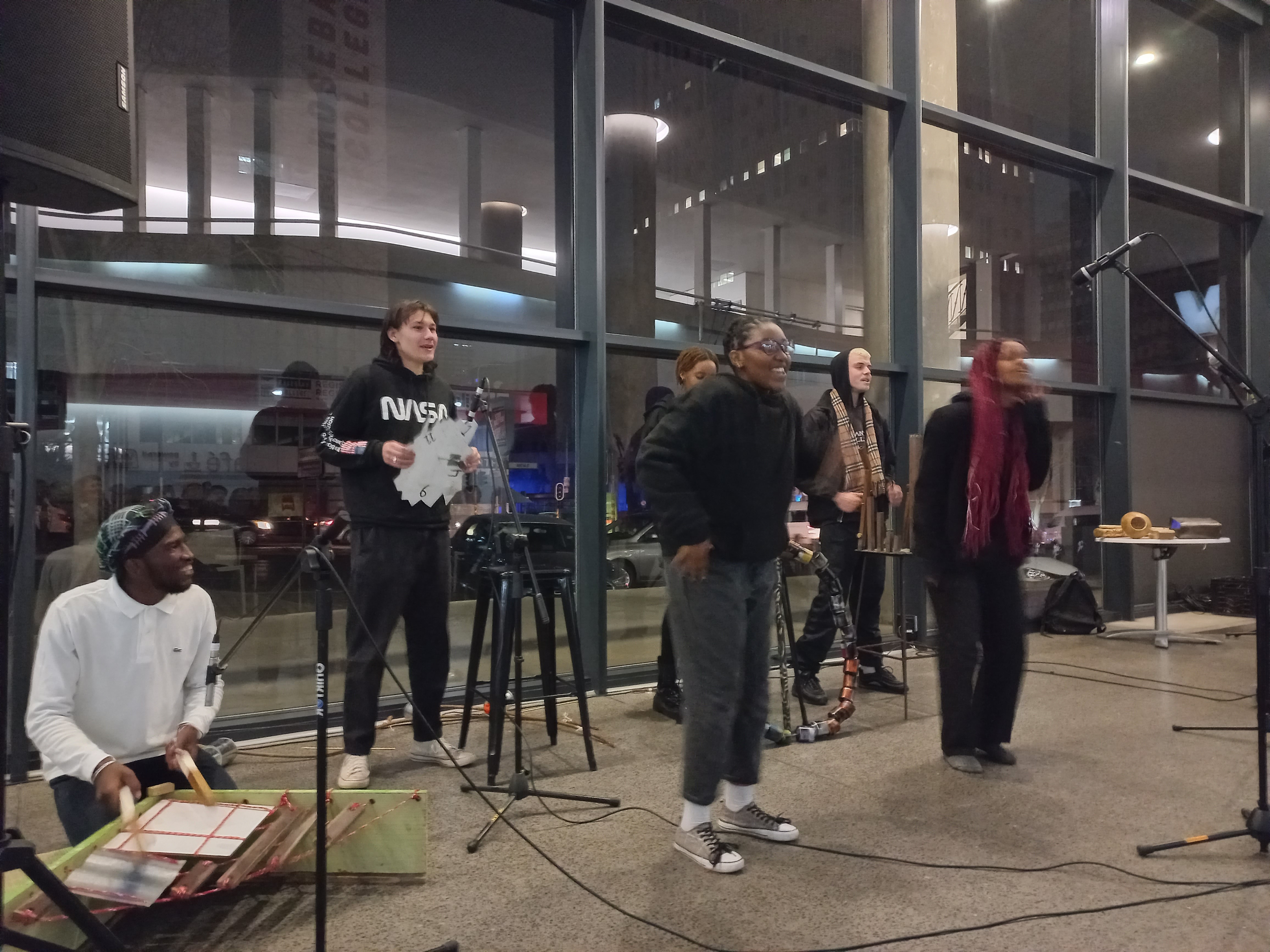
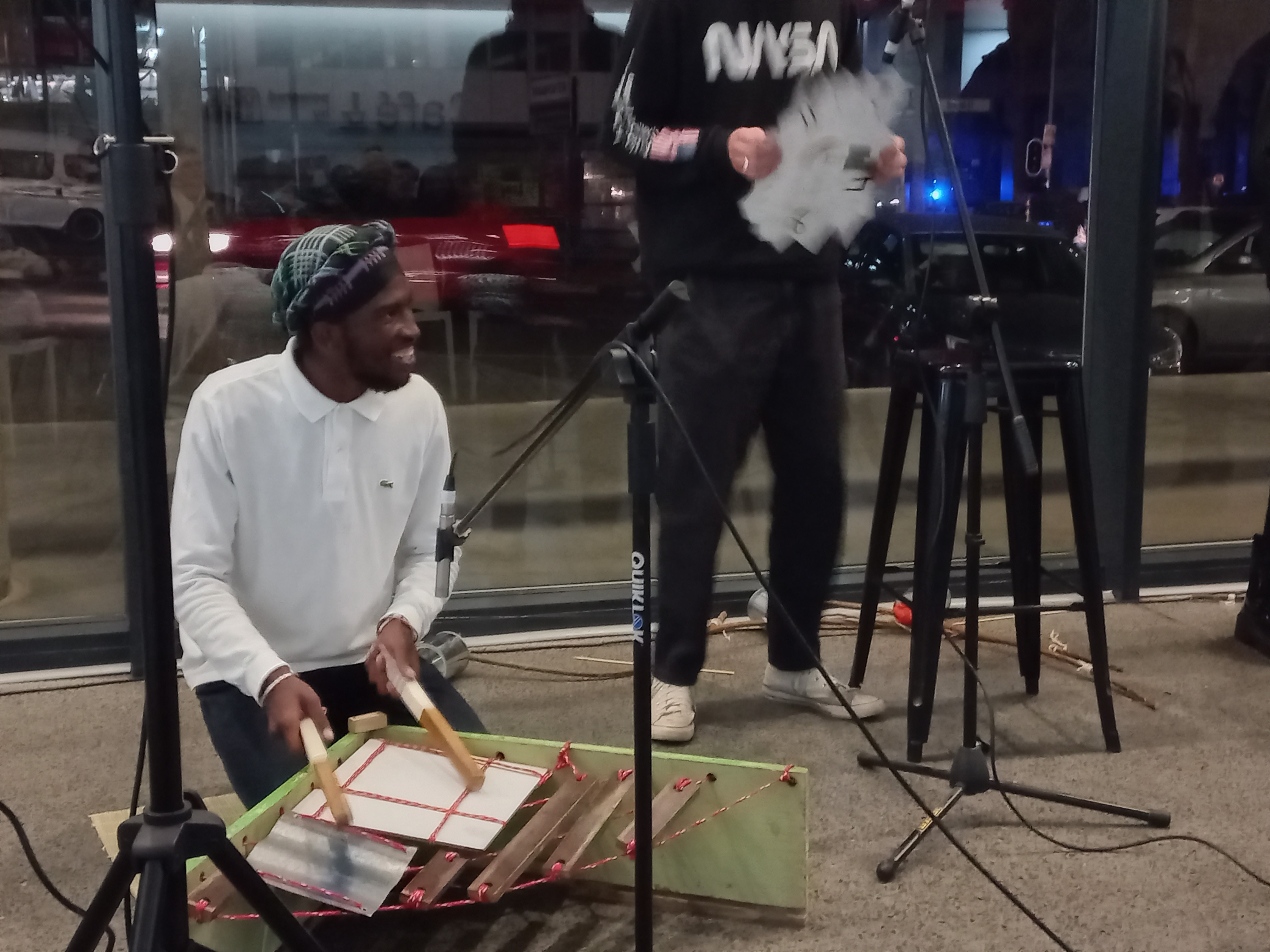
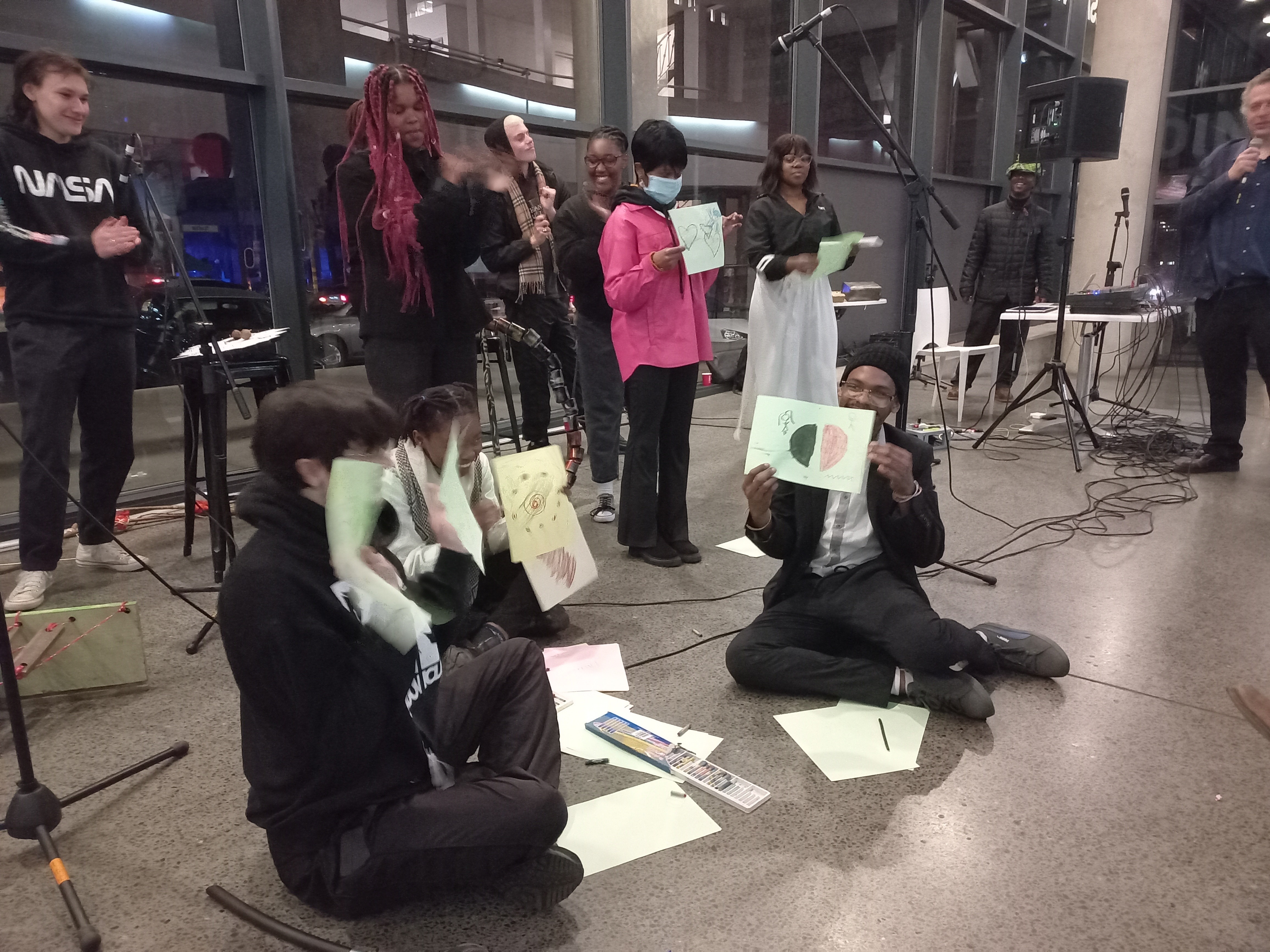
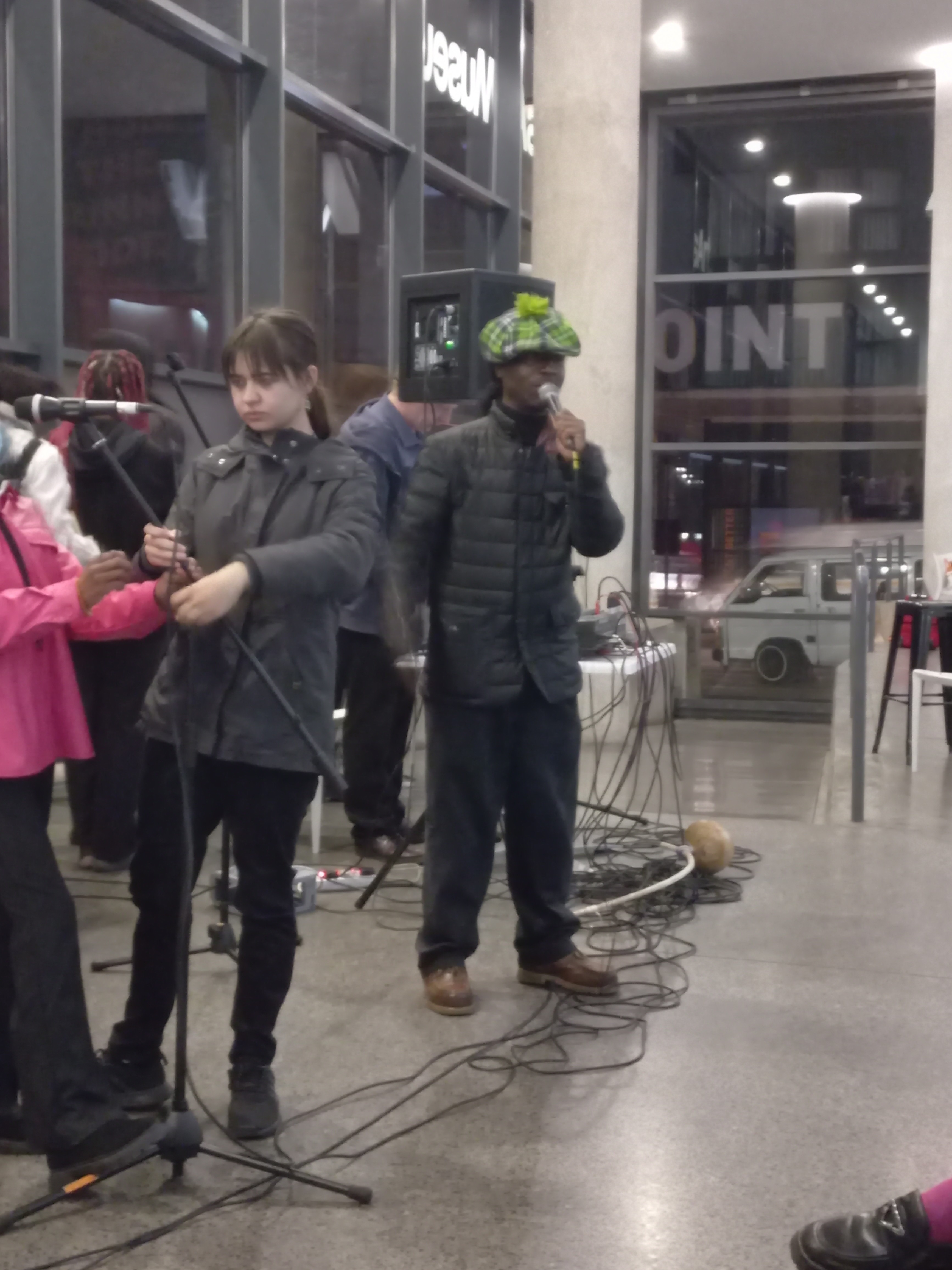
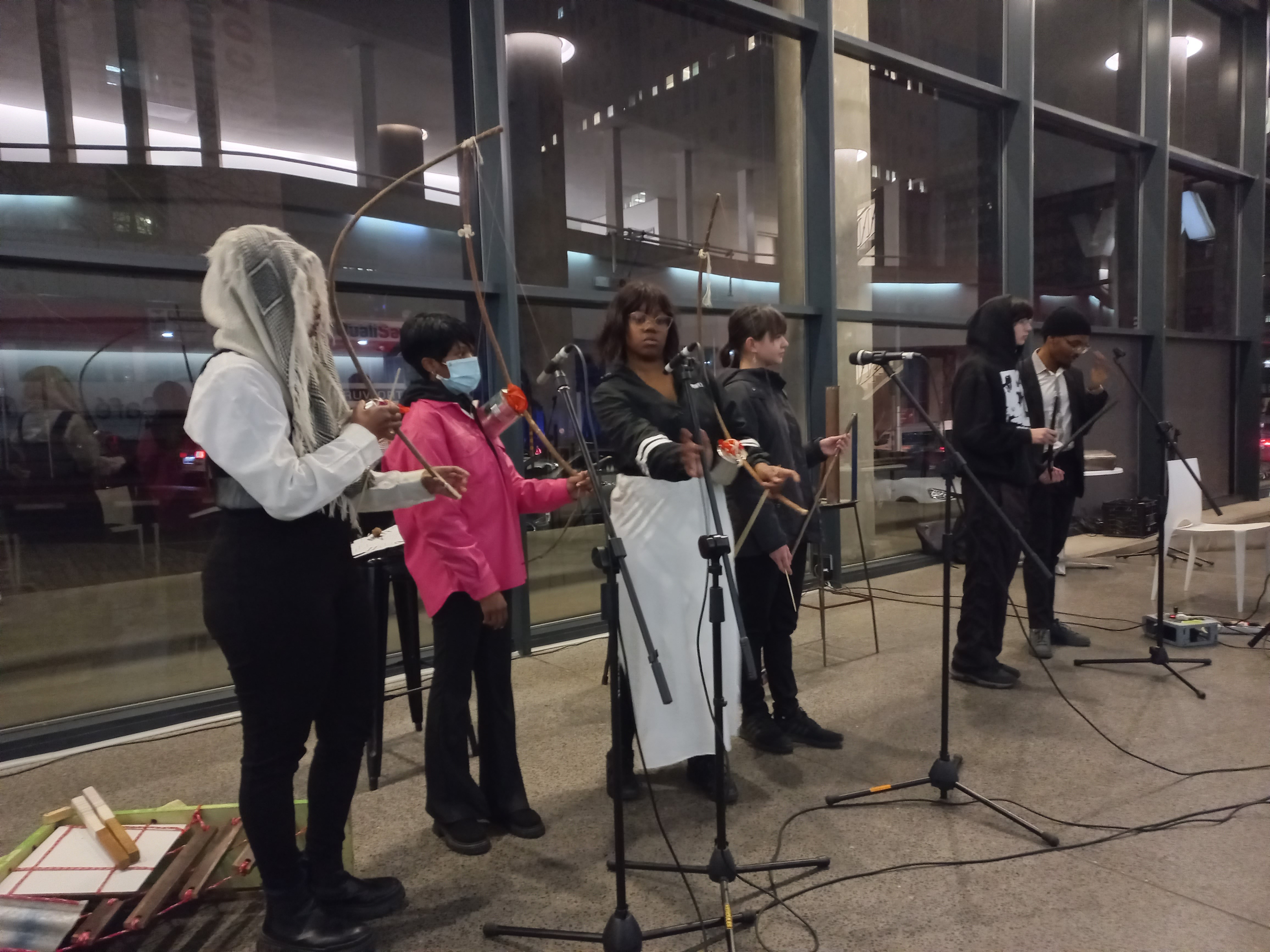
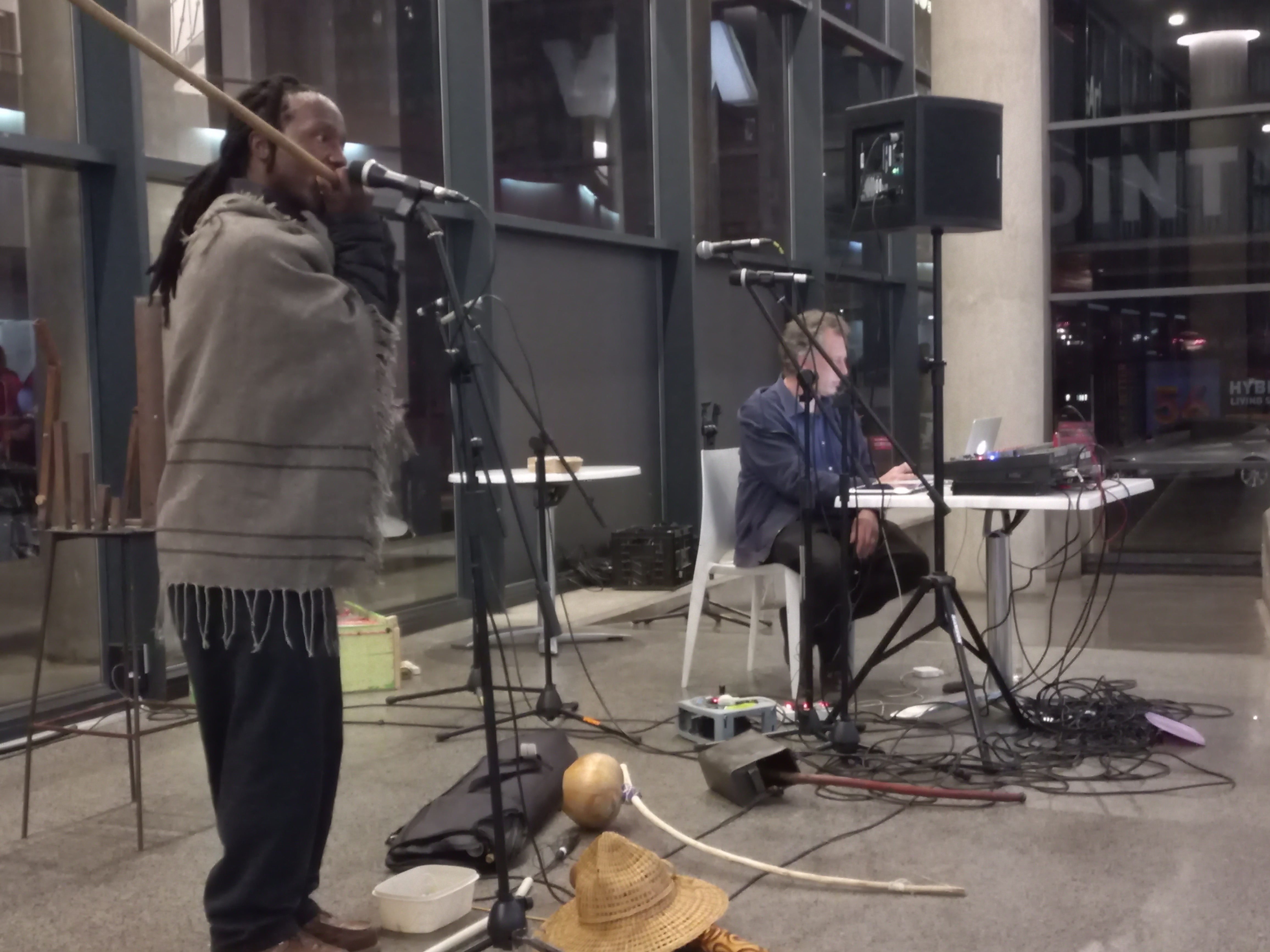
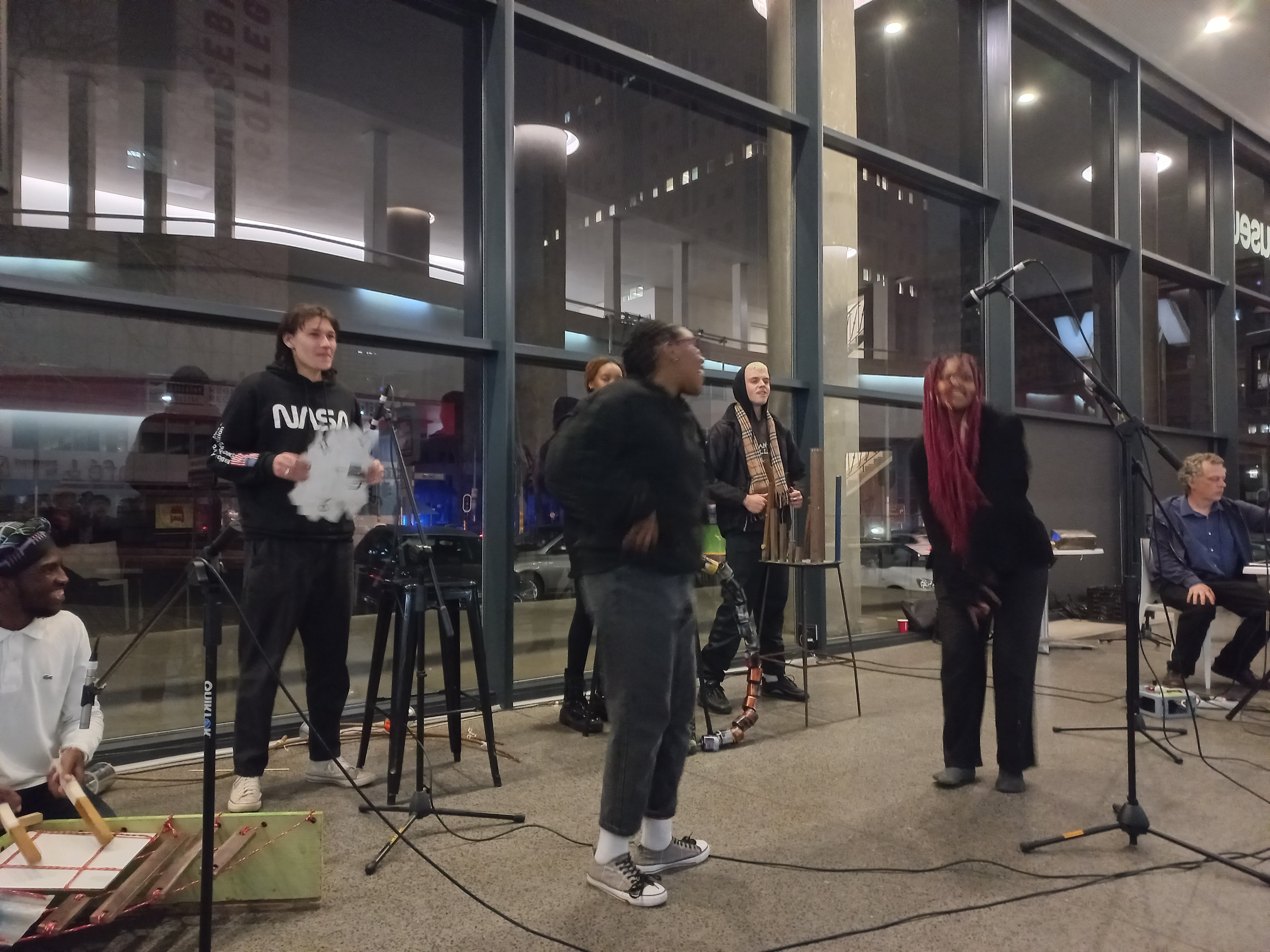
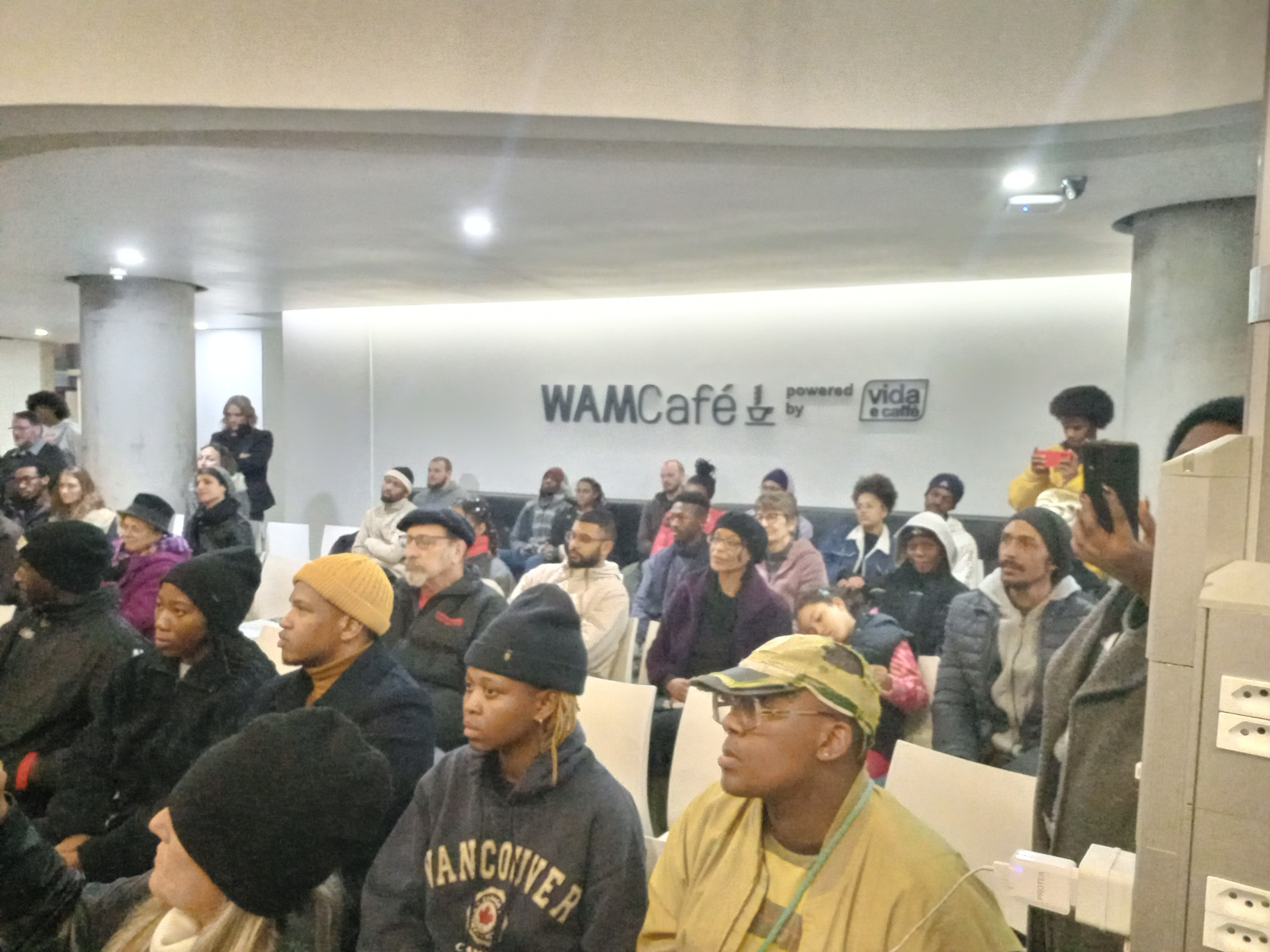
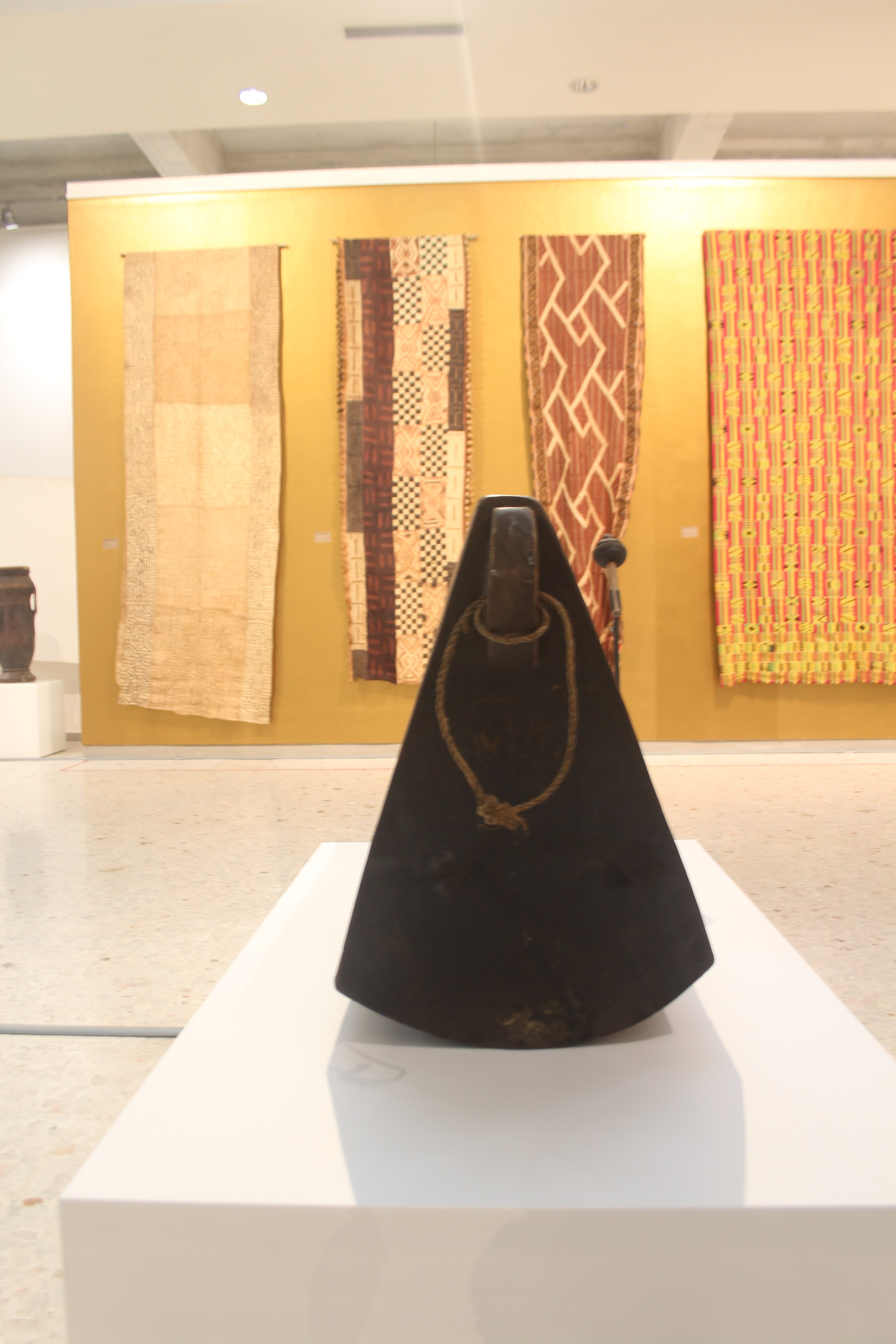
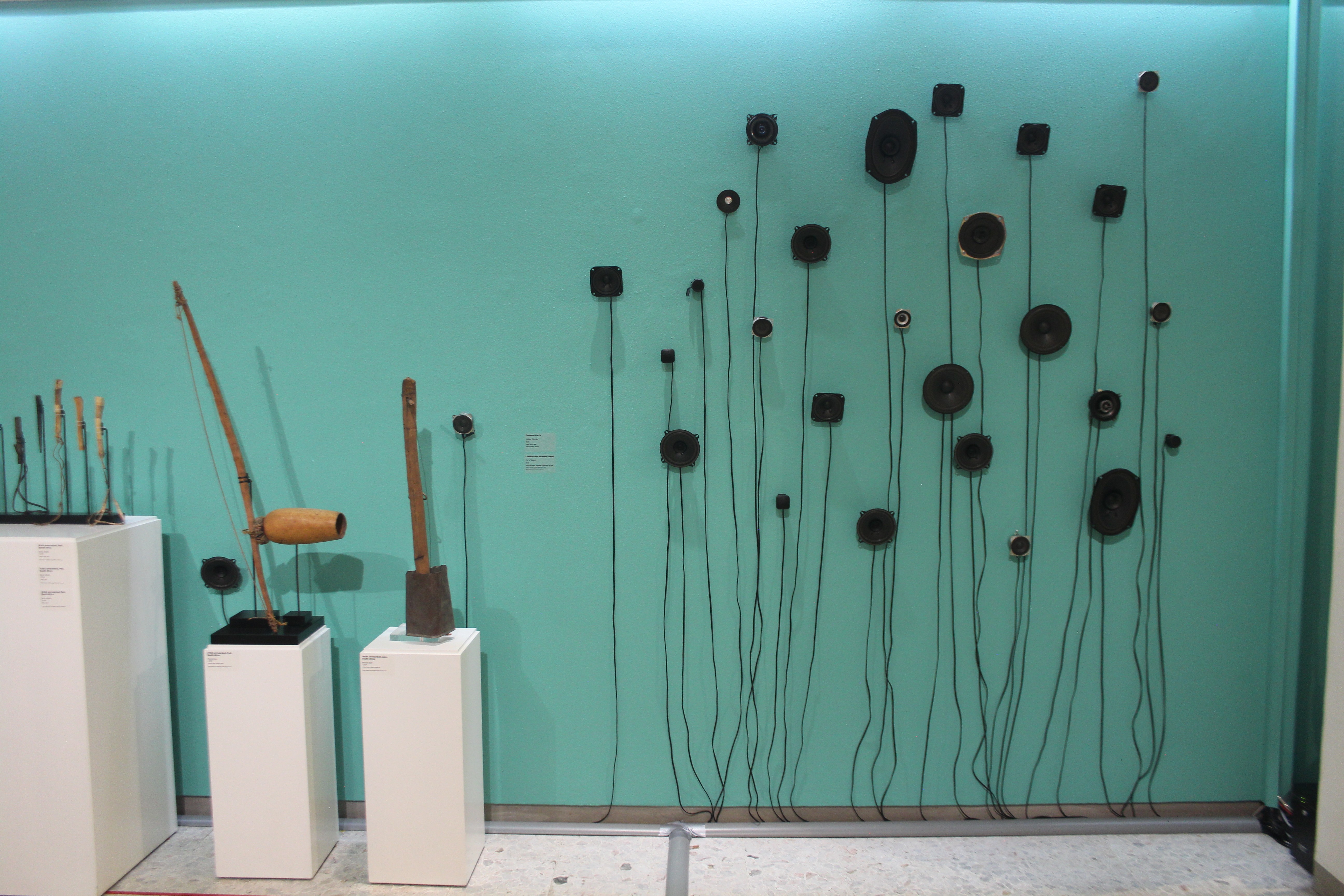
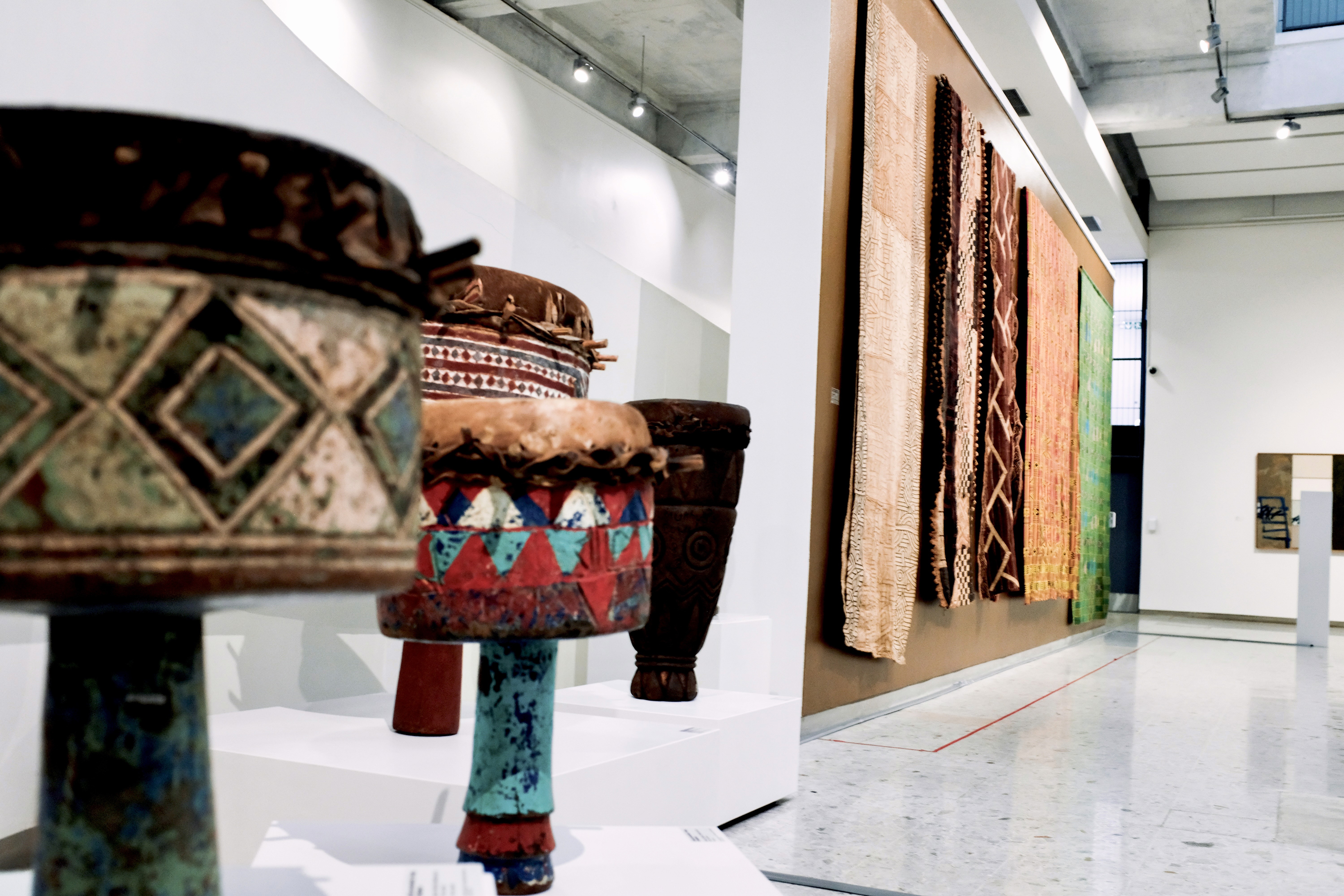
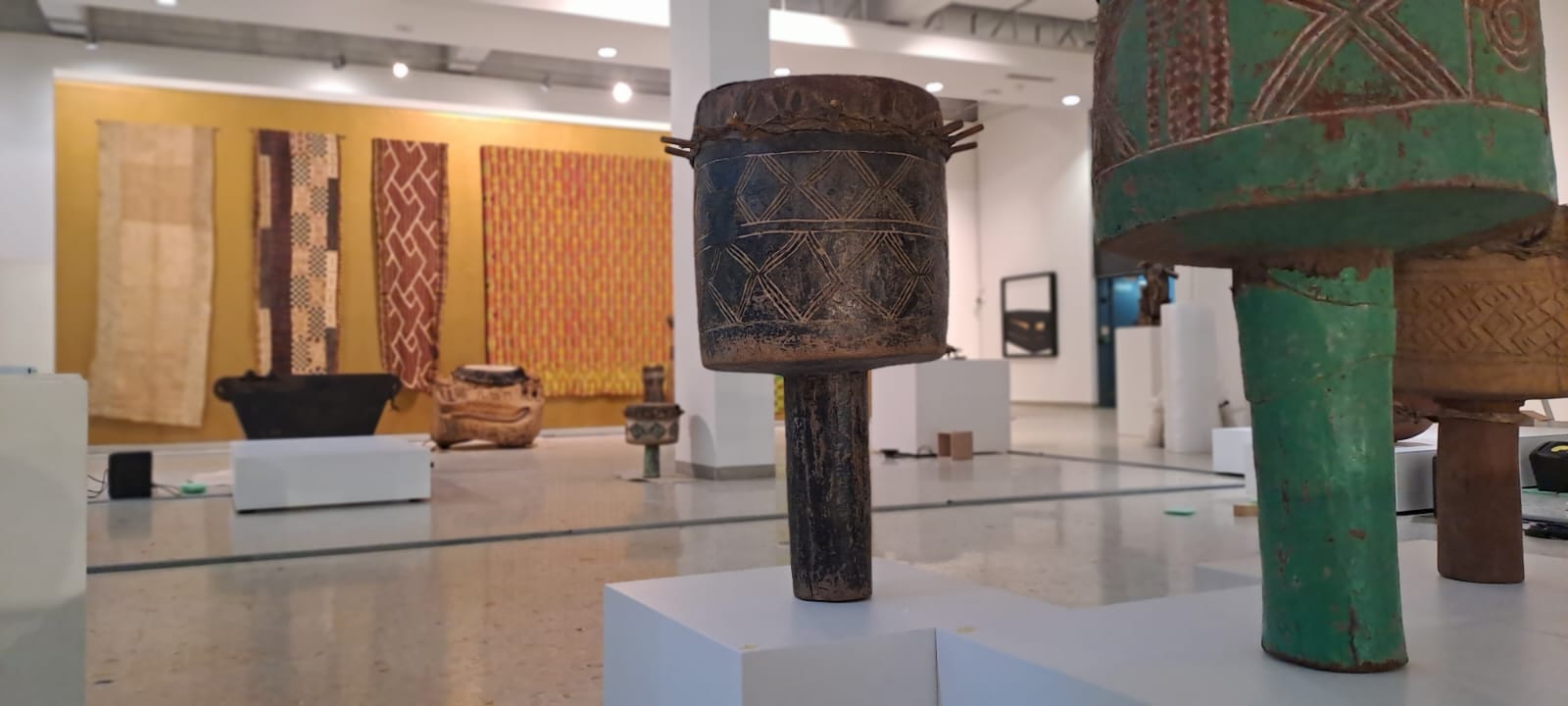
Several musical instruments from the WAM holdings were exhibited. Musical instruments in art collections embody the meeting of matter and immateriality, the tangible and intangible. Celebrated for their material aesthetic attributes and their connections to community, when they are part of art museum collections, they are treated like artworks; despite having been made to be played, such instruments can no longer be touched and are thus denied their ontology. The challenge of how to ‘play’ musical instruments from WAM’s collection, without touching them, inspired Dr Cameron Harris and Prof Alison Kearney, who collaborate as the ‘Sound Art Journeys collective’ to find a way to un-silence the instruments in the museum.
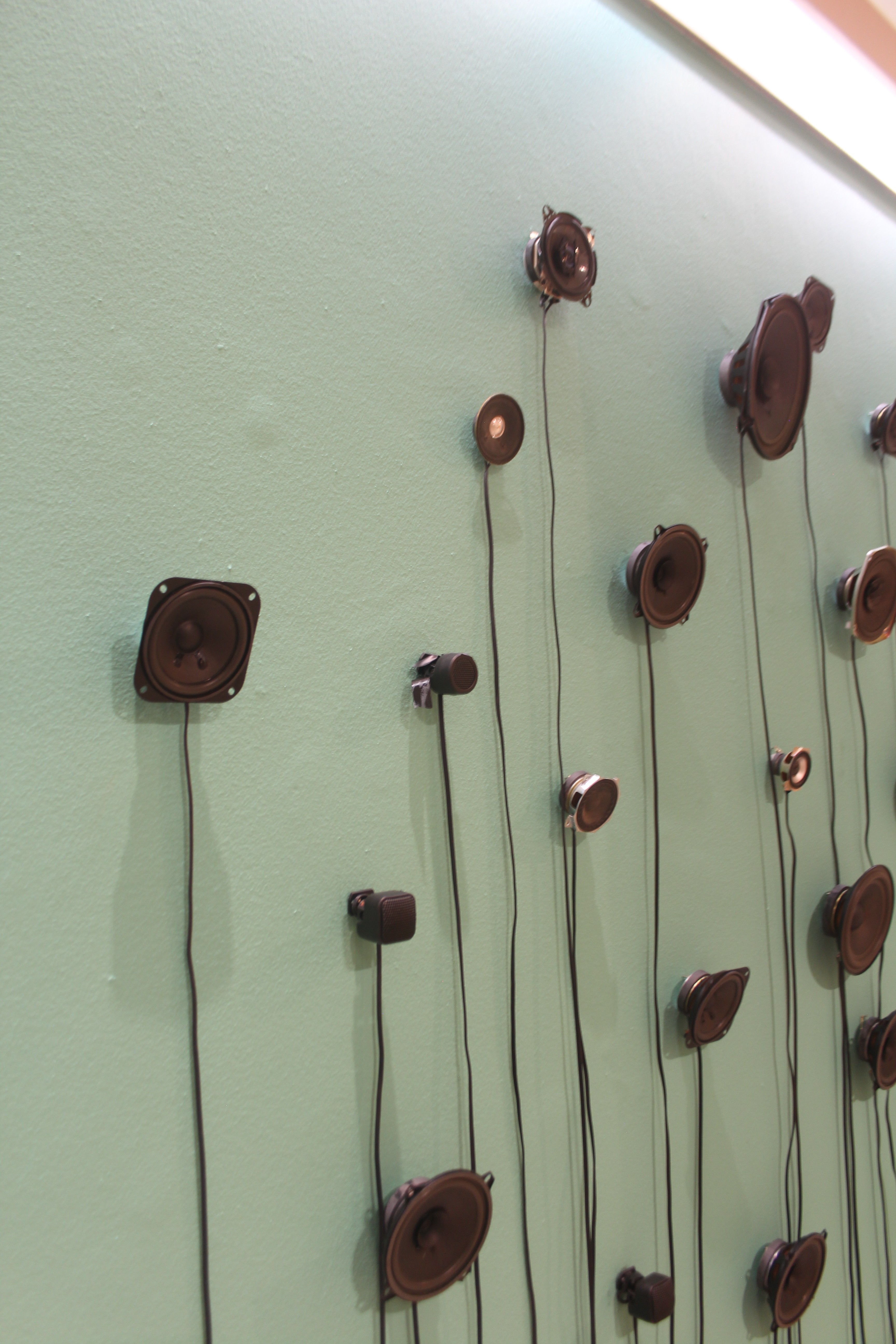
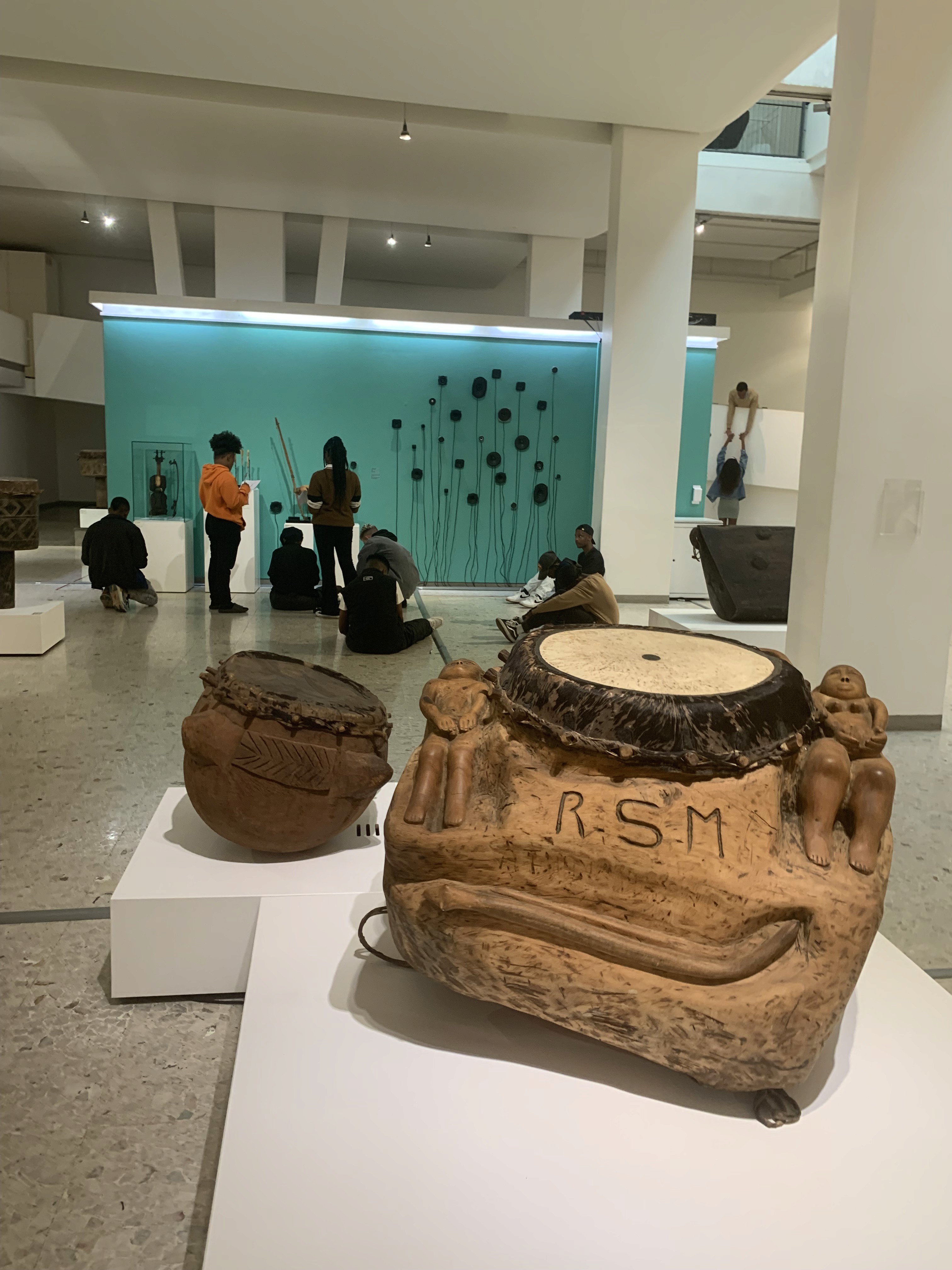
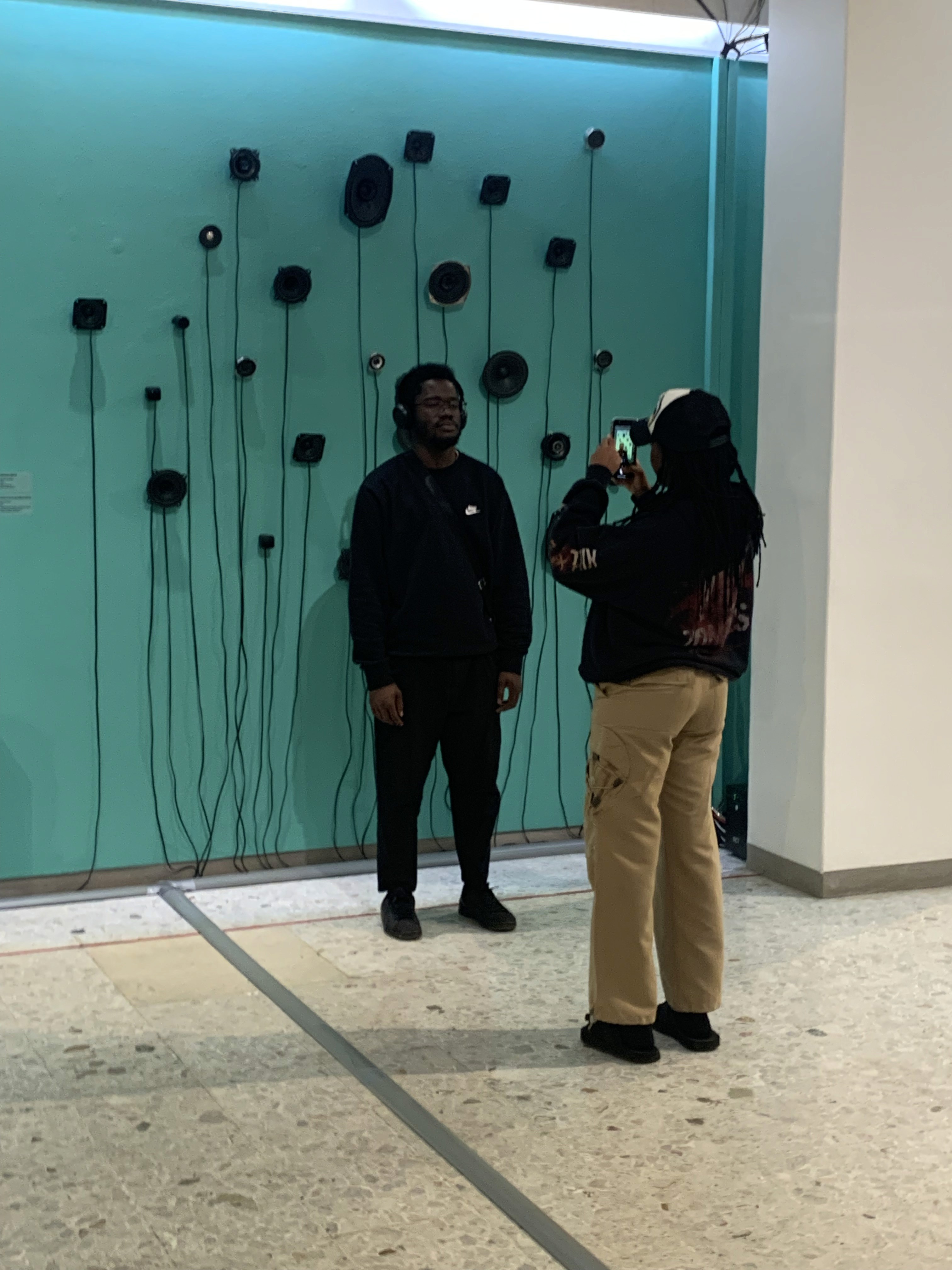
They created an installation titled Out of Sound (2023), which enabled scholarly engagement with the relationship between the seen, felt and audible in the art museum. The installation comprised 16 African drums, mounted on custom-made plinths, arranged for optimal spatialised sound and the flow of visitors through the visual and sonic space. Each plinth contained an aperture (aligned with the sound holes in the drums). Hidden speakers projected sound energy through these apertures, exciting the air inside the drums. The drums’ characteristic shapes therefore coloured the timbre of the sounds diffused into the gallery to the extent that the difference between the heard experience for each drum was striking: the essence of the original sounds of these drums was therefore inscribed onto the sounds heard in the installation. This element combined with an installation of 38 car speakers, arranged in circularly to evoke a bed of flowers, on a gallery wall. These speakers connected to the interactive computer system that ran the installation via visible audio cables, designed as part of the installation. The speakers within the drum plinths also connected to the same computer system. The ‘sound wall’ of car speakers provided a neutral, contrasting way of diffusing the installation’s sound that could be made to interact with the sound points emanating from the drums or otherwise provide a juxtaposition to them.
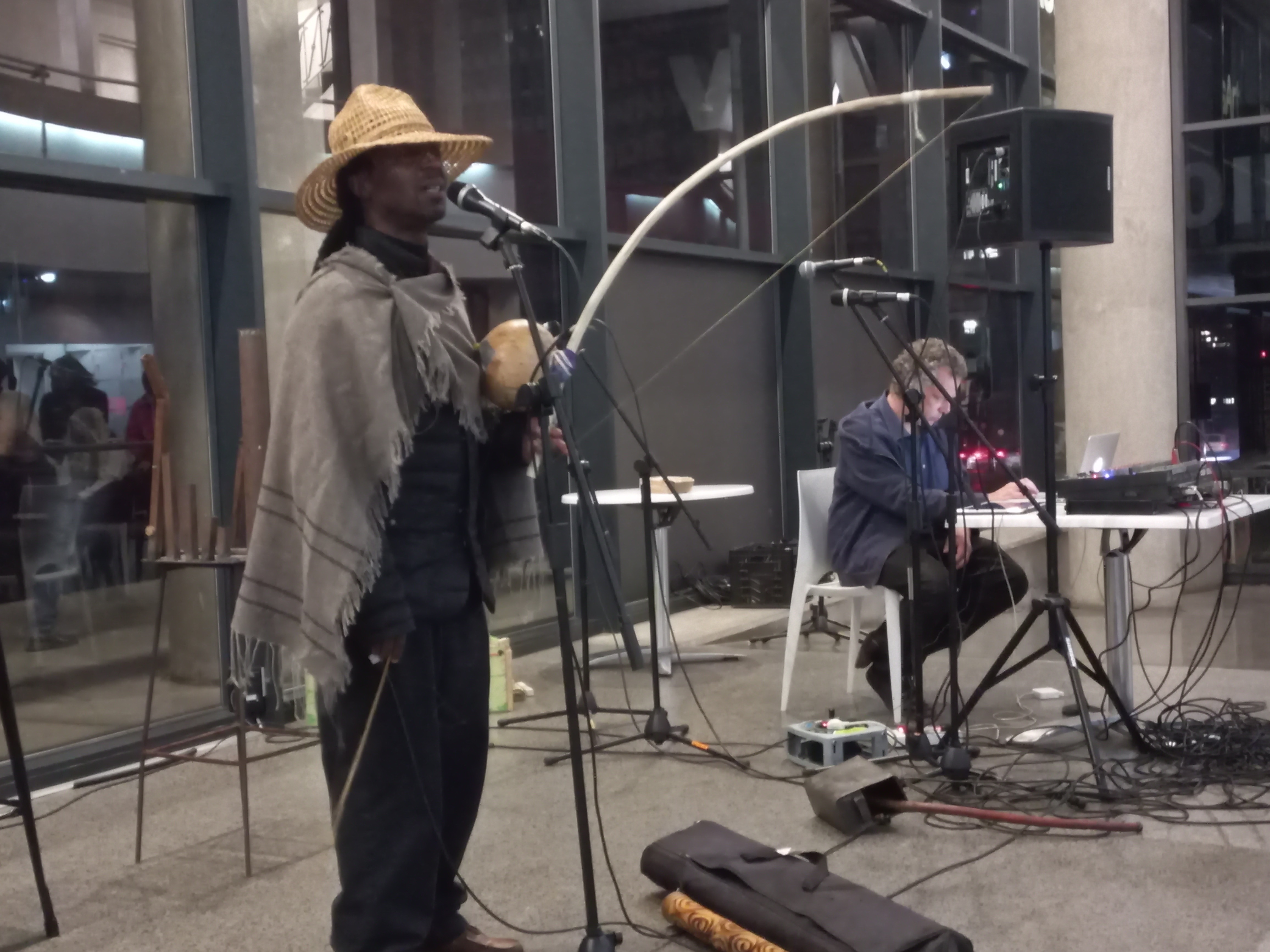
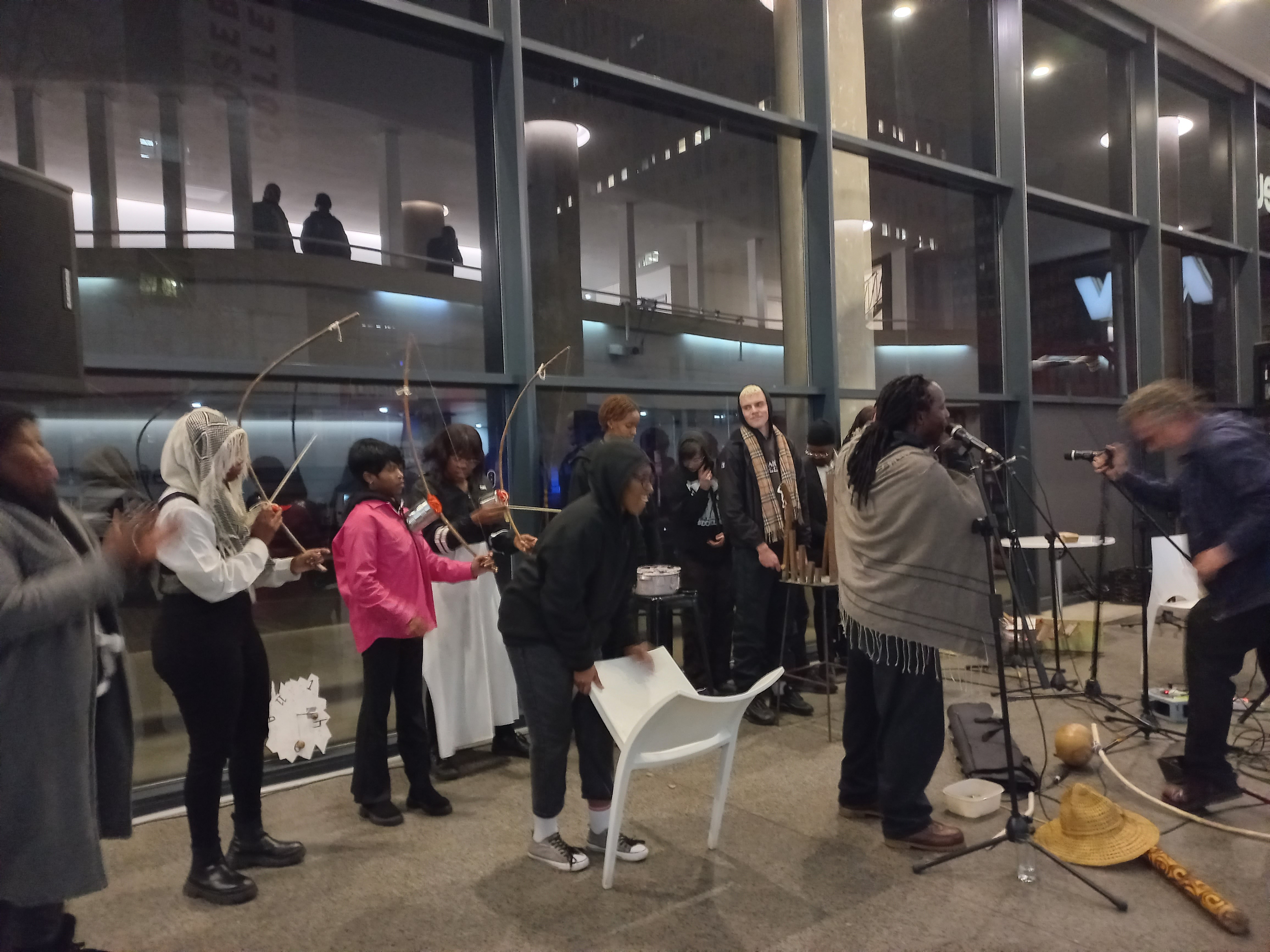
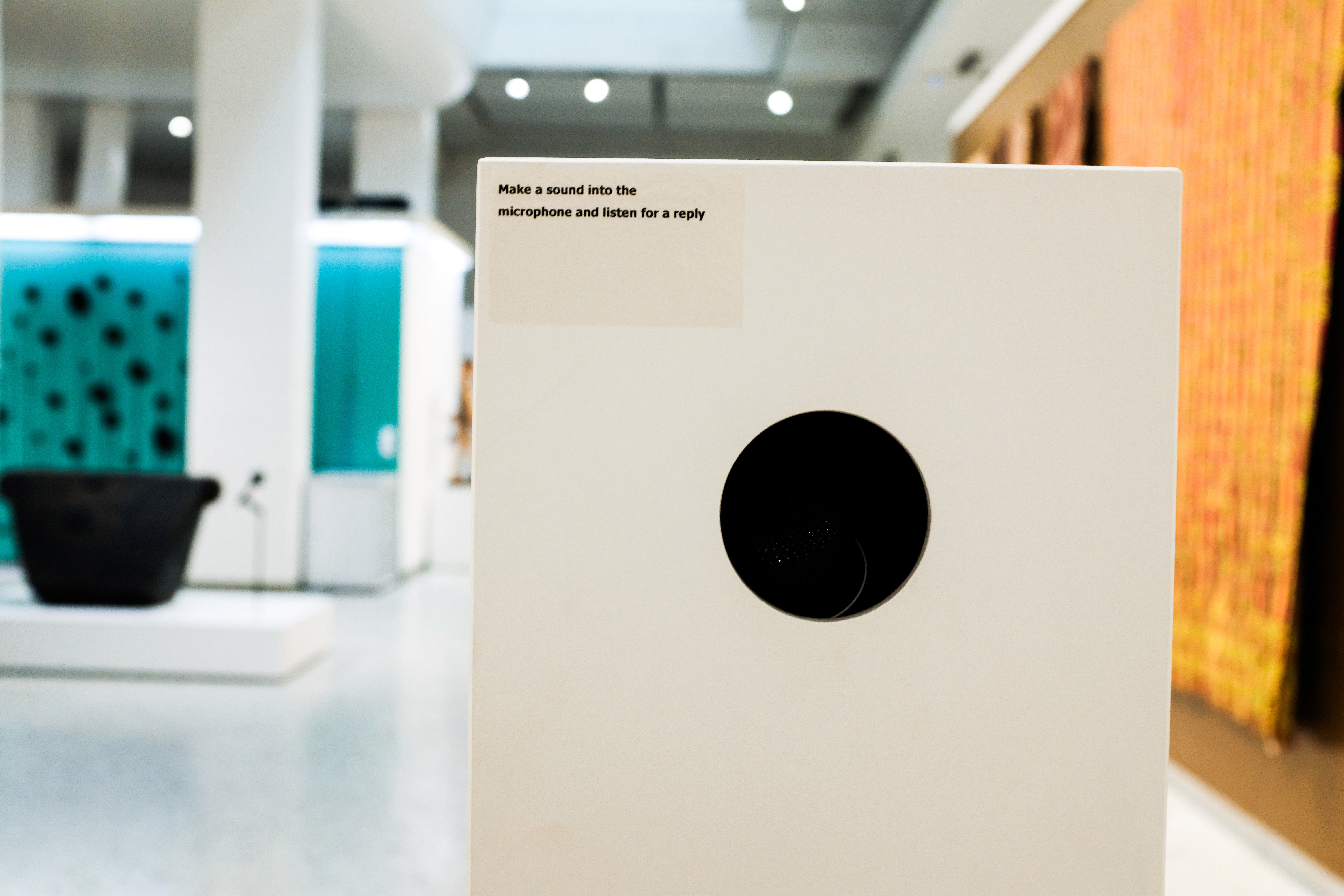
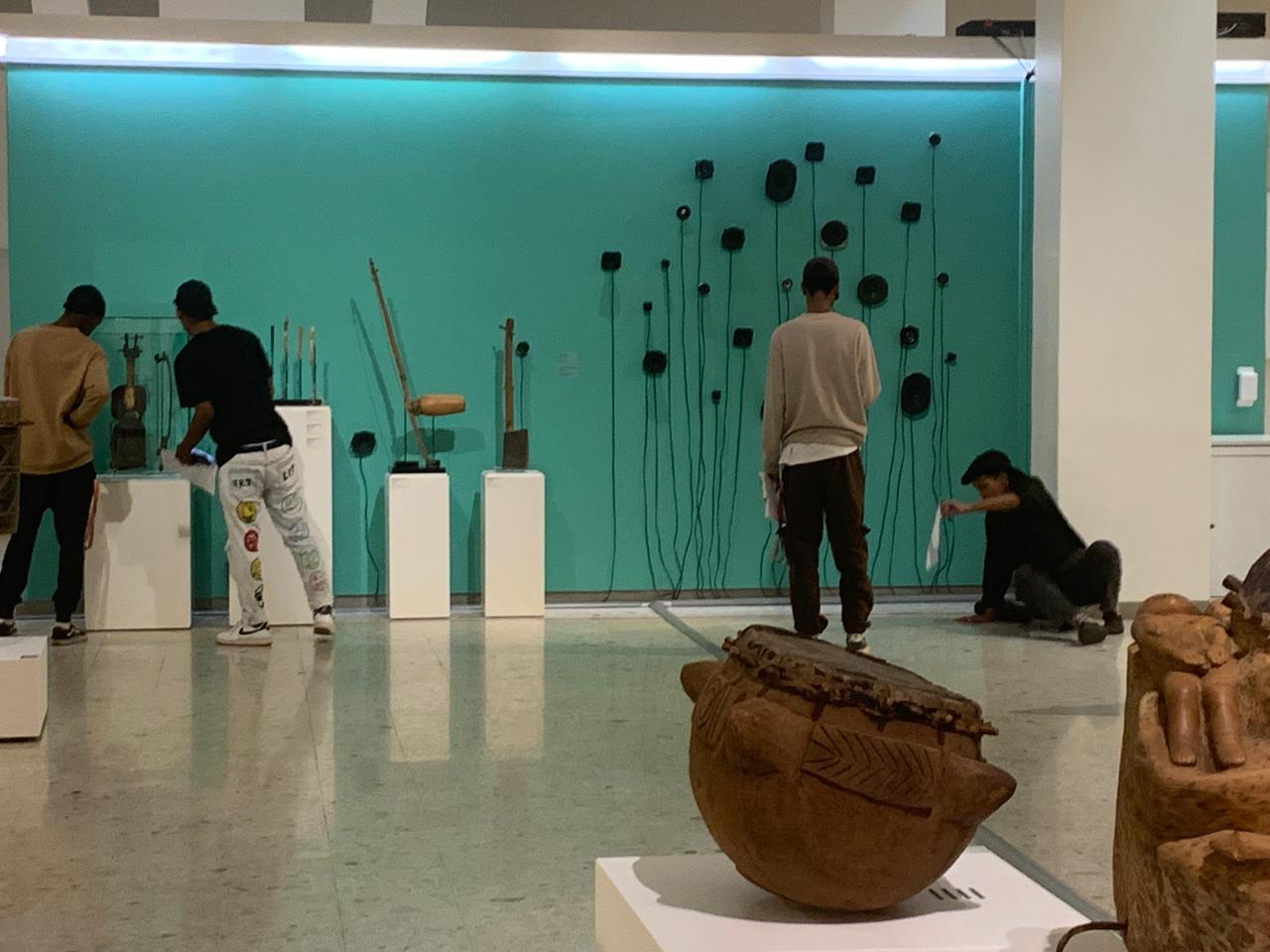
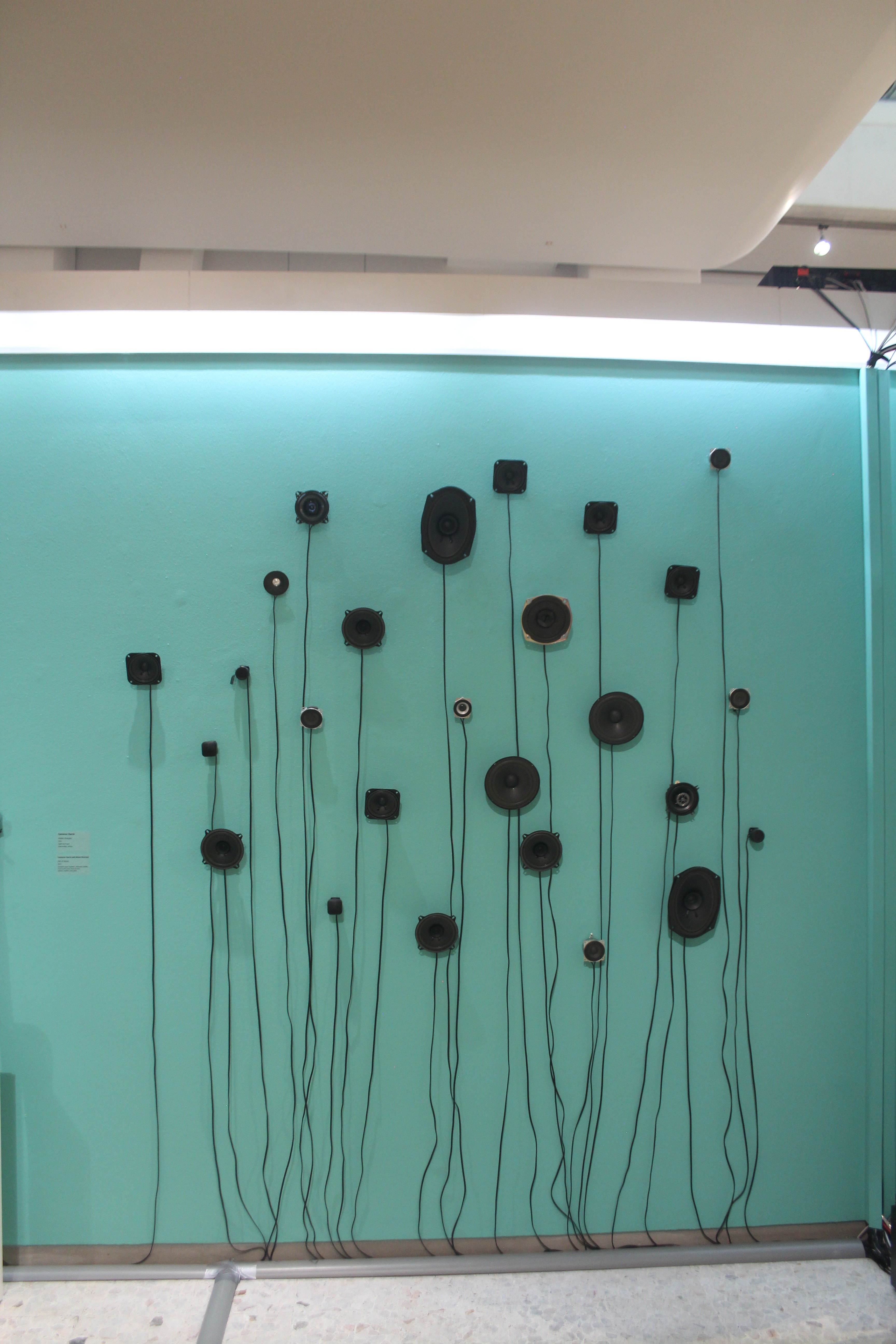
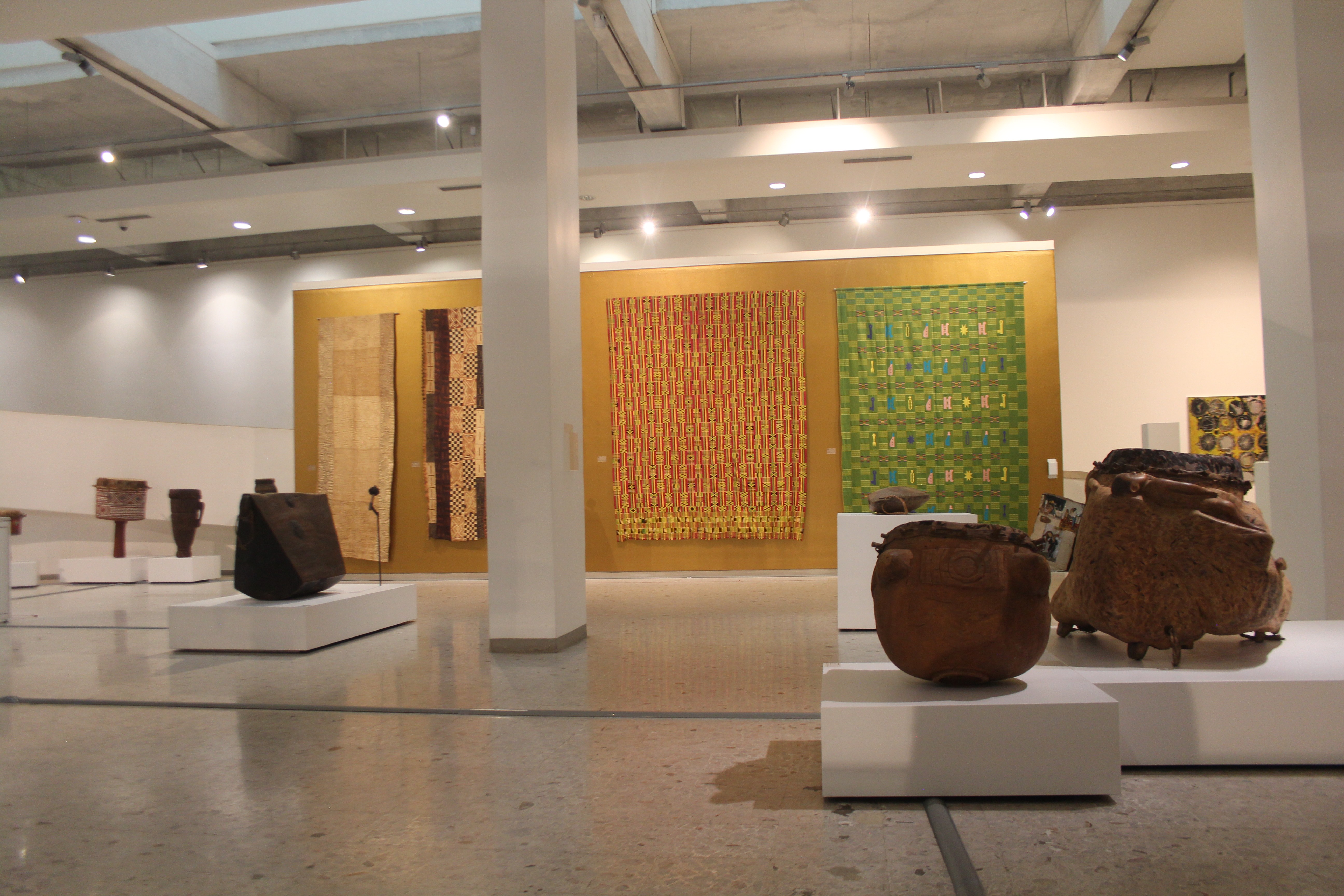
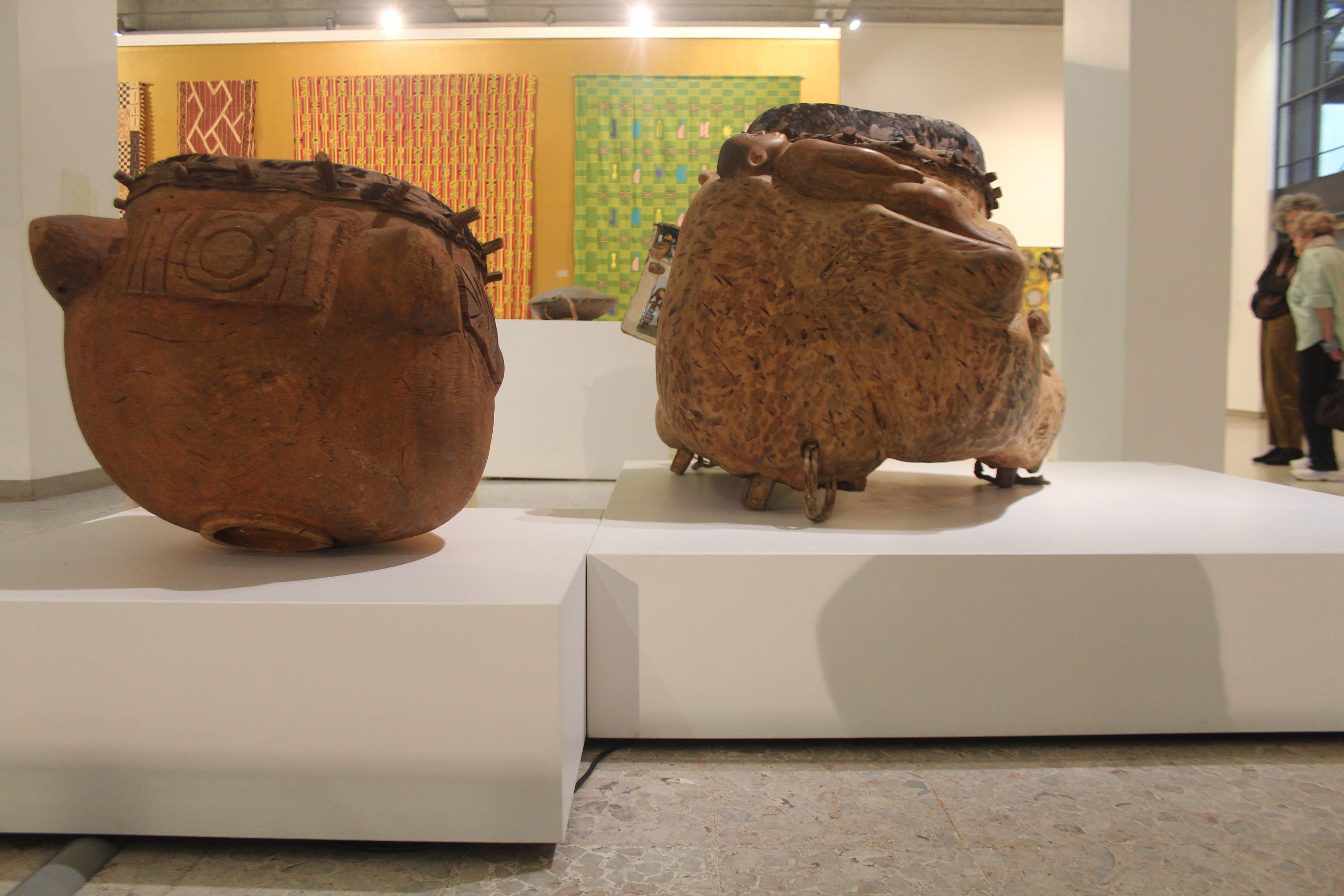
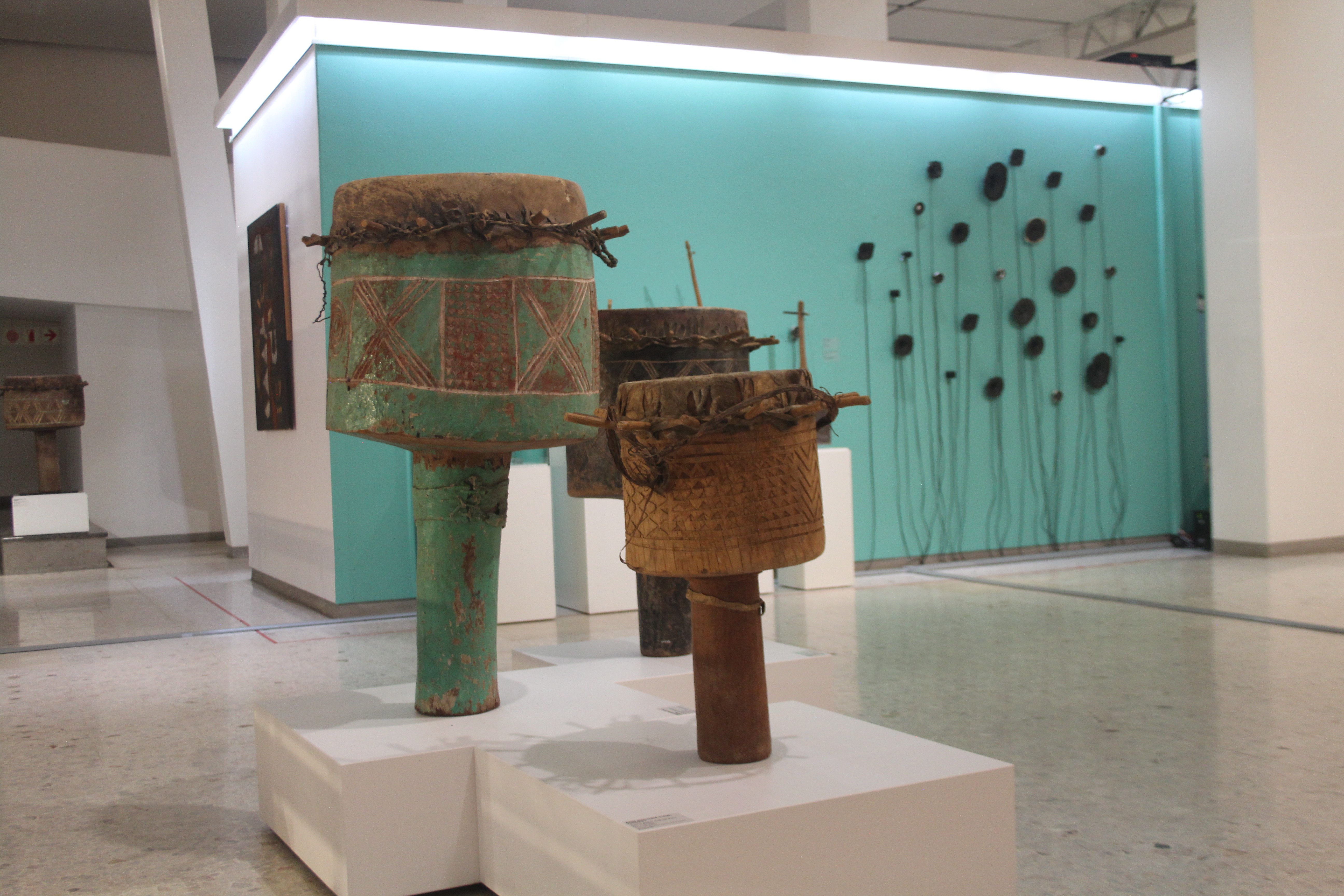
The installation included two interactive components as well as pre-set sound scenes that would play throughout the day. These components allowed participants to co-create with the artists, through movement in relation to the drums and creating vocal/bodily sound into a microphone (which was then distributed through the speaker network according to a rhythmic delay chosen by the system each time it detected a sound). In both cases the participants’ interventions disrupted the active pre-set scene. Due to the way the system was programmed, the more interaction there was, the more collage-like the presentation of the pre-set scenes would also become. Therefore, each day’s sound was unique, emphasising the ways artworks change as audiences respond to them.
The installation’s sounds were chosen to highlight the timbral diversity of the drum shapes and while there was a continuum from mimetic sounds to abstract sounds, the aim was not to evoke specifically the drums’ sounds when they were are part of social practices outside art, emphasising this work was an exploration of the possibilities for the instruments in their new life in an art museum collection: conditions, and by extension the sounds are not the same in the museum as in everyday practices.
For more information see also these websites that feature the work: