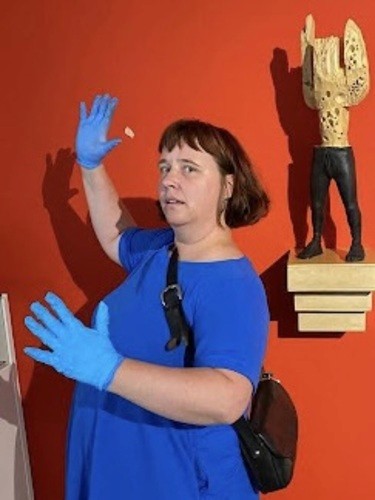
Prof. Alison Kearney
One of TRIP’s aims is to explore and develop means of sharing our knowledge and research work in progress that make sense for the ideas expressed. It is not uncommon that scholars develop politically and socially progressive research methodologies, but revert to positivistic, pseudo-scientific reporting methods when sharing their findings (see Anyon, 2002). The lack of sharing research findings in ways that support the ideas, and political positions engendered by the research paradigms employed is a critique frequently levelled at post-structuralist and post-humanist scholars.
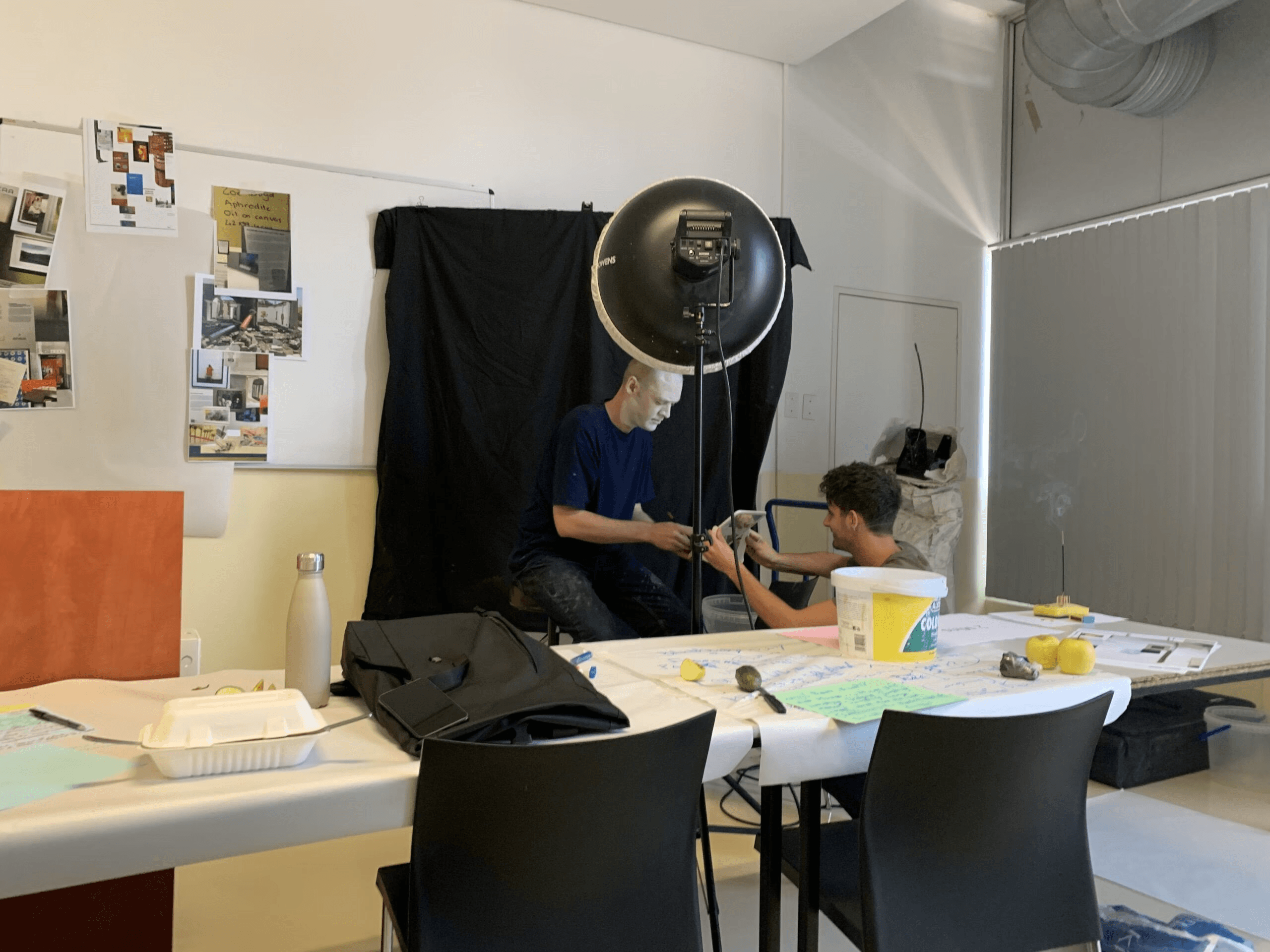
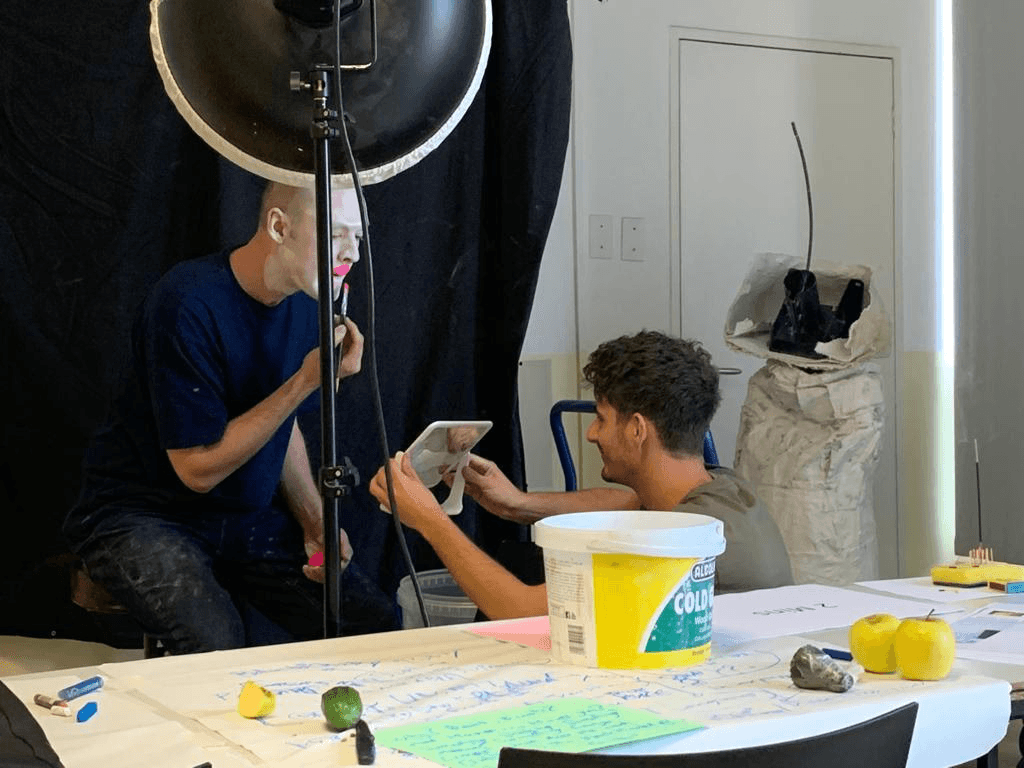
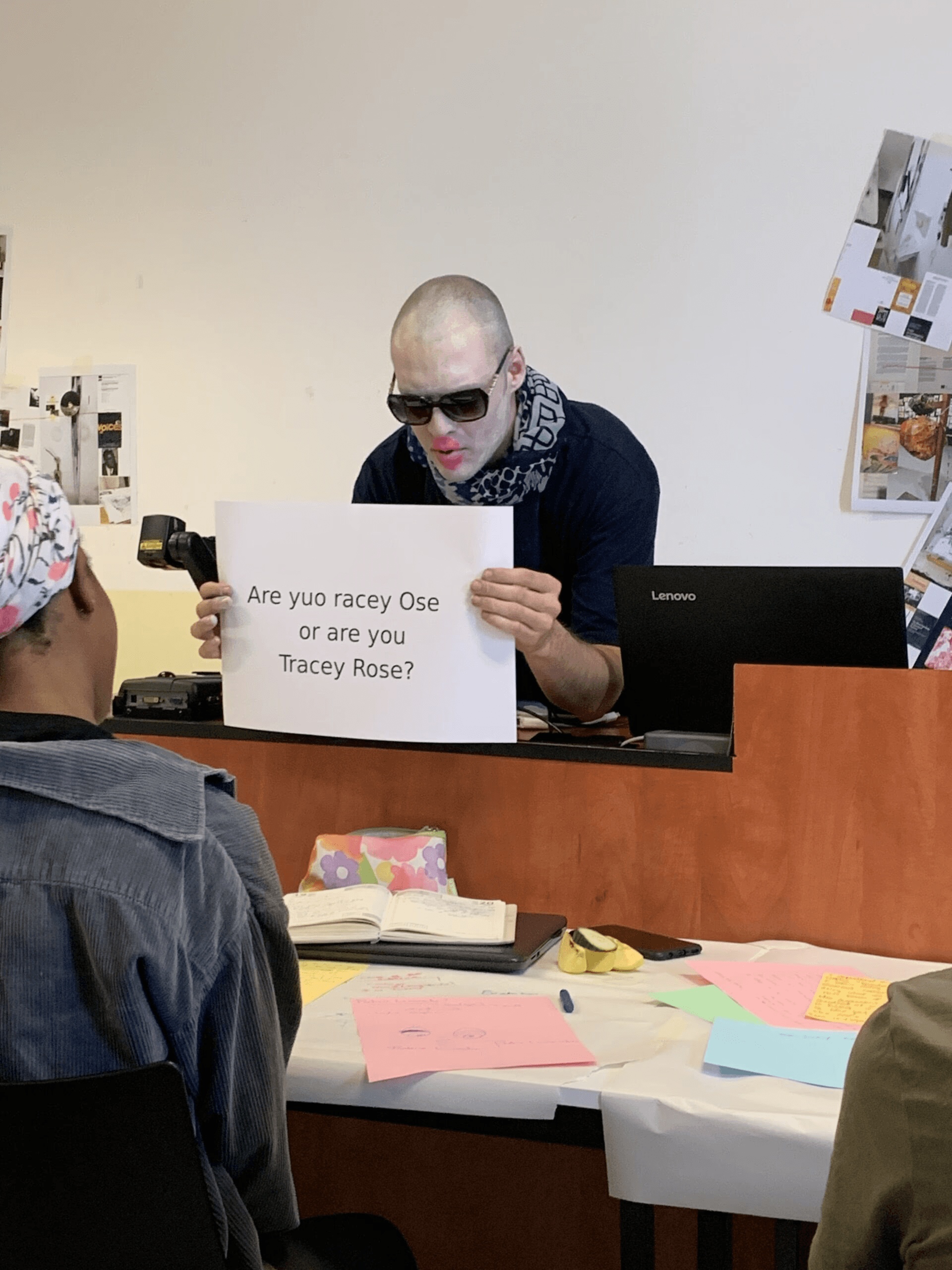
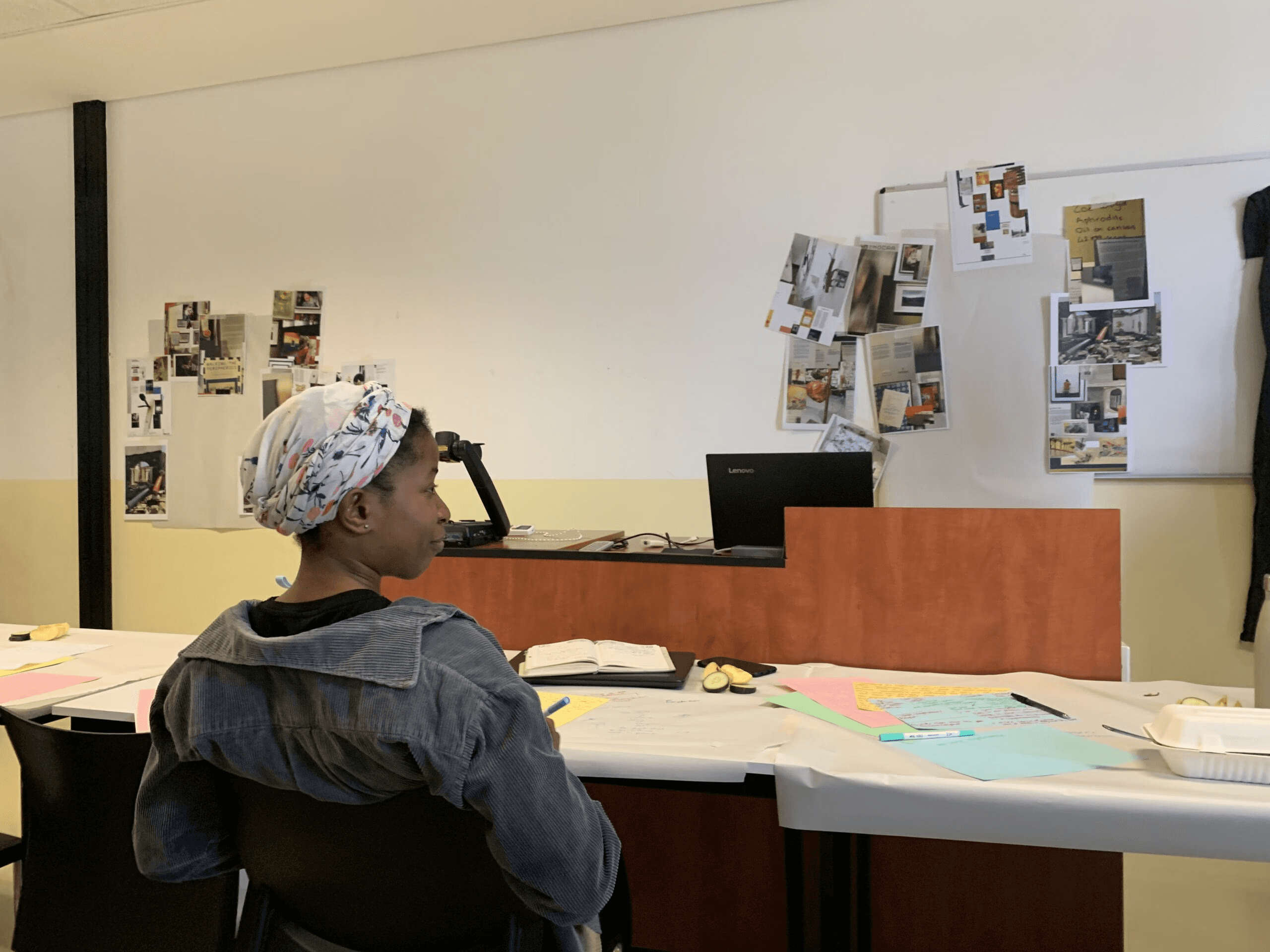
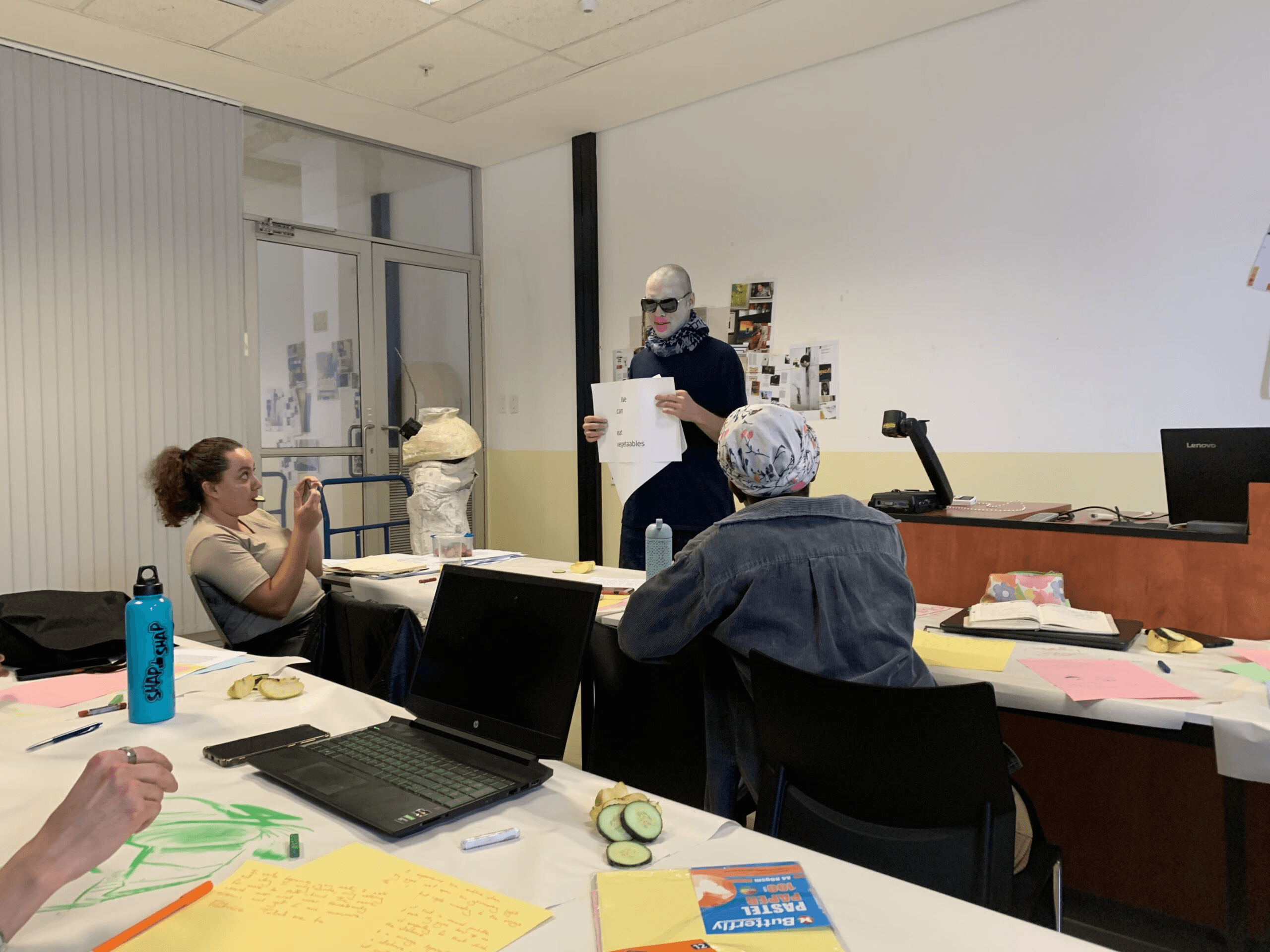
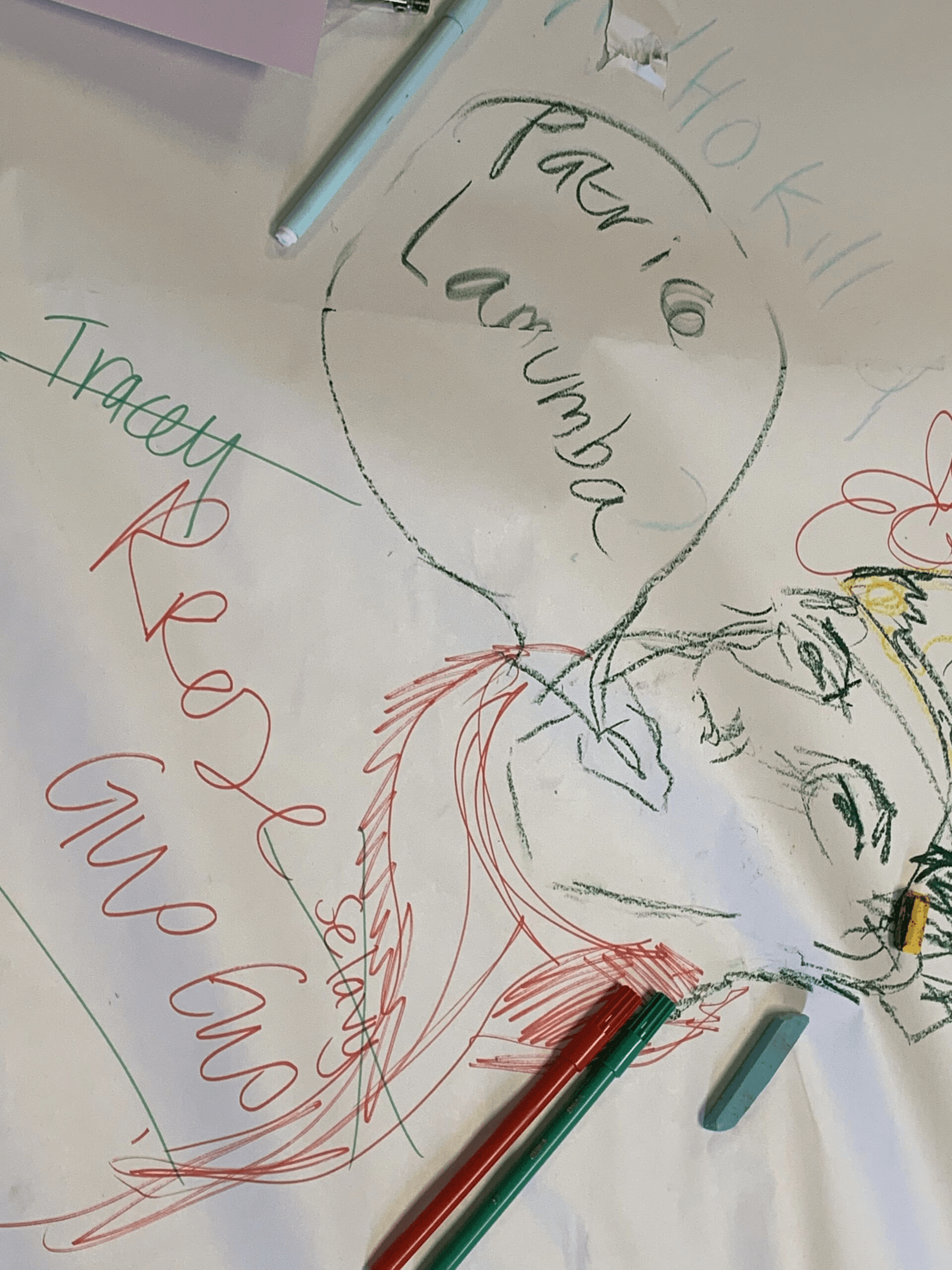
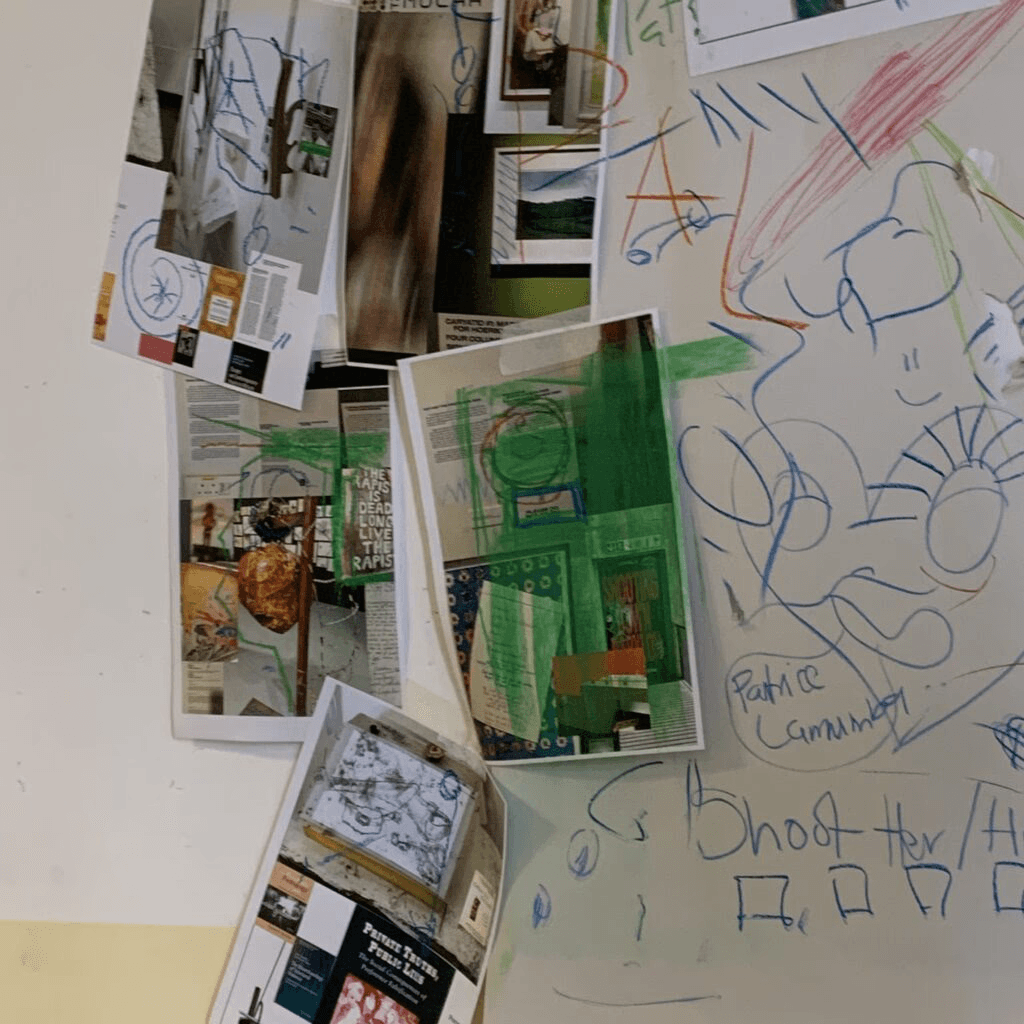
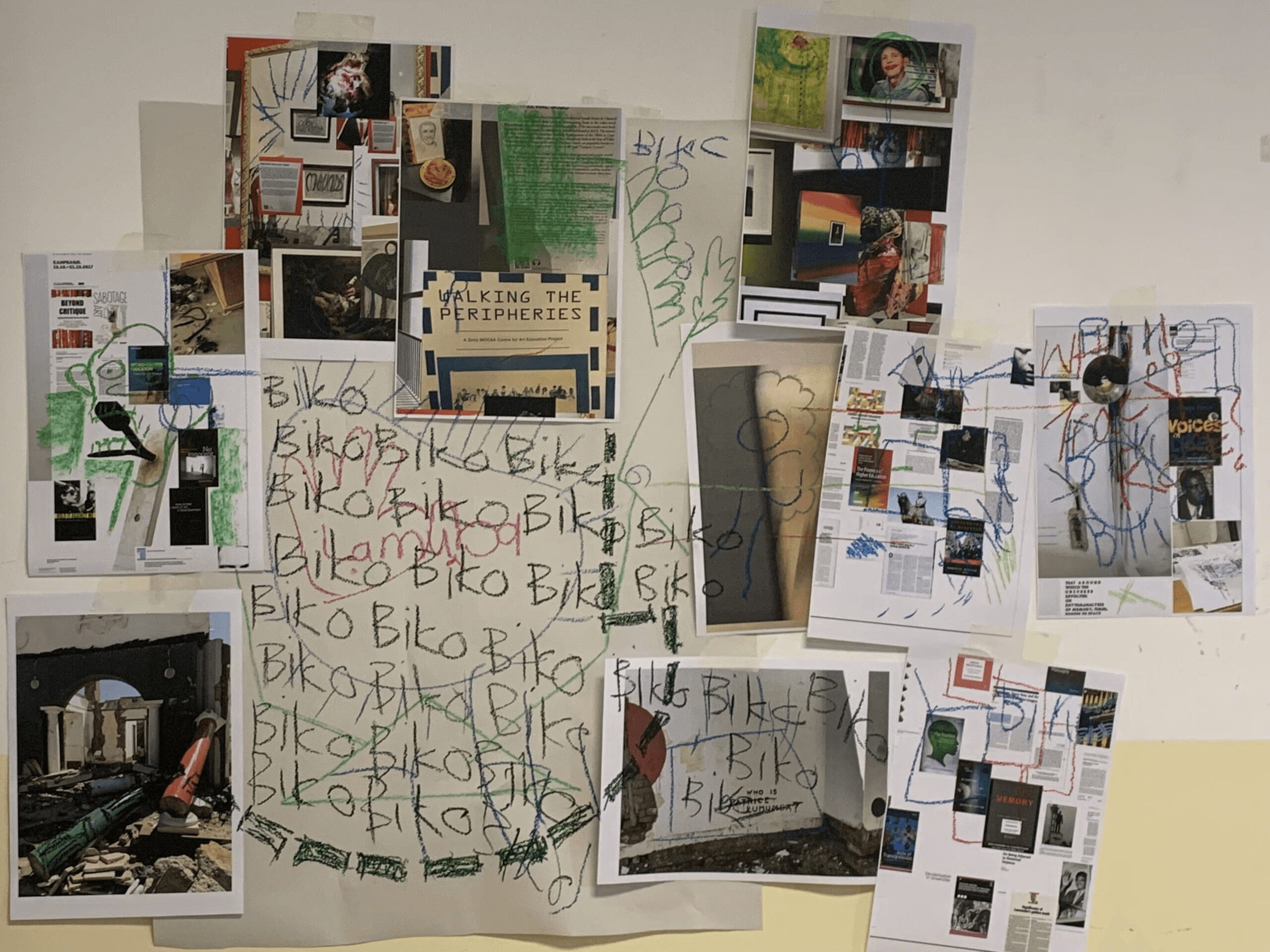
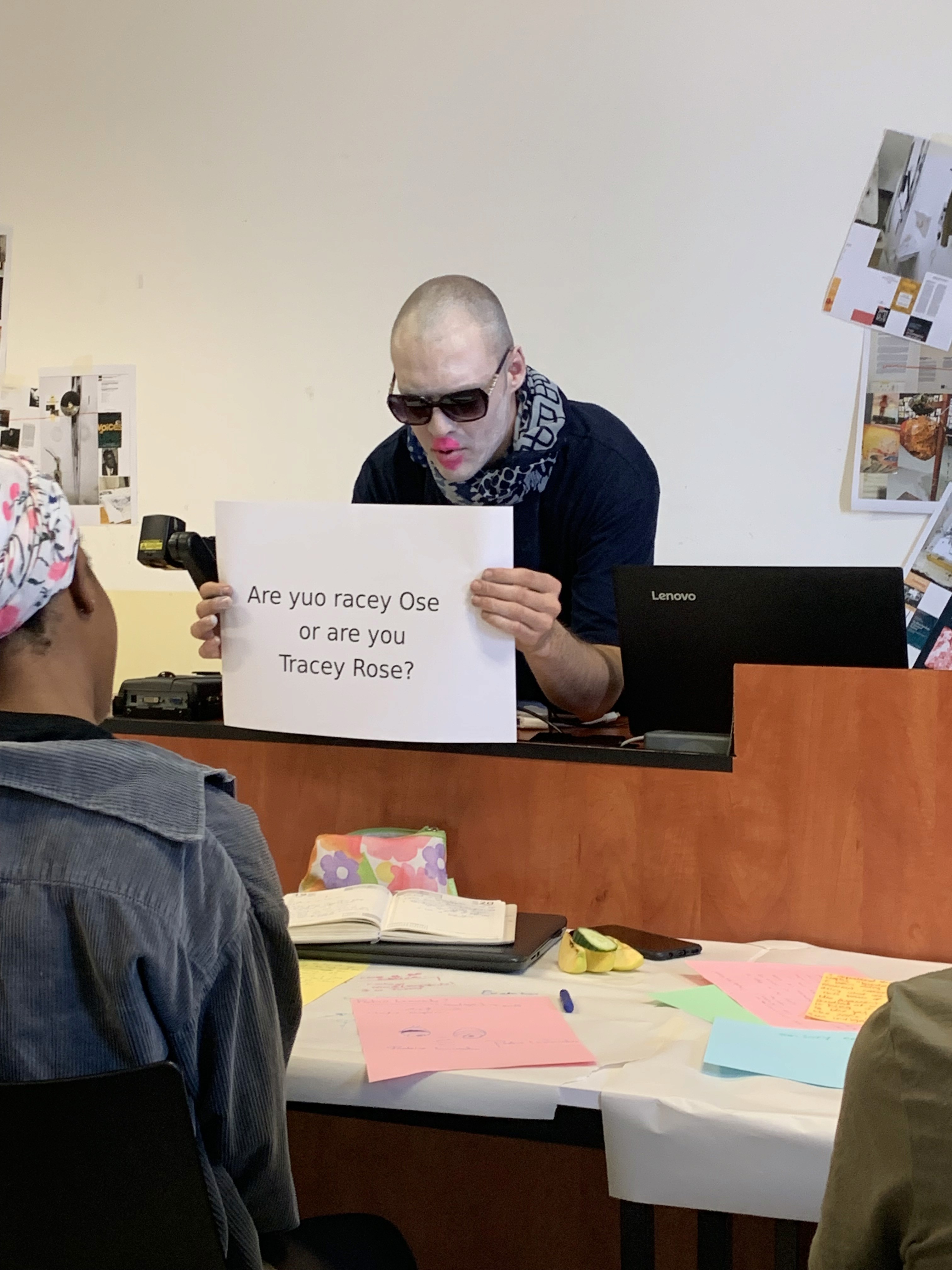
To address the problem of lack of congruence between the research methods employed, and the ways of reporting, and expressing research findings, Prof Alison Kearney challenged her post-graduate students to ‘enact’ the theories they were using during a mini-postgraduate symposium. One student, Gus, (referenced with permission), took up the challenge by doing a performance, in which they embodied a persona that spoke back to the artworks they were researching. Gus’ critical position, and interpretation of the researched material was personified in the characterization, movements and dialogue presented. The audience was invited to interact during the performance, and write, draw or speak to the theory. Not only was the researcher able to utilize their whole body, and multiple modes of communication, the audience was also challenged to share their immediate responses through multiple modalities as well. The remnants of the performance and interactions are a pastiche, tracing the intra-action of this presentation.
The Semiotics of Baking
When faced with teaching research methods and design theory to a reluctant group of post-graduate Graphic Design students, Prof Alison Kearney realized that she would have to develop a pedagogy that would ‘entice students to theory’, while at the same time preparing them to theorize their own design practices within visual culture theory. When engaged in making, the students were highly skilled, interested, innovative, and very creative, however they expressed aversion towards “theory”, which they mostly found tedious, difficult, and arcane. They were not readers, and mostly were not interested in ‘academic’ writing, feeling alienated and excluded from academic practices. Kearney developed and employed arts-based, applied theory teaching strategies to change the students’ attitude towards theory, by demonstrating that the students could understand the world and their design work through different ‘theoretical lenses’. Underpinning the course was a philosophy of learning as situated practice, in which participants were constituted as a community of practice. Included in the methodologies component of the course were specific outings to a bowling alley, kitchens where chefs learnt how to cook, and a gaming arcade.
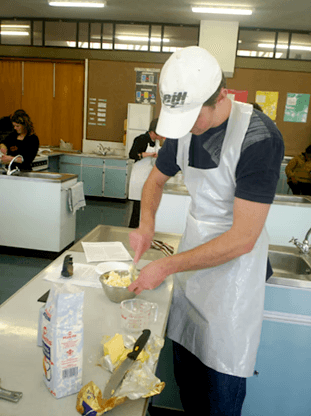
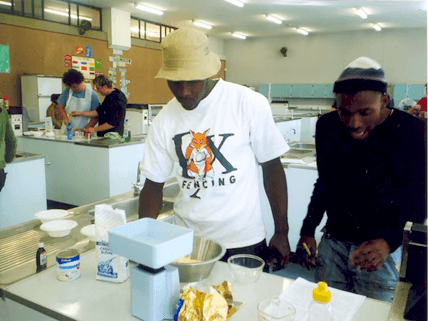
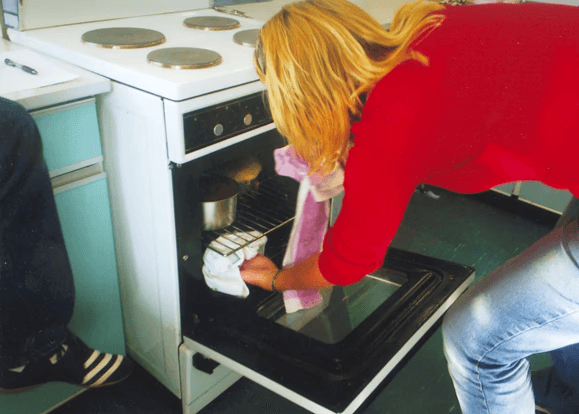
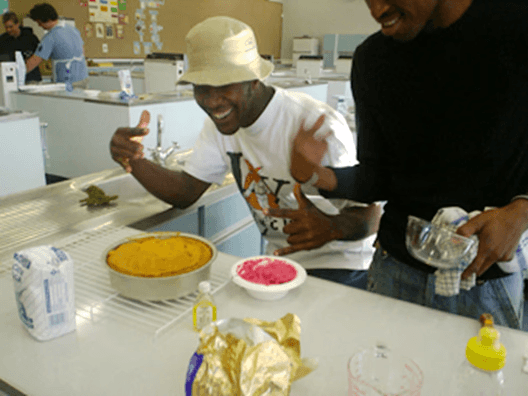
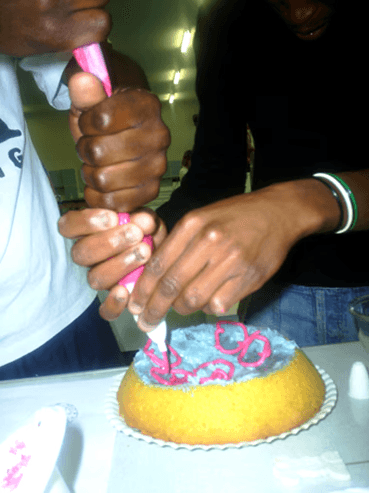
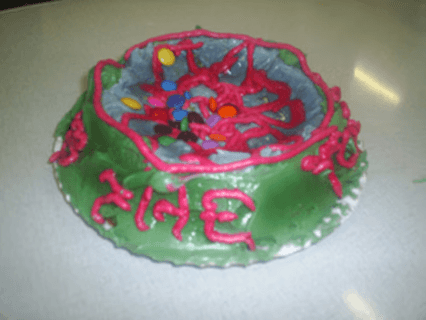
Each of these outings was constructed as an empirical incursion, to apply methods of analysis, or test theories that we had discussed in lectures. For example, a series of lectures that focused on understanding Barthes’ (1967) theory of semiology culminated in an outing to kitchens used to train chefs how to cook. Students were grouped into pairs and had to bake a cake using a recipe that Kearney provided. All students had the same recipe, the same ingredients and the same equipment. This scenario provided a good opportunity to talk about the differences between the rules and conventions of language and the speech act (langue and parole in Barthes’ terms) (Barthes, 1967). Students took photos that were later used to deepen their understanding of theory in the following lesson. Kearney modelled practice through constructing herself as a fellow researcher on these outings. The research outings interrupted the expected flow of learning, and challenged students to new capabilities, as students were participating in research, knowledge creation and questioning taken for granted assumptions.