Prof. Alison Kearney
Embodying Writing
As artist-scholar, writing is integral to all aspects of my work. I journal daily, consistently write scholarly texts, as well as employ writing intensive pedagogies to teach my students ways of writing arts histories. I am interested in the relationship between modes of expression and the ideas that we share. My big dream for my own writing, is to express ideas through the ways I write: so that the content of the text resembles or speaks to the way the text is written: anarchic writing about anarchism. Such an approach to writing means foregrounding the materiality of writing. I proposed such a material, and embodied approach to writing in my 2017 article “Art History is Dead; Long Live Art History.” This kind of writing begs the question of how authors present their texts as well as asks the audience to read differently. Since 2017 I have been exploring ways to achieve my proposed method. I make use of free writing and other creative writing techniques when teaching art theory. Students and I do short writing actives together, at the beginning and end of every lesson. The course structure enables us to for a community of practice, in which we reflect on our learning, and become comfortable using writing as a thinking tool.
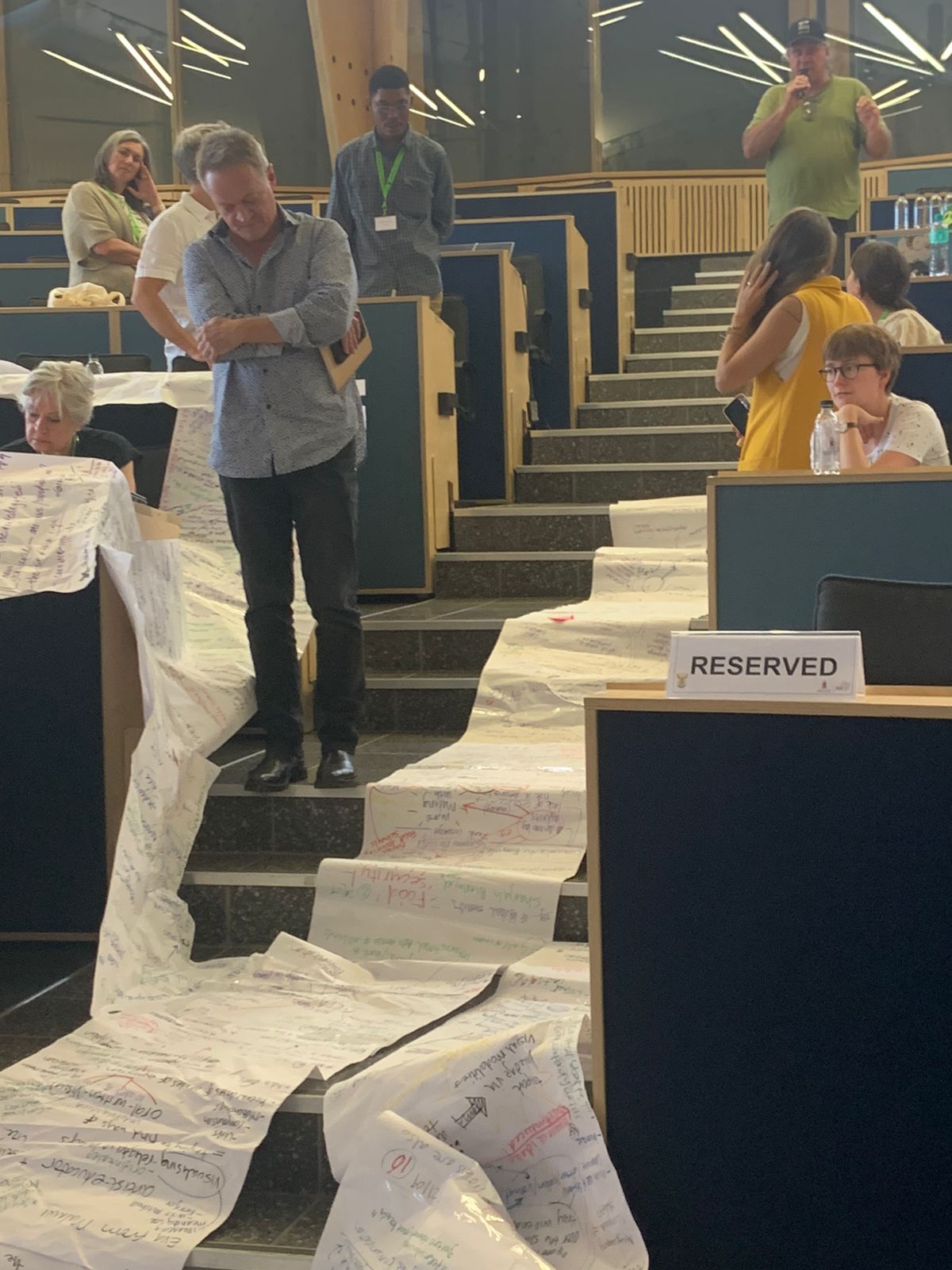
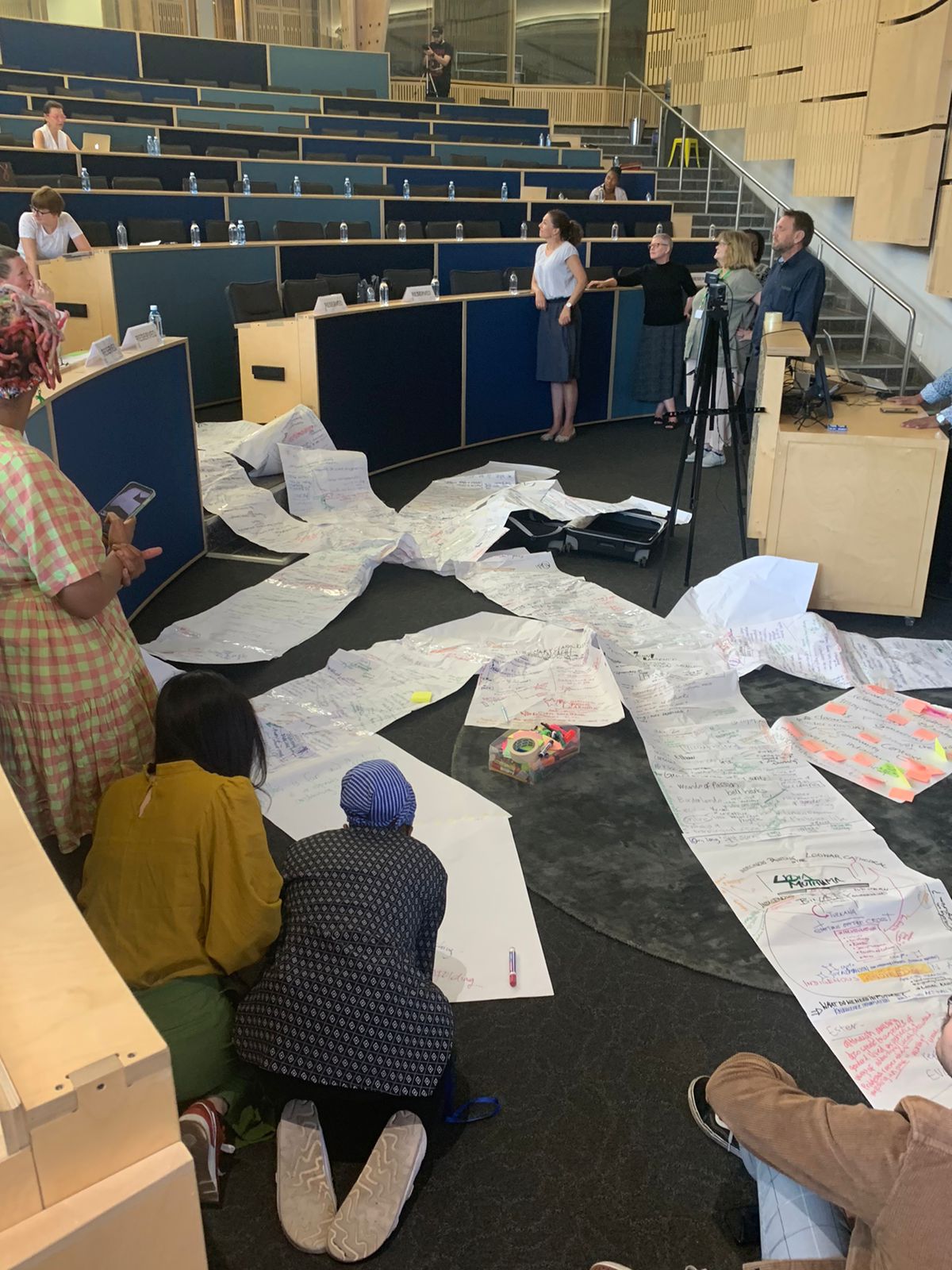
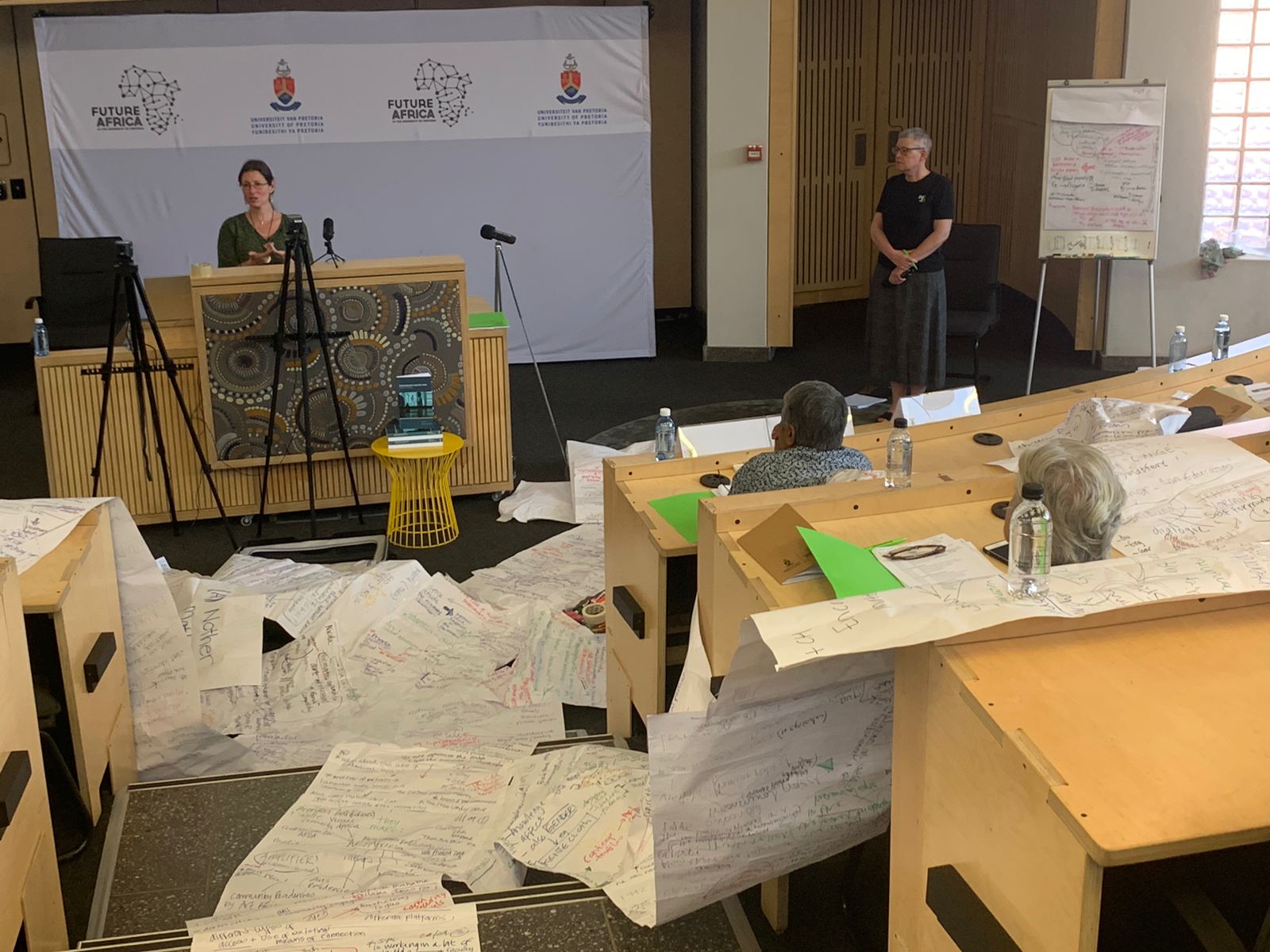
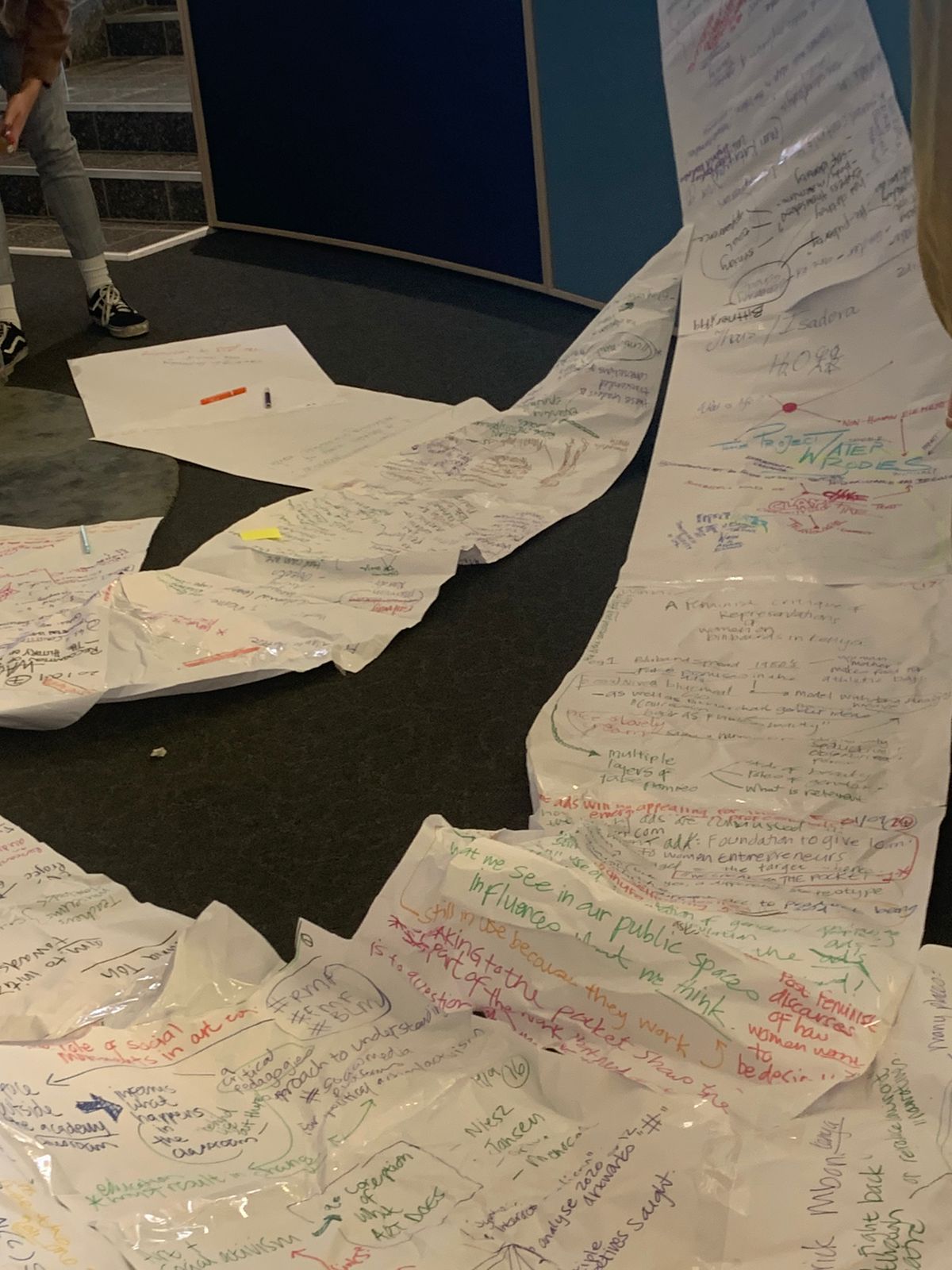
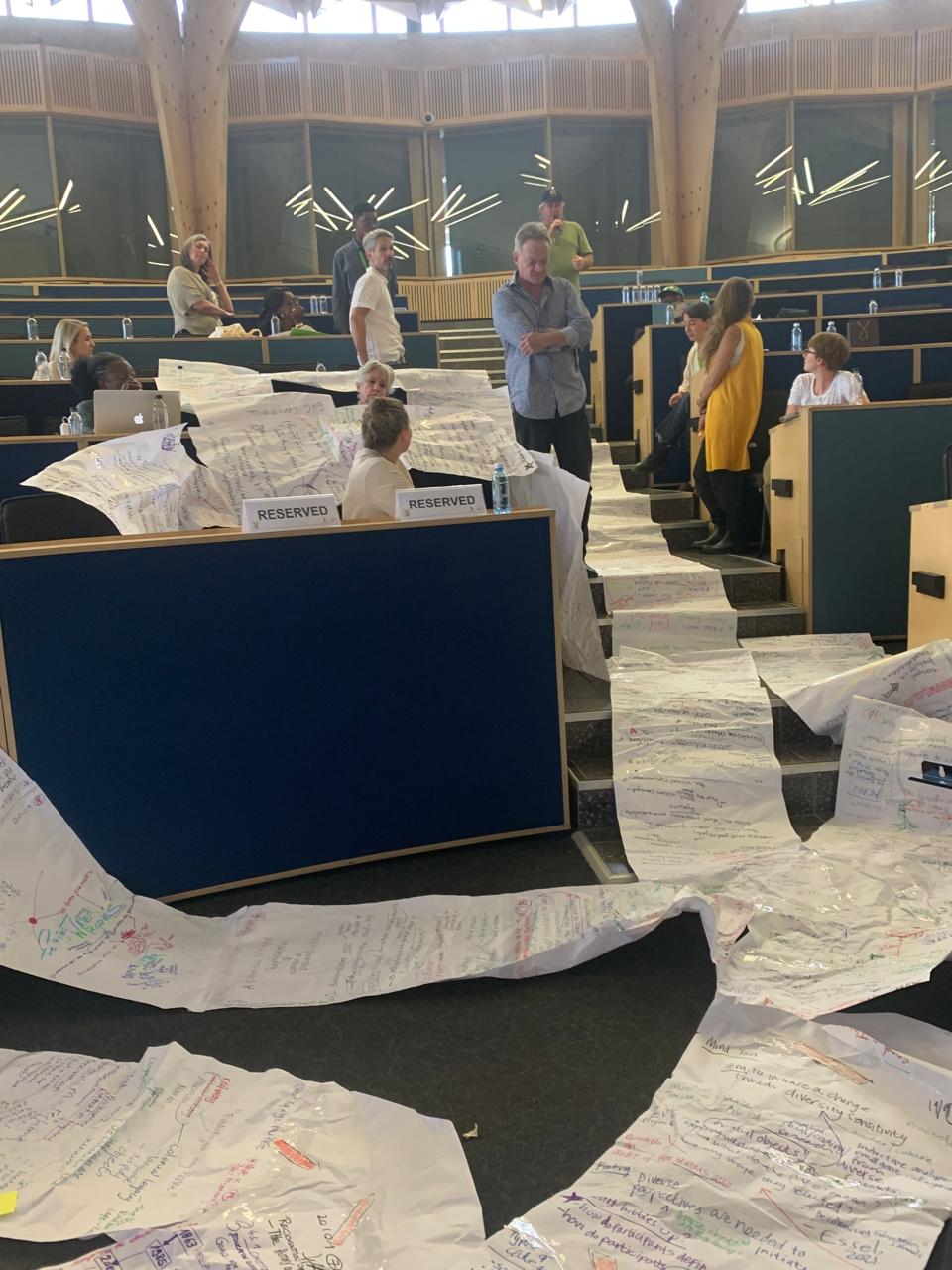
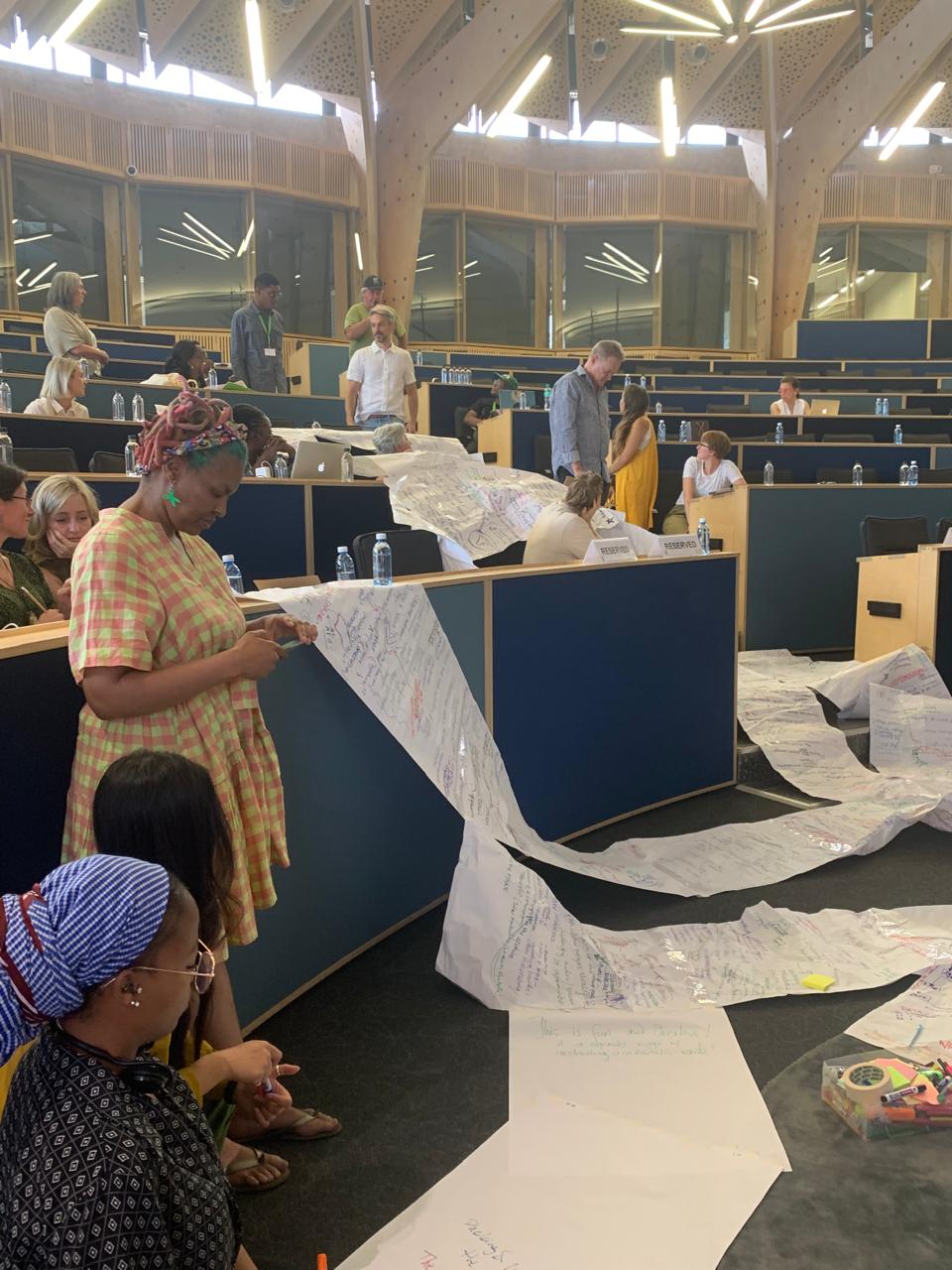
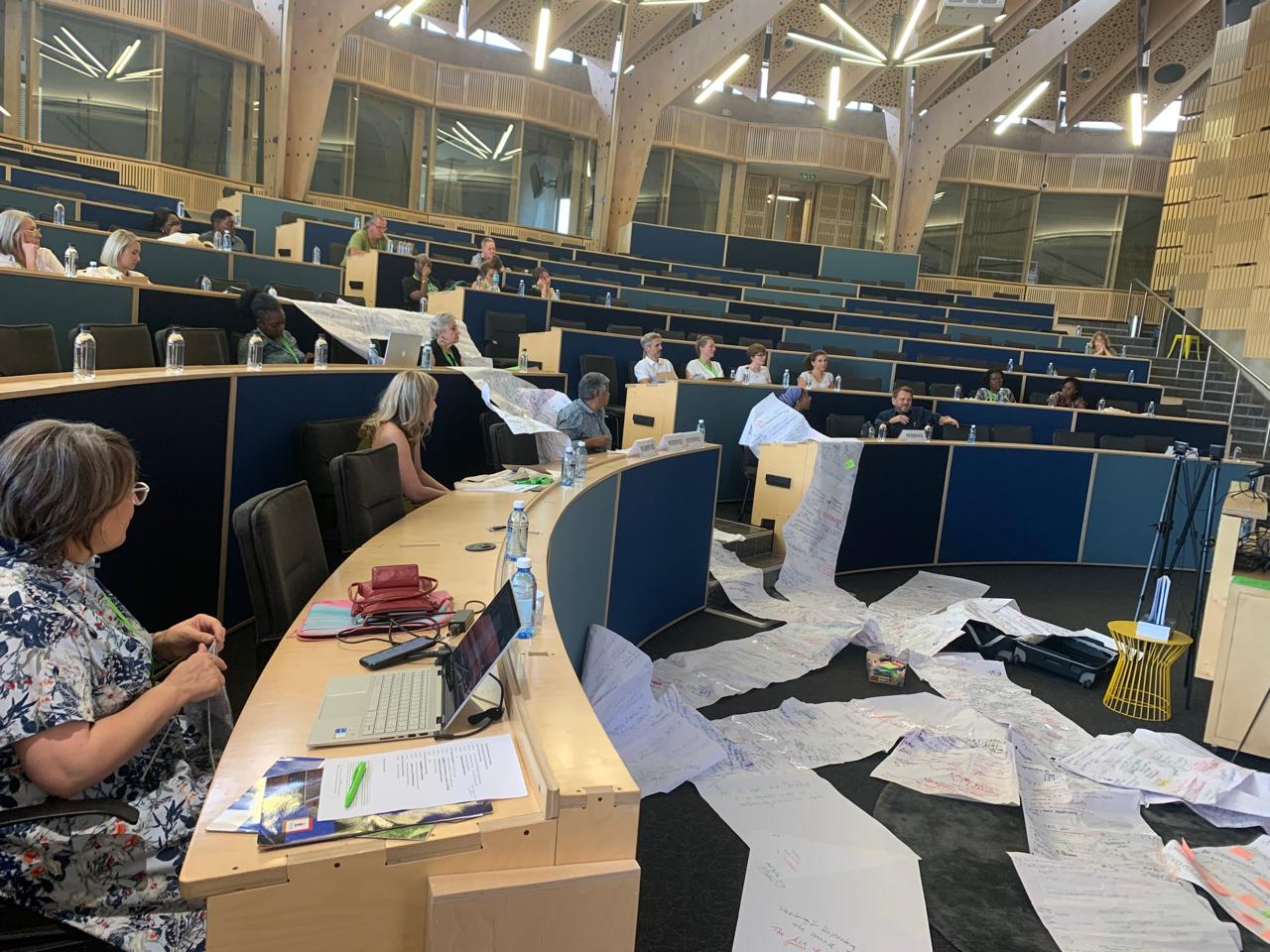
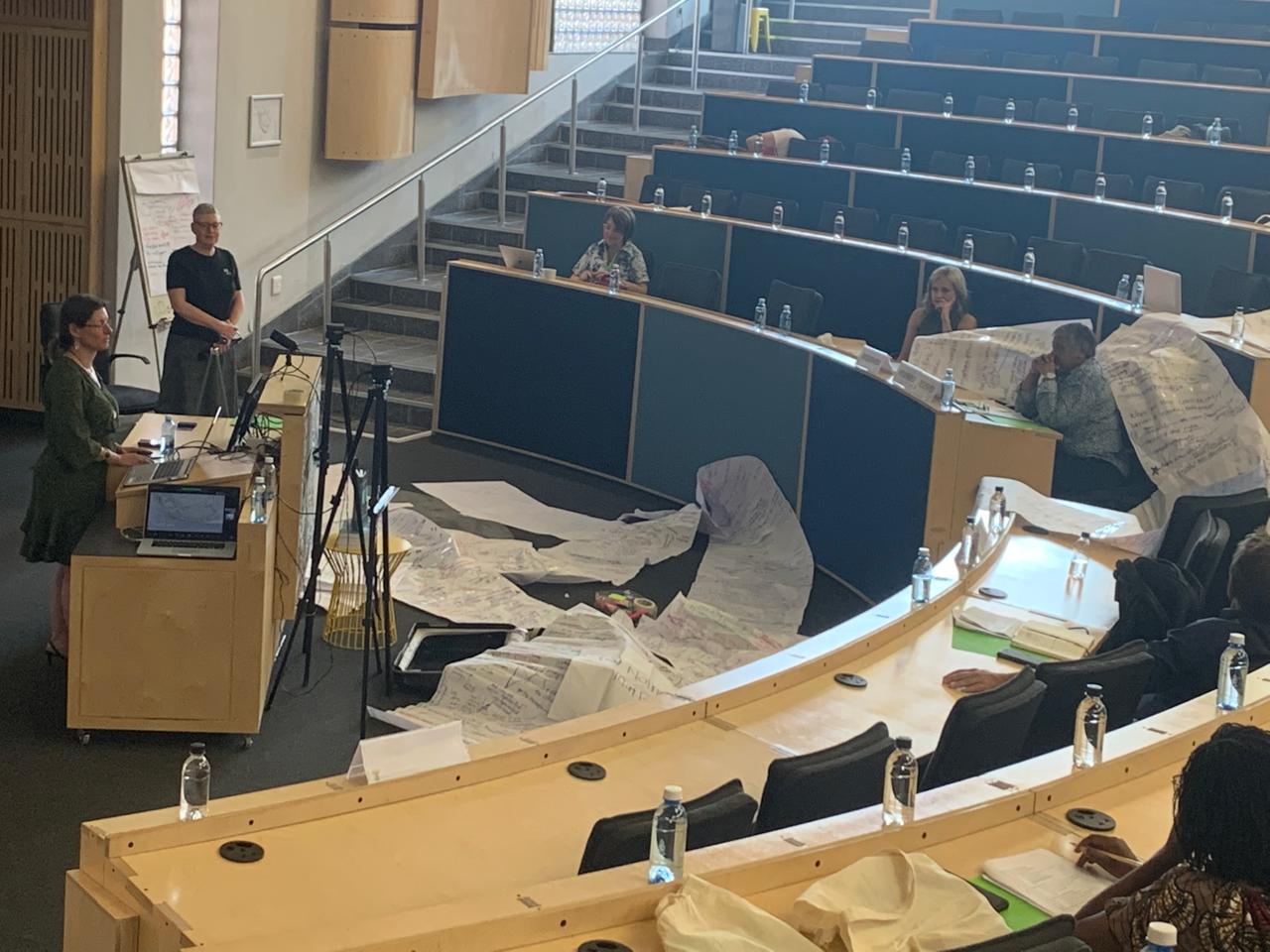
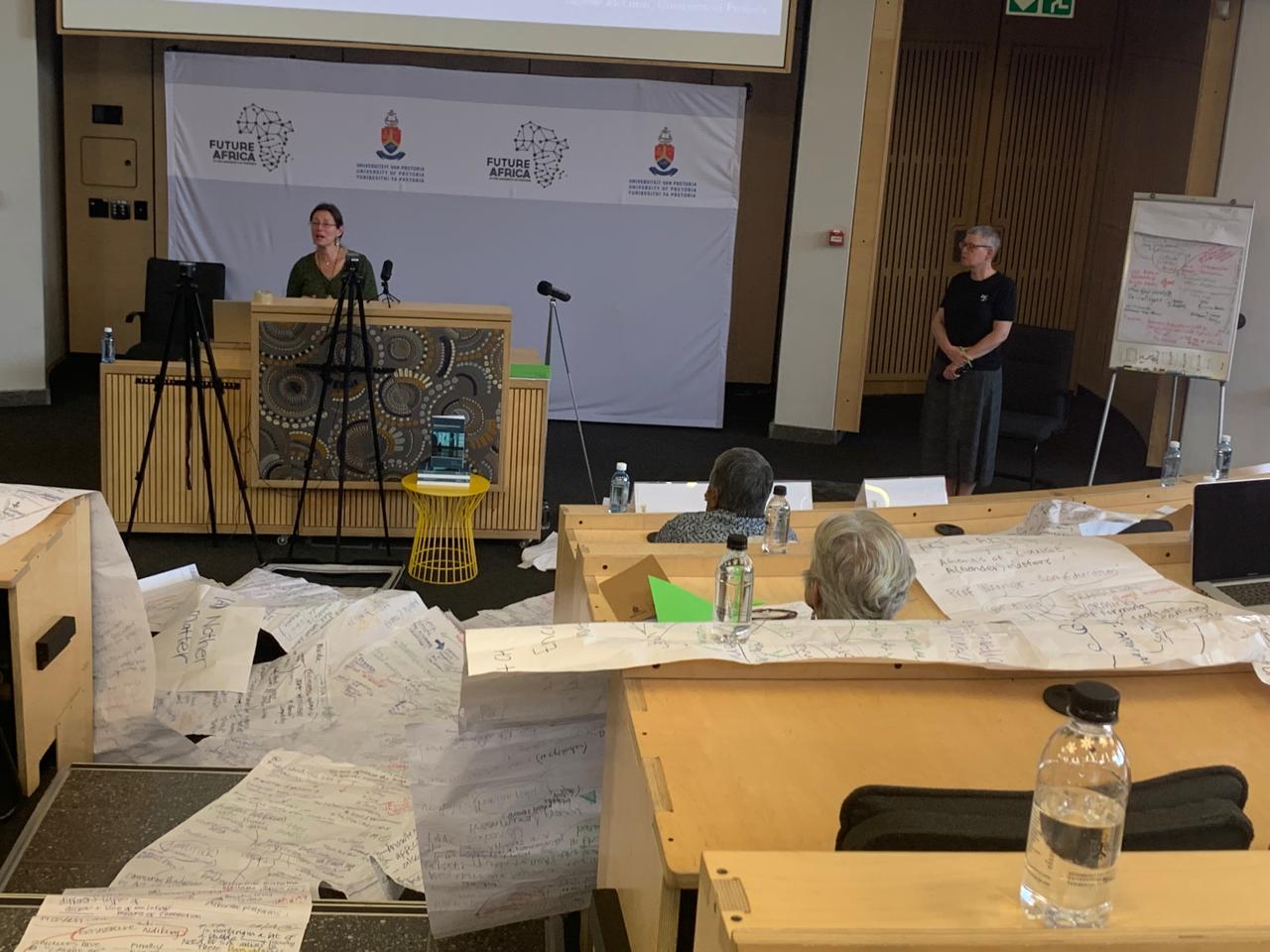
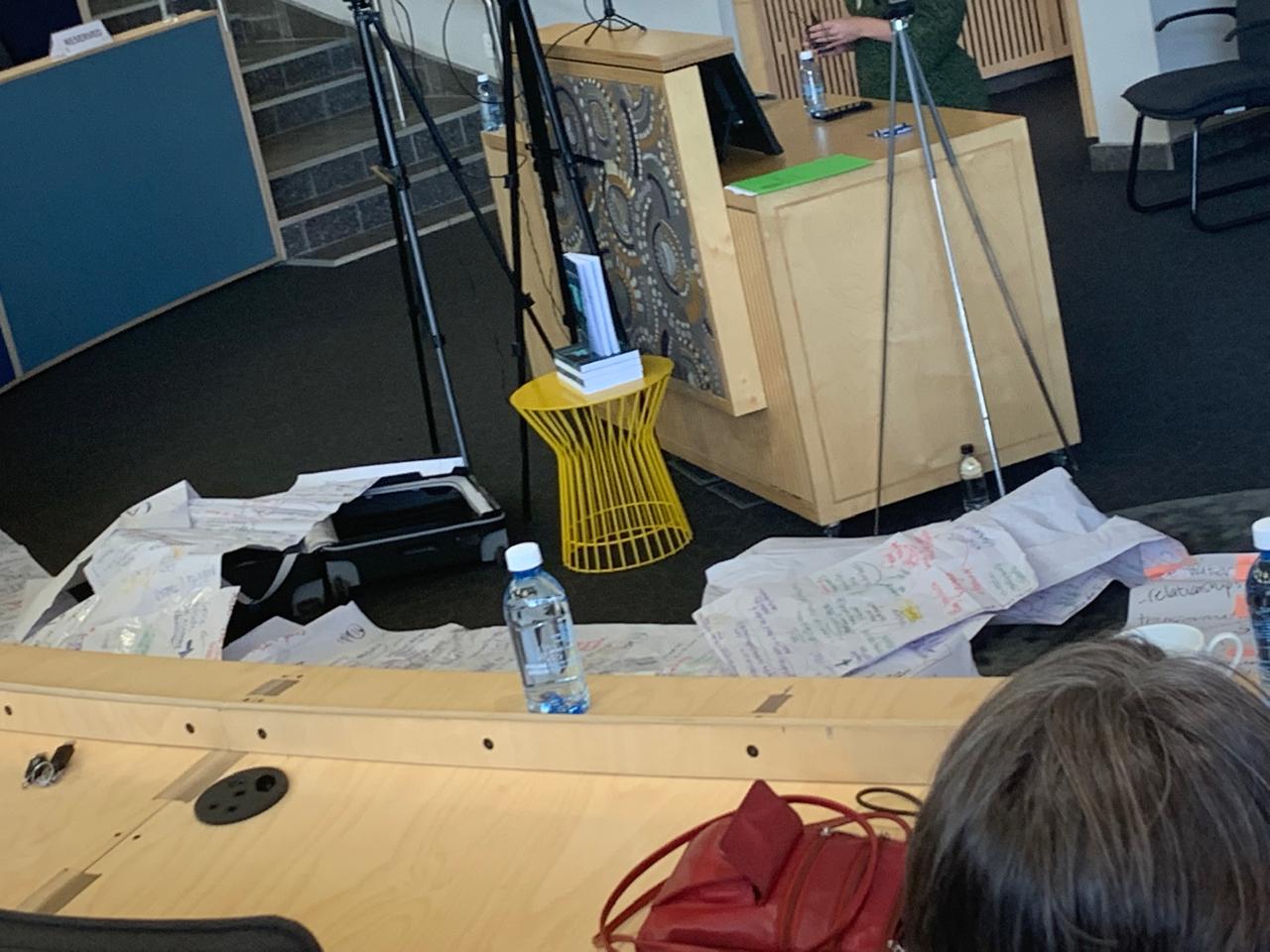
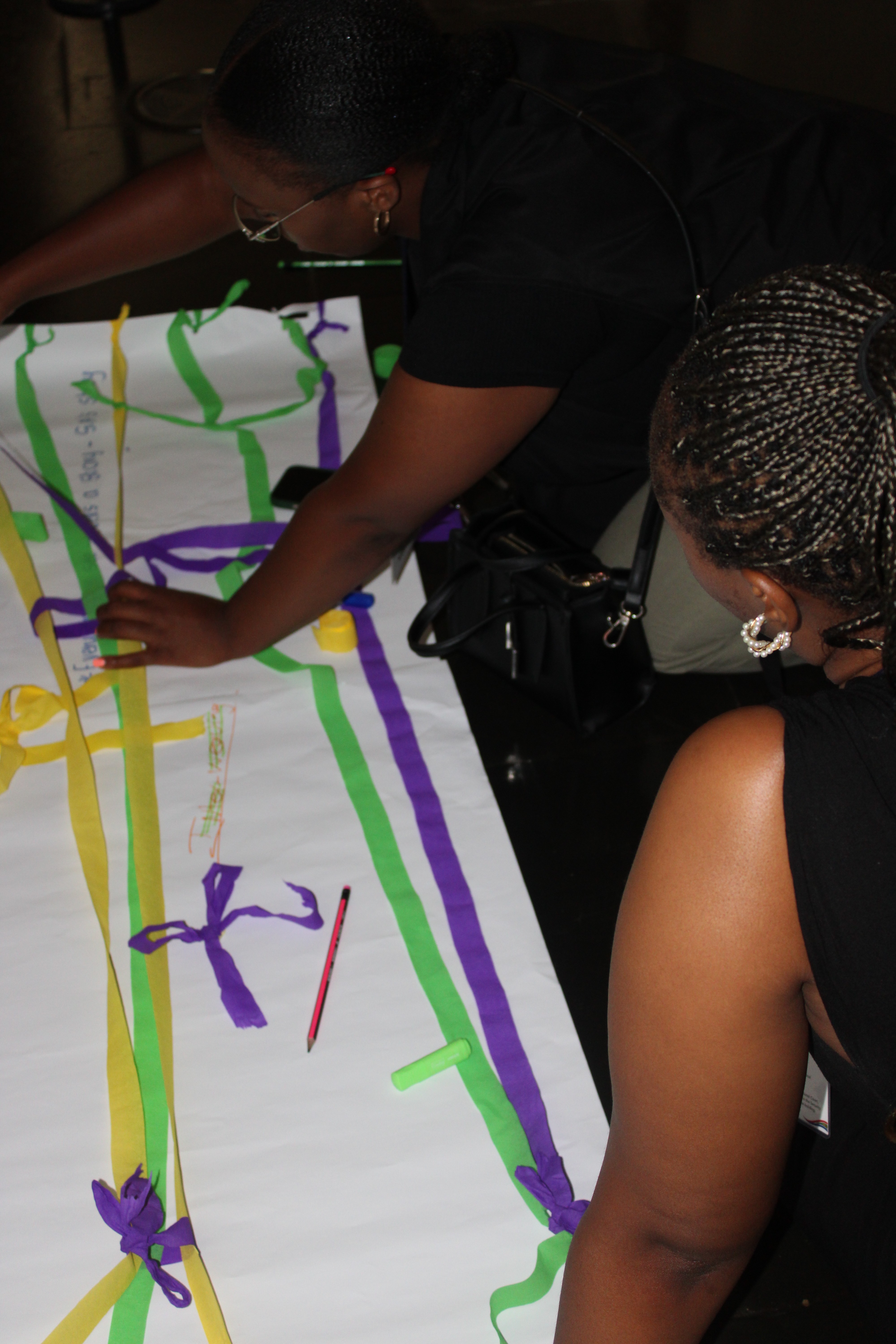
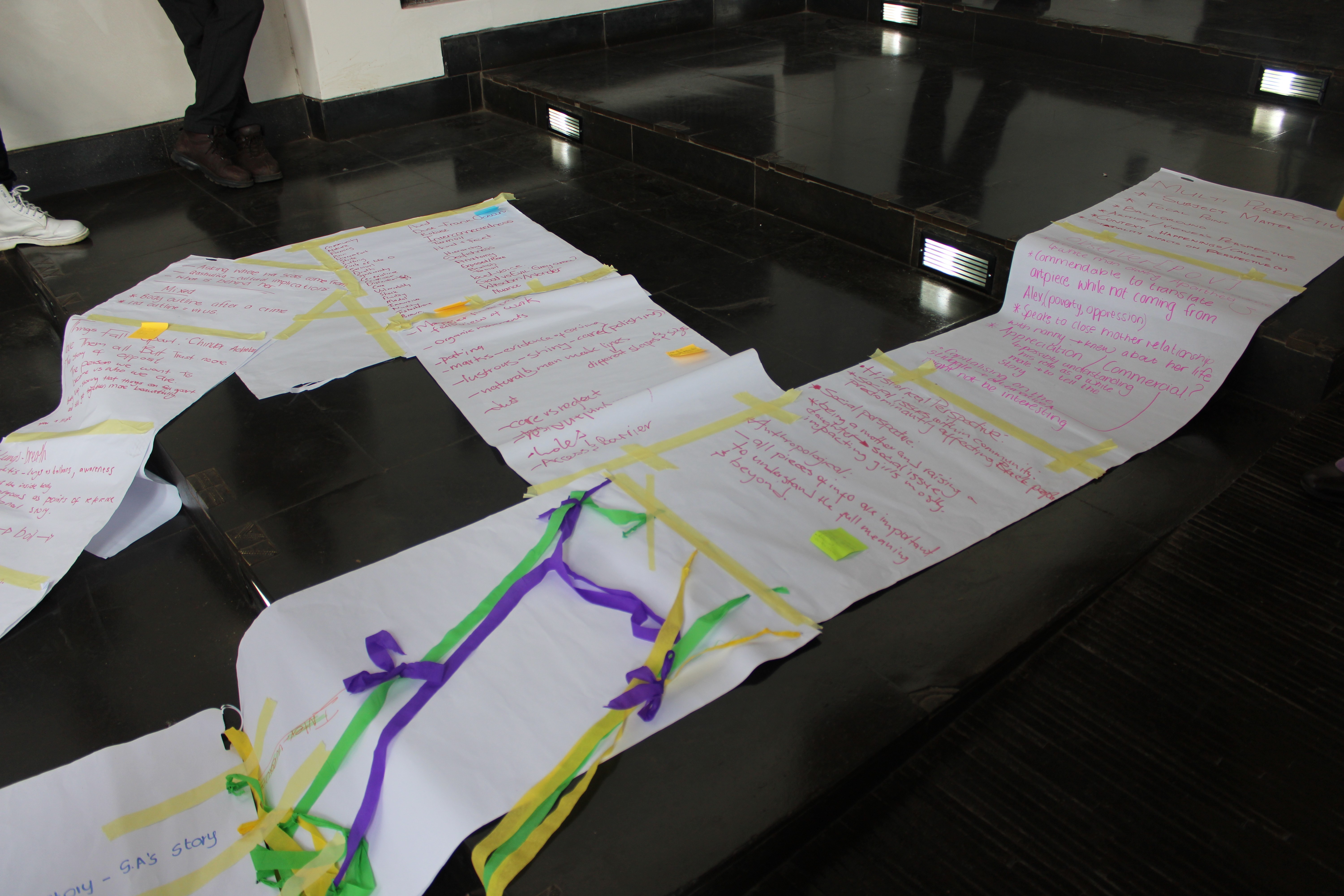
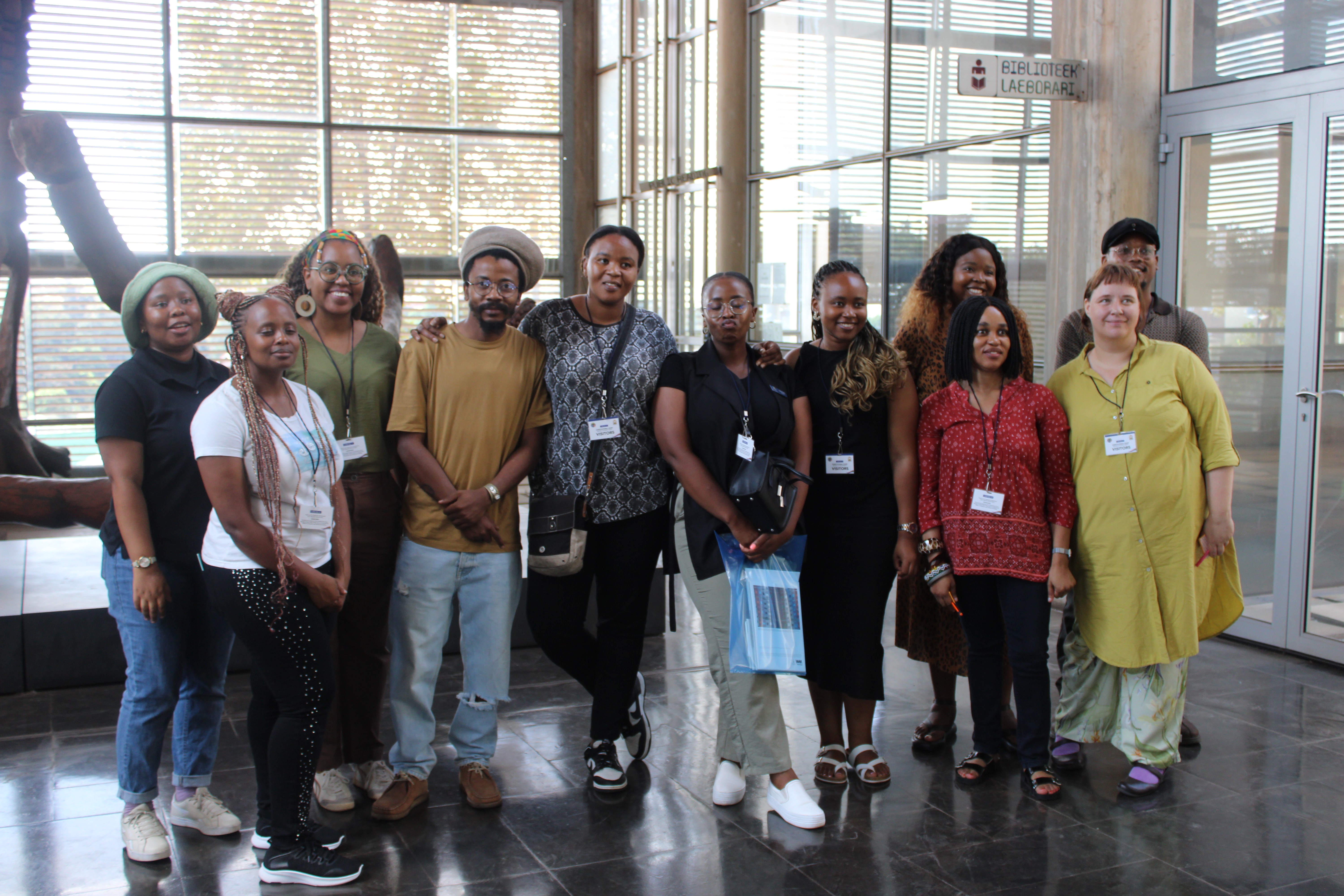
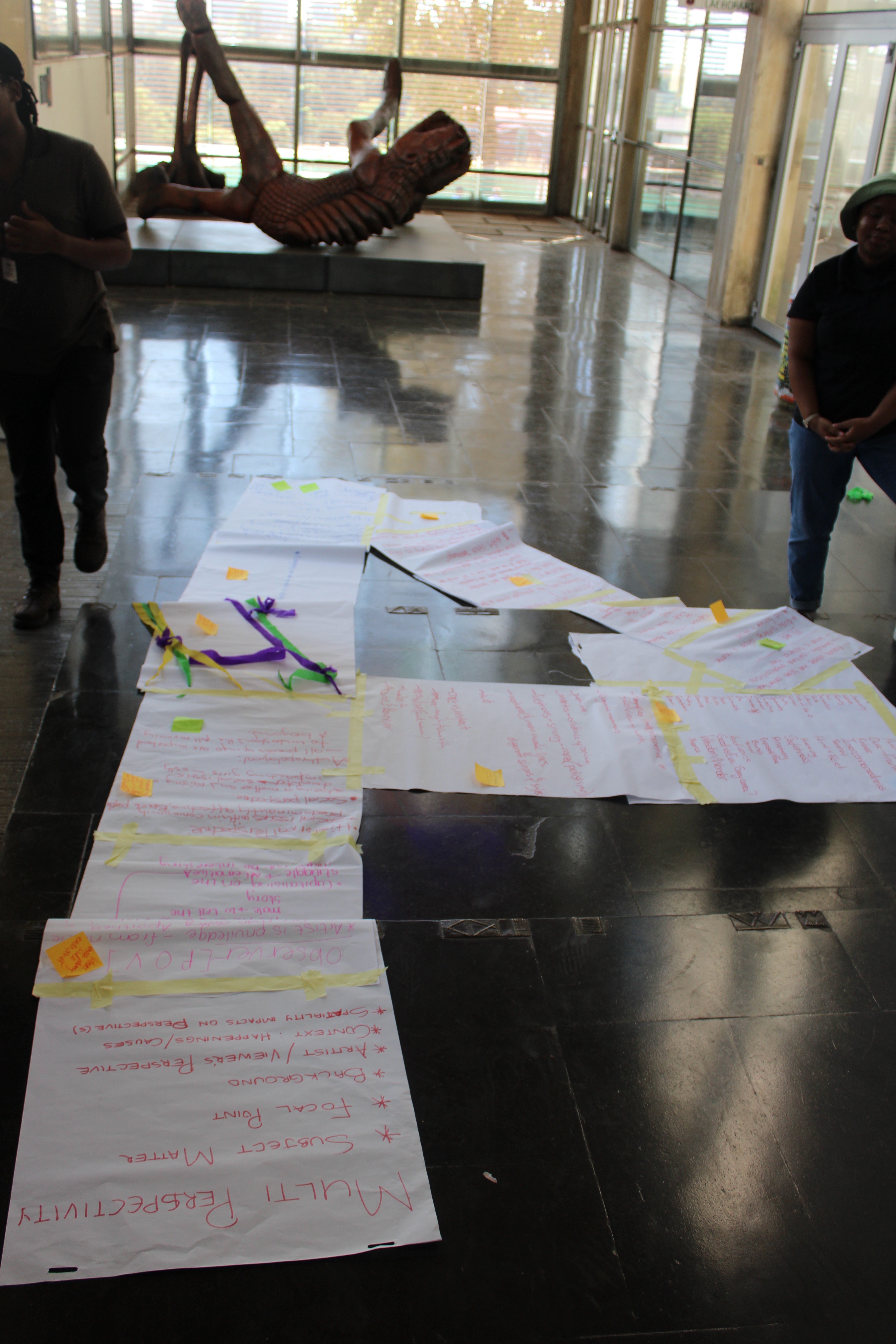
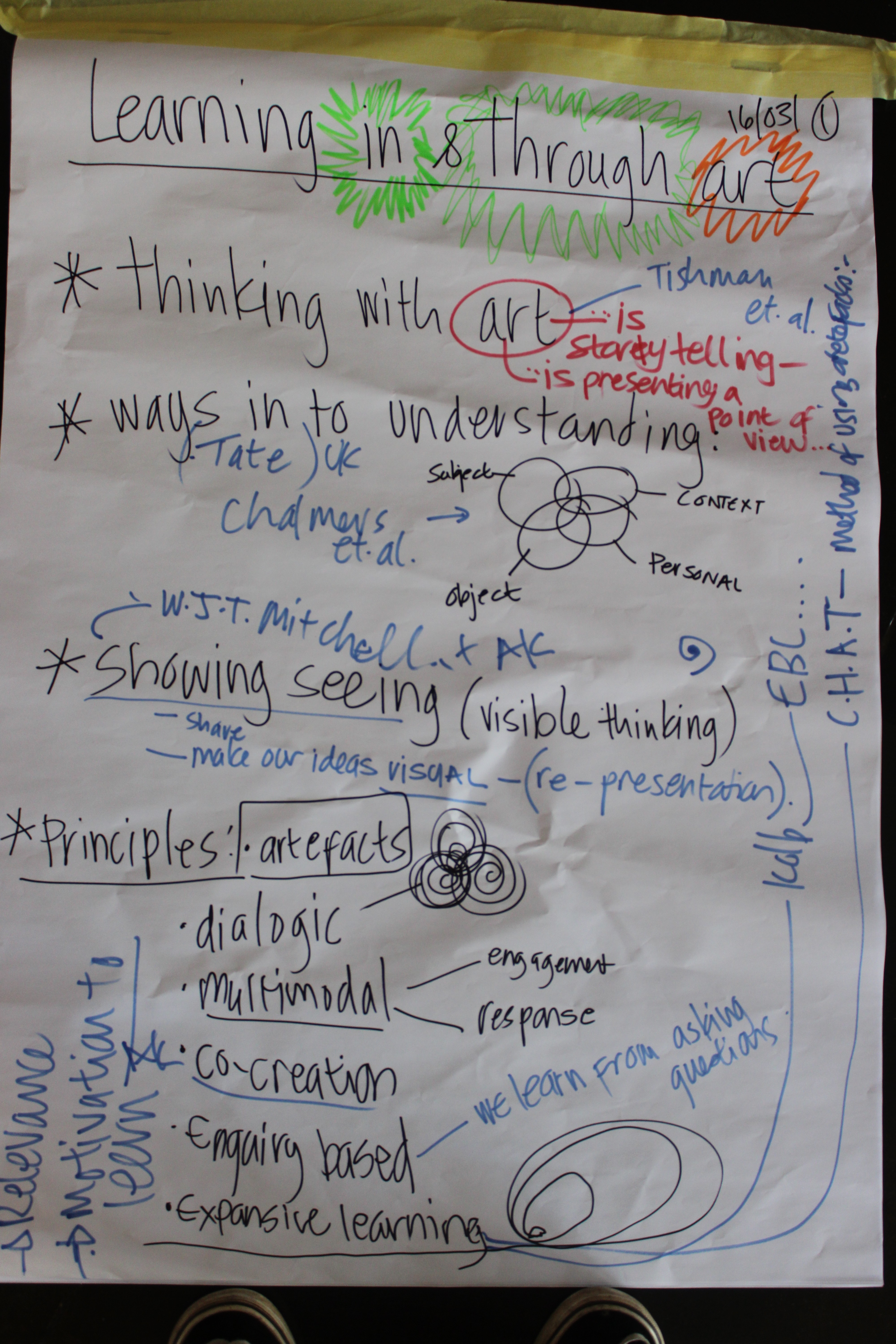
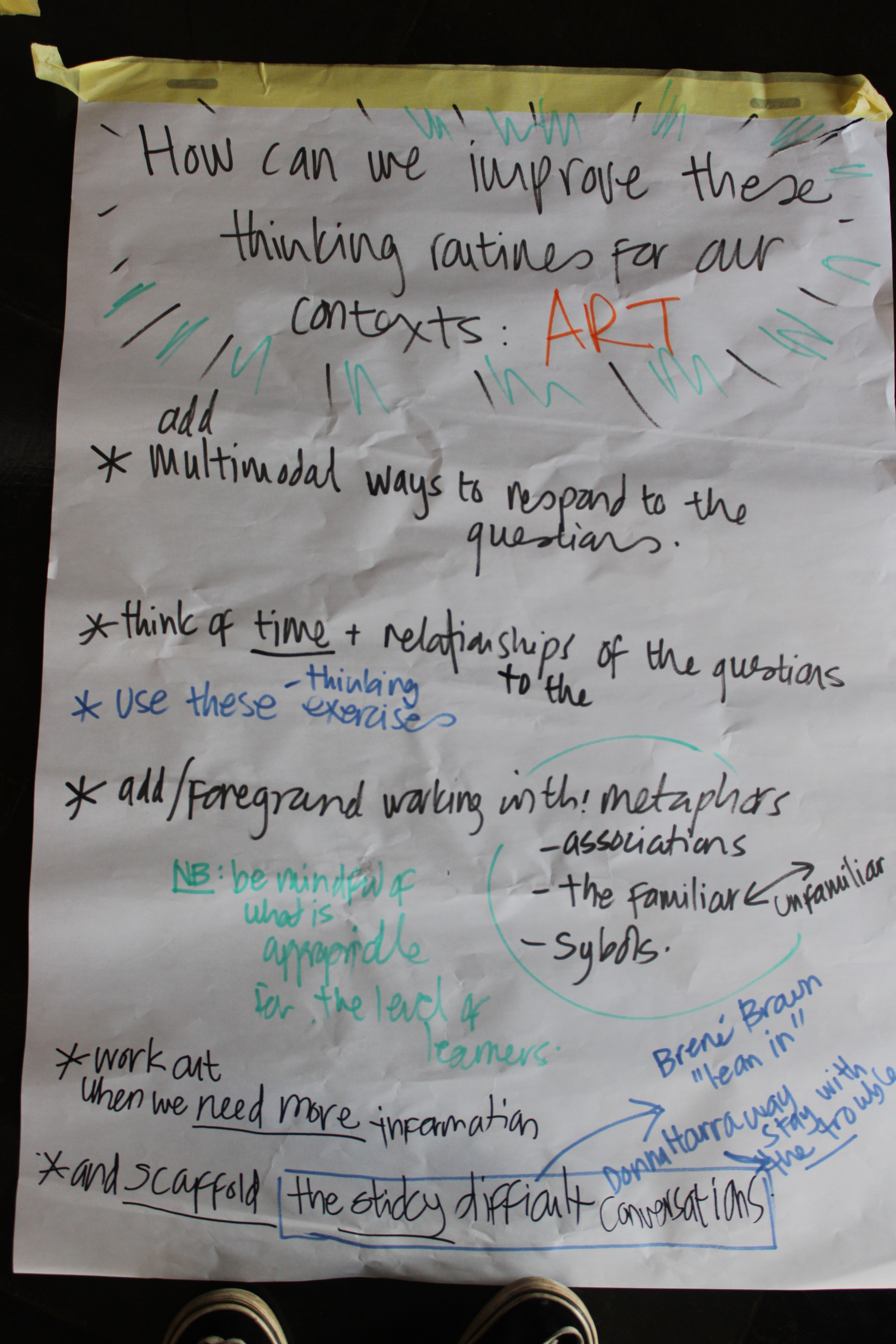
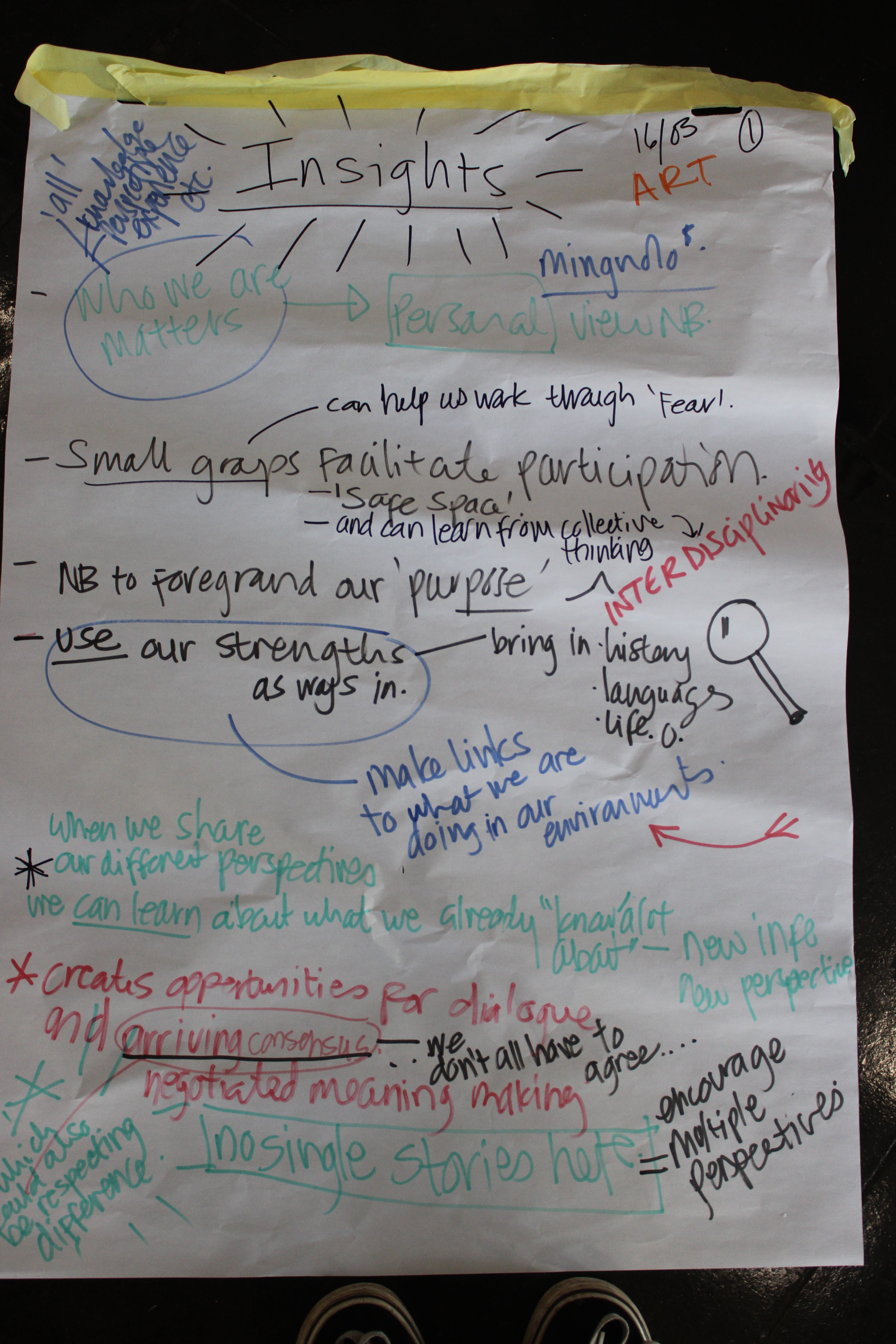
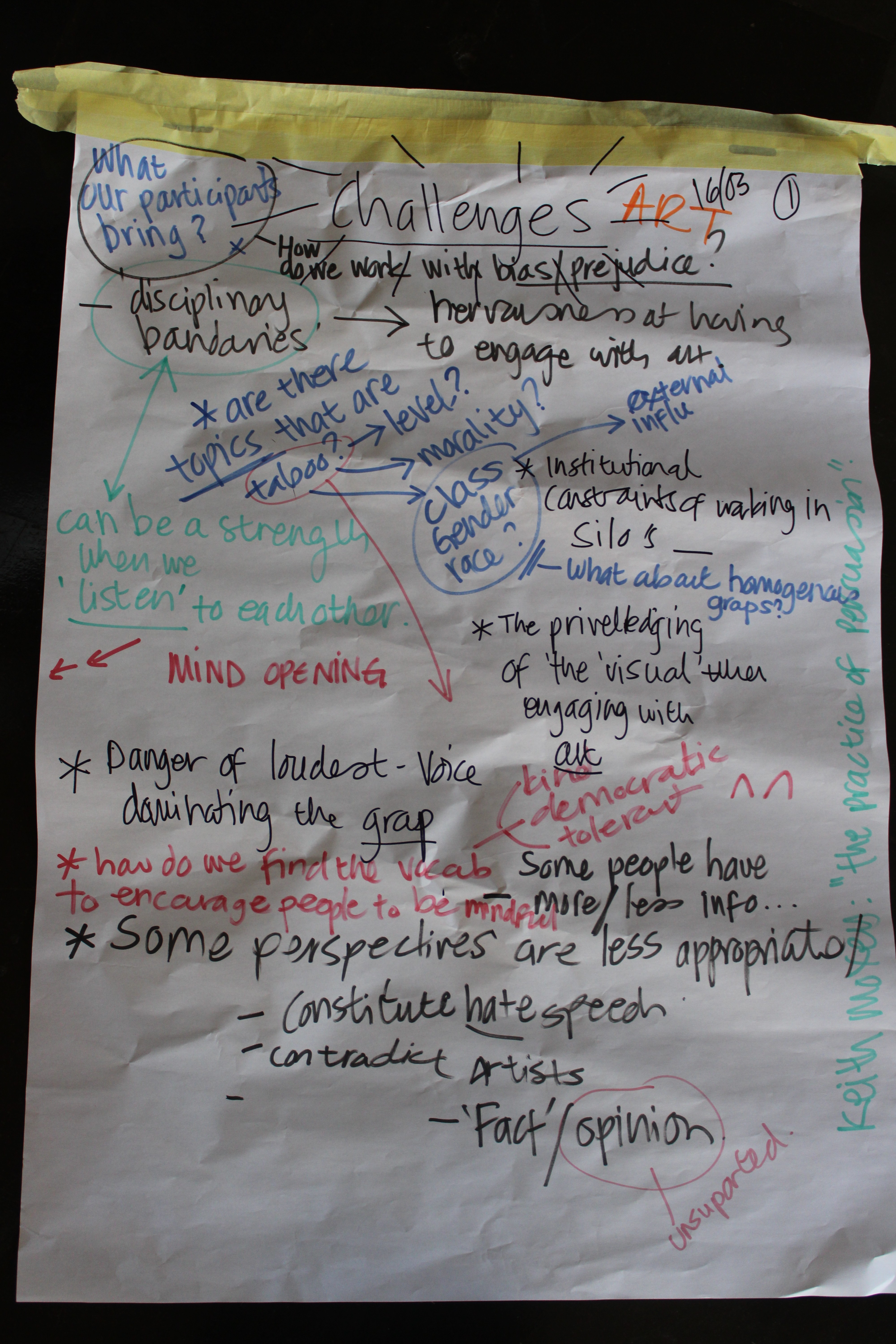
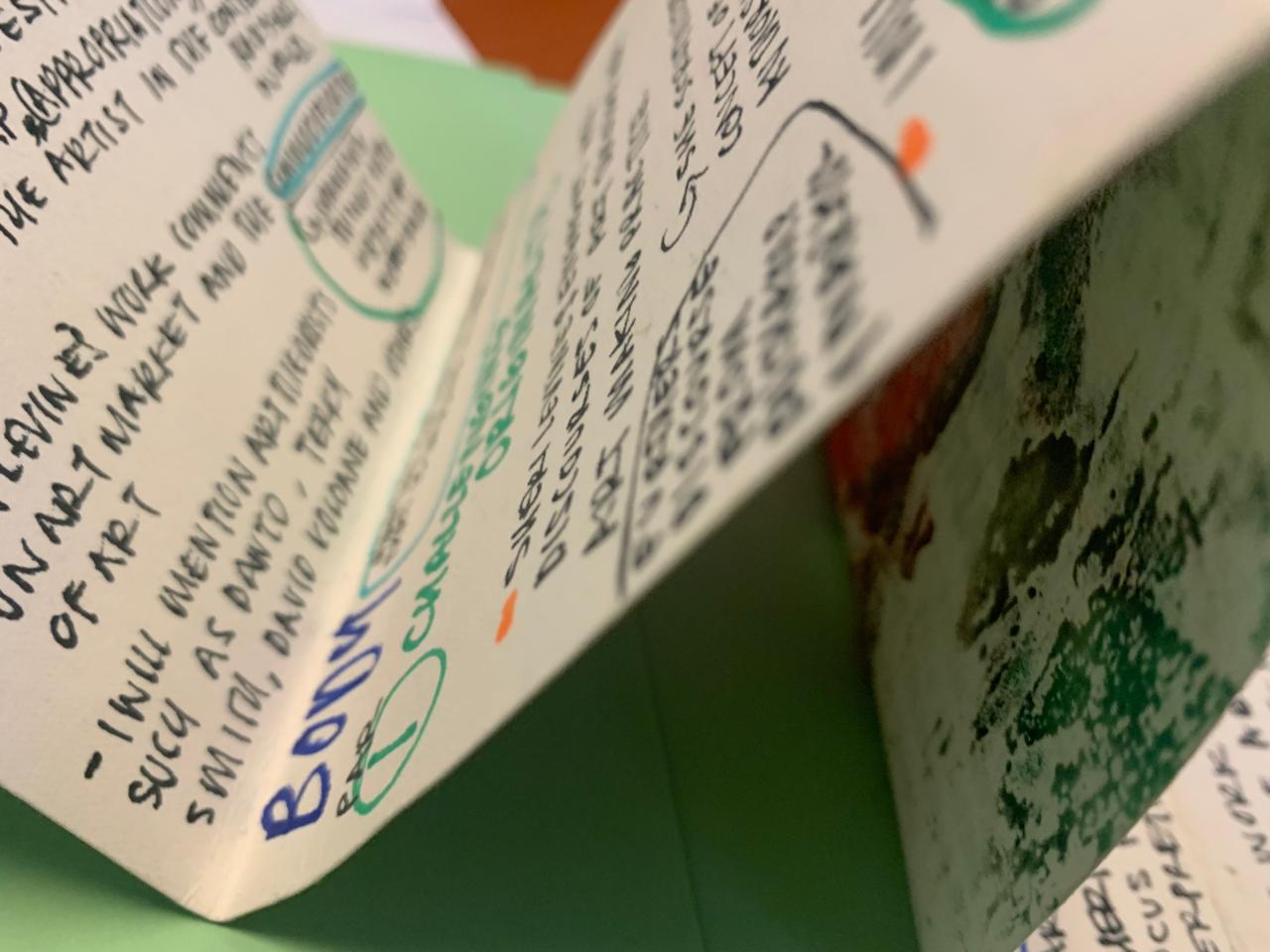
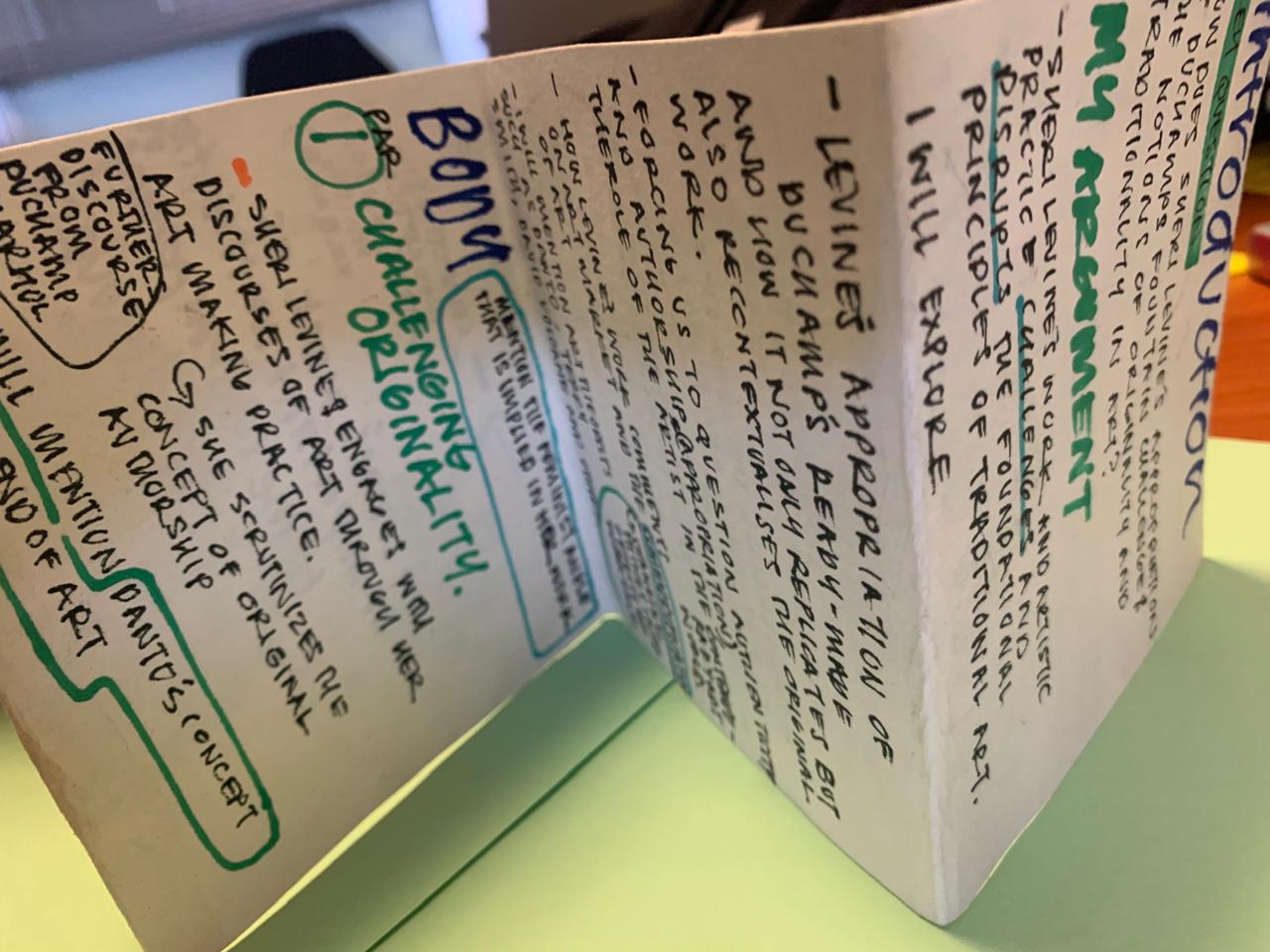
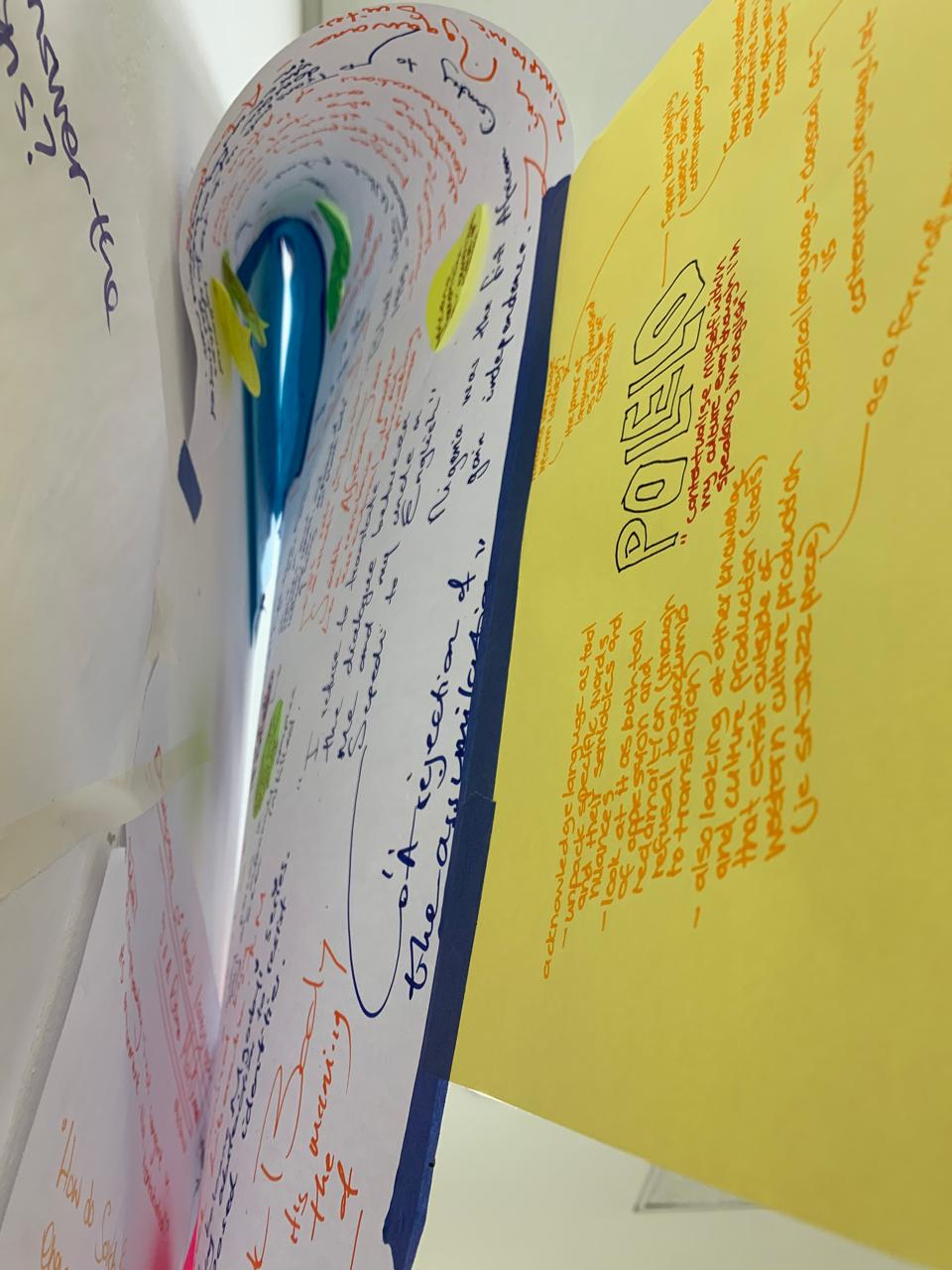
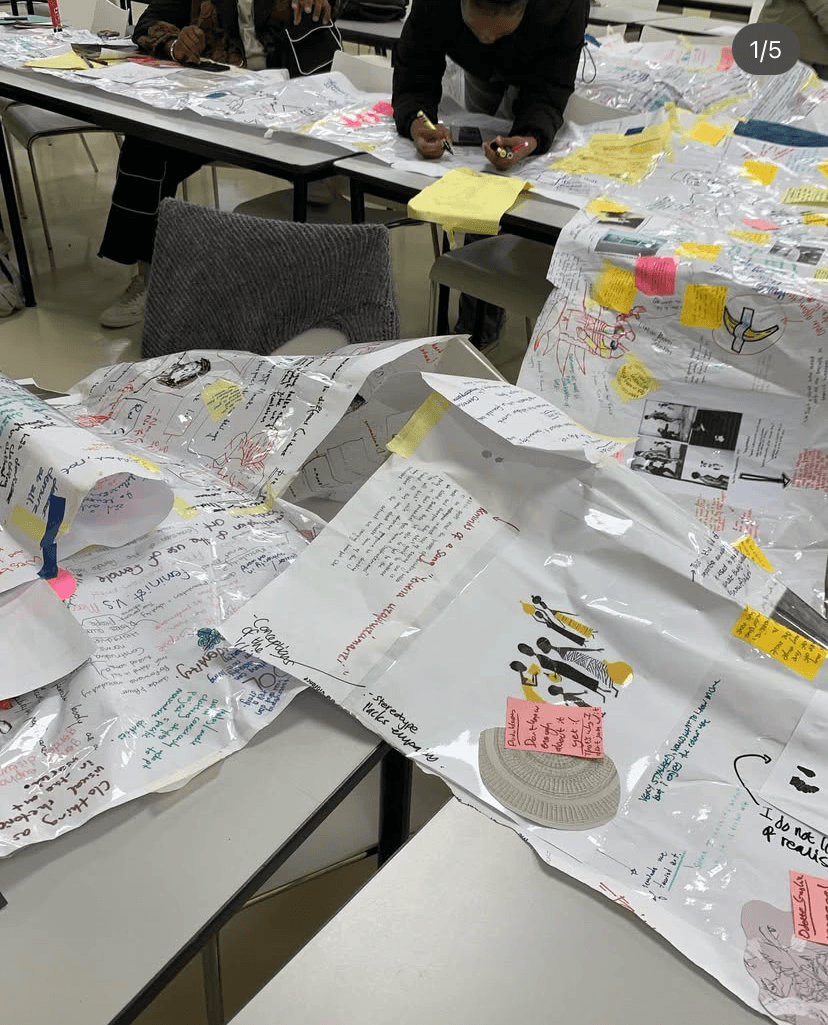
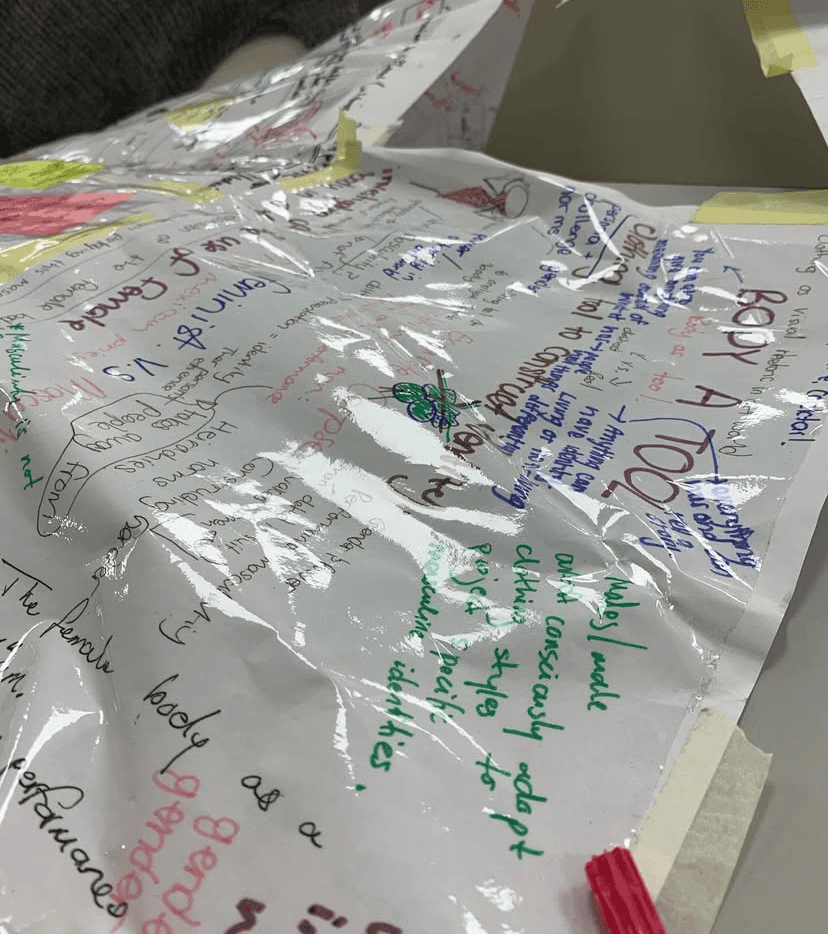
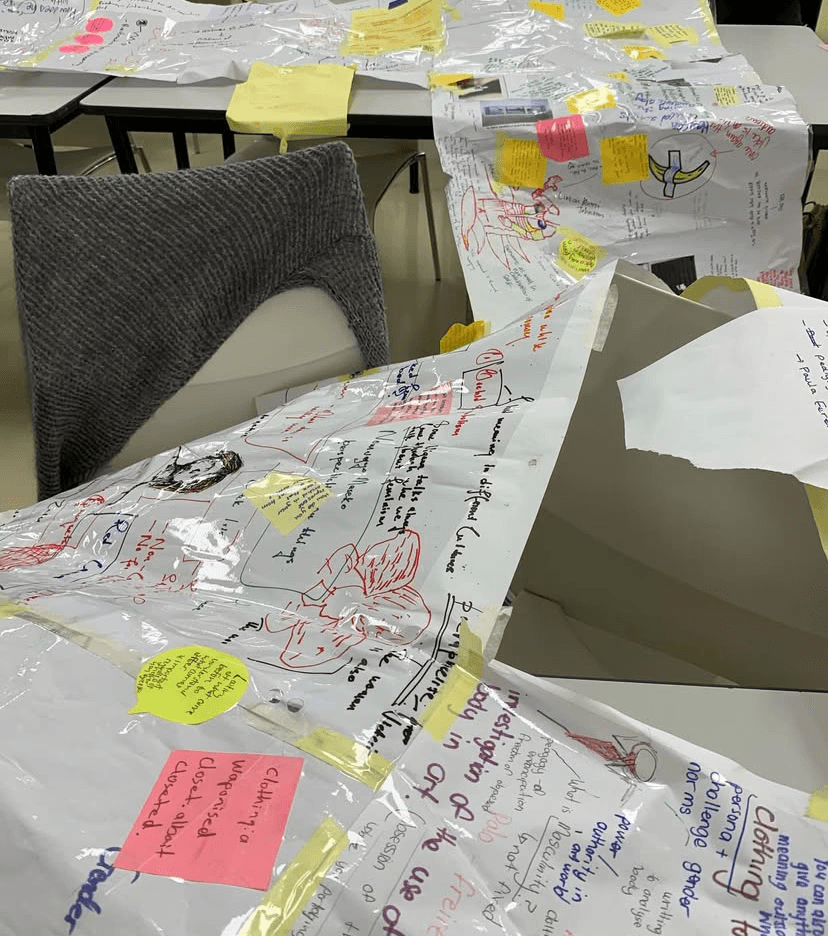
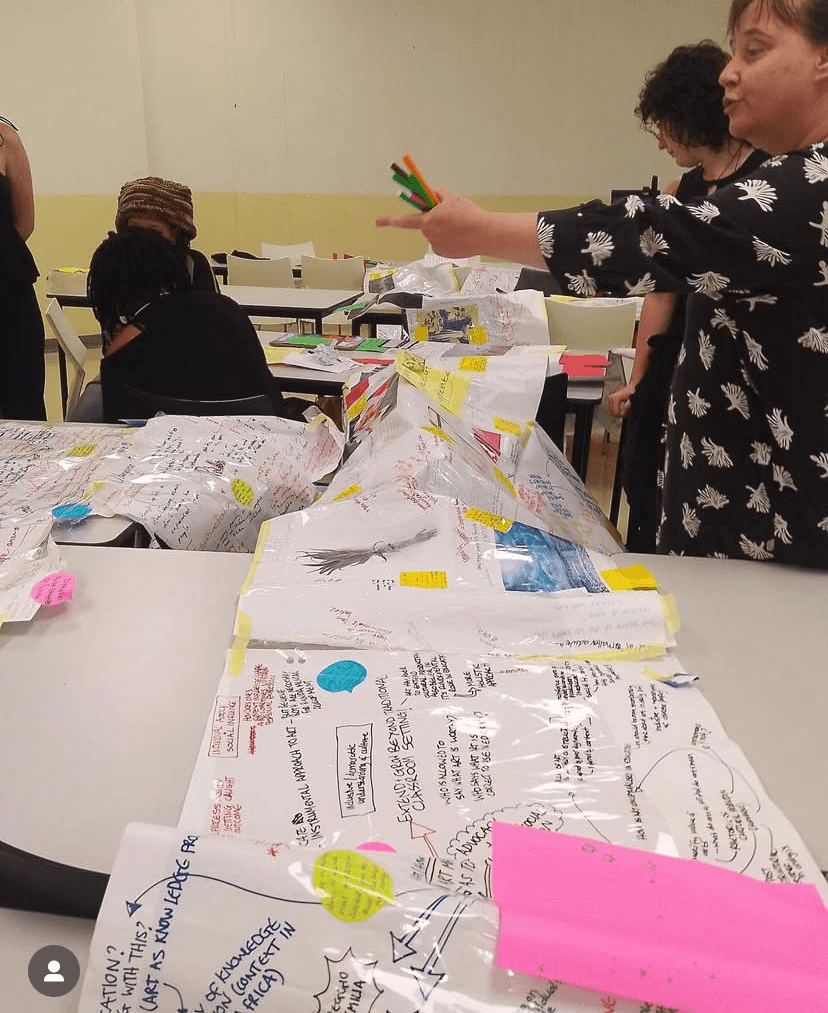
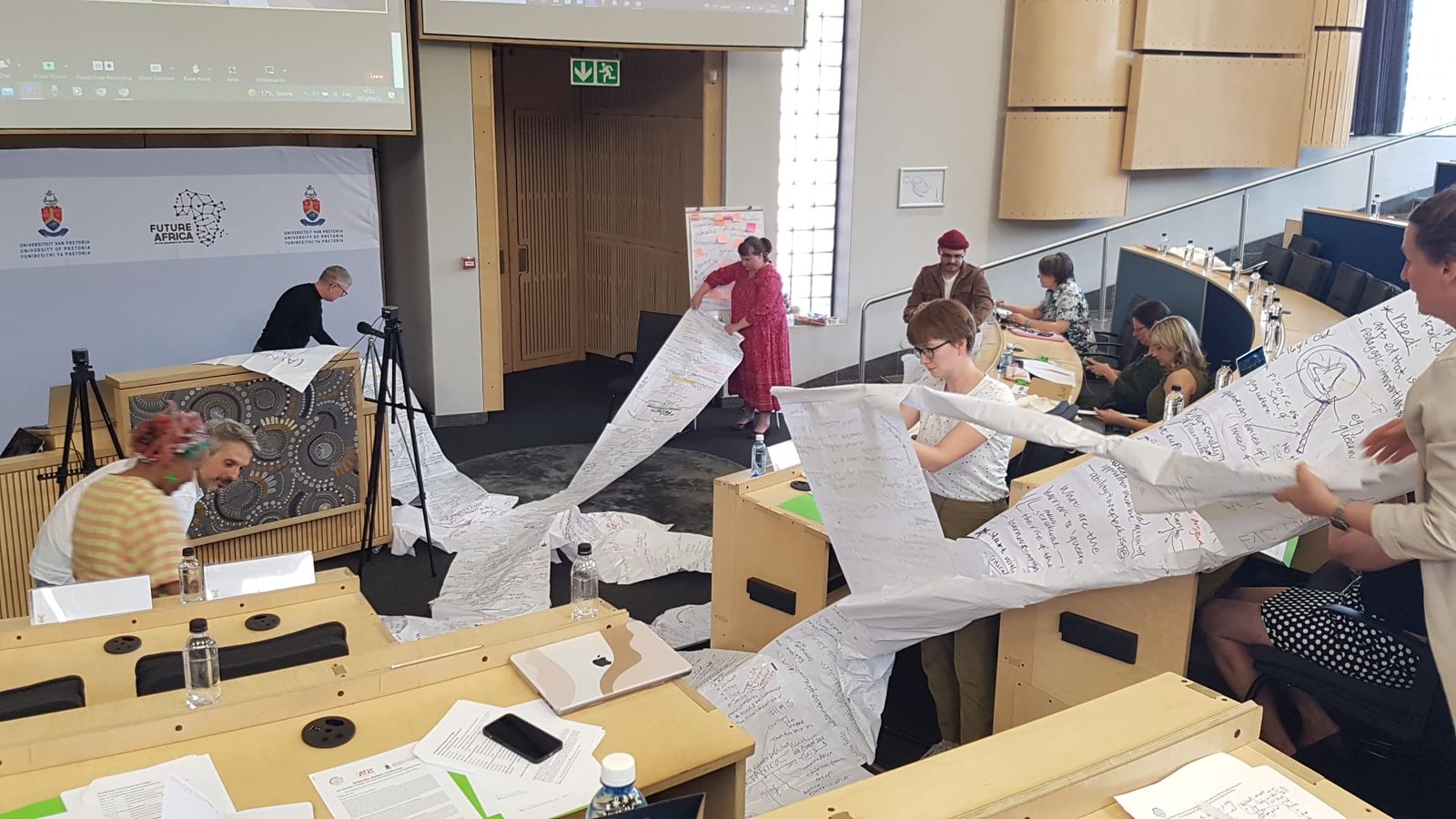
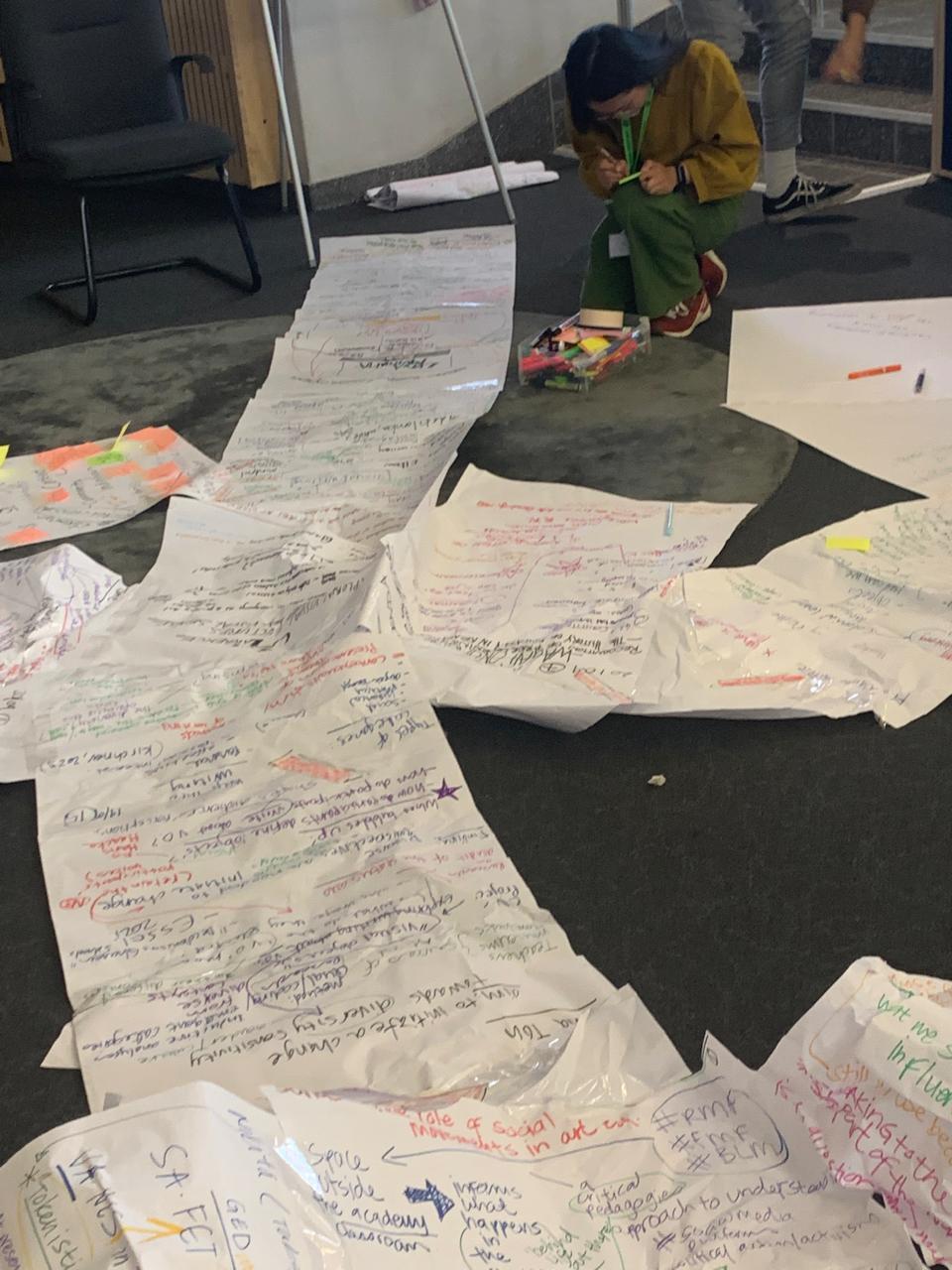
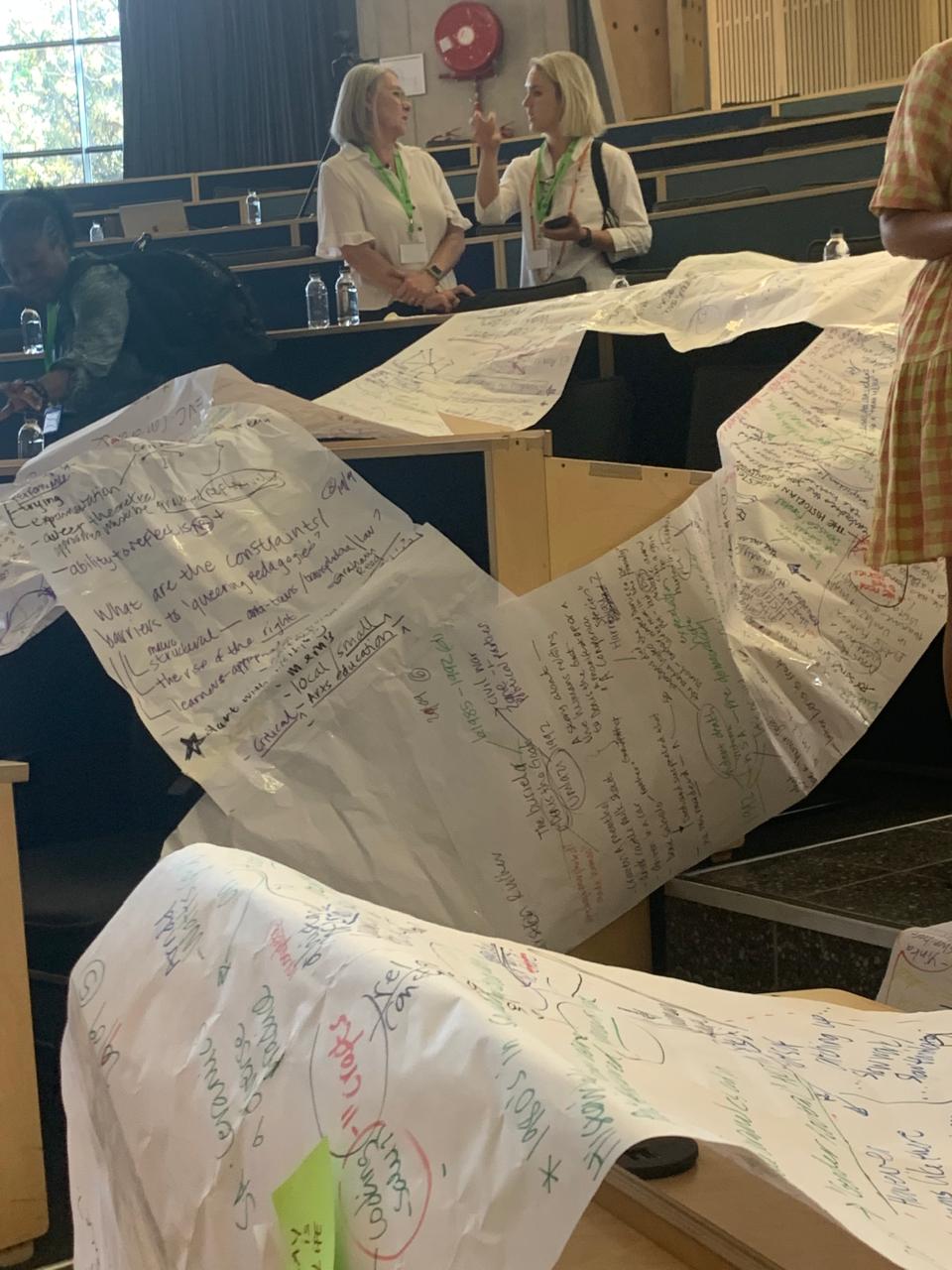
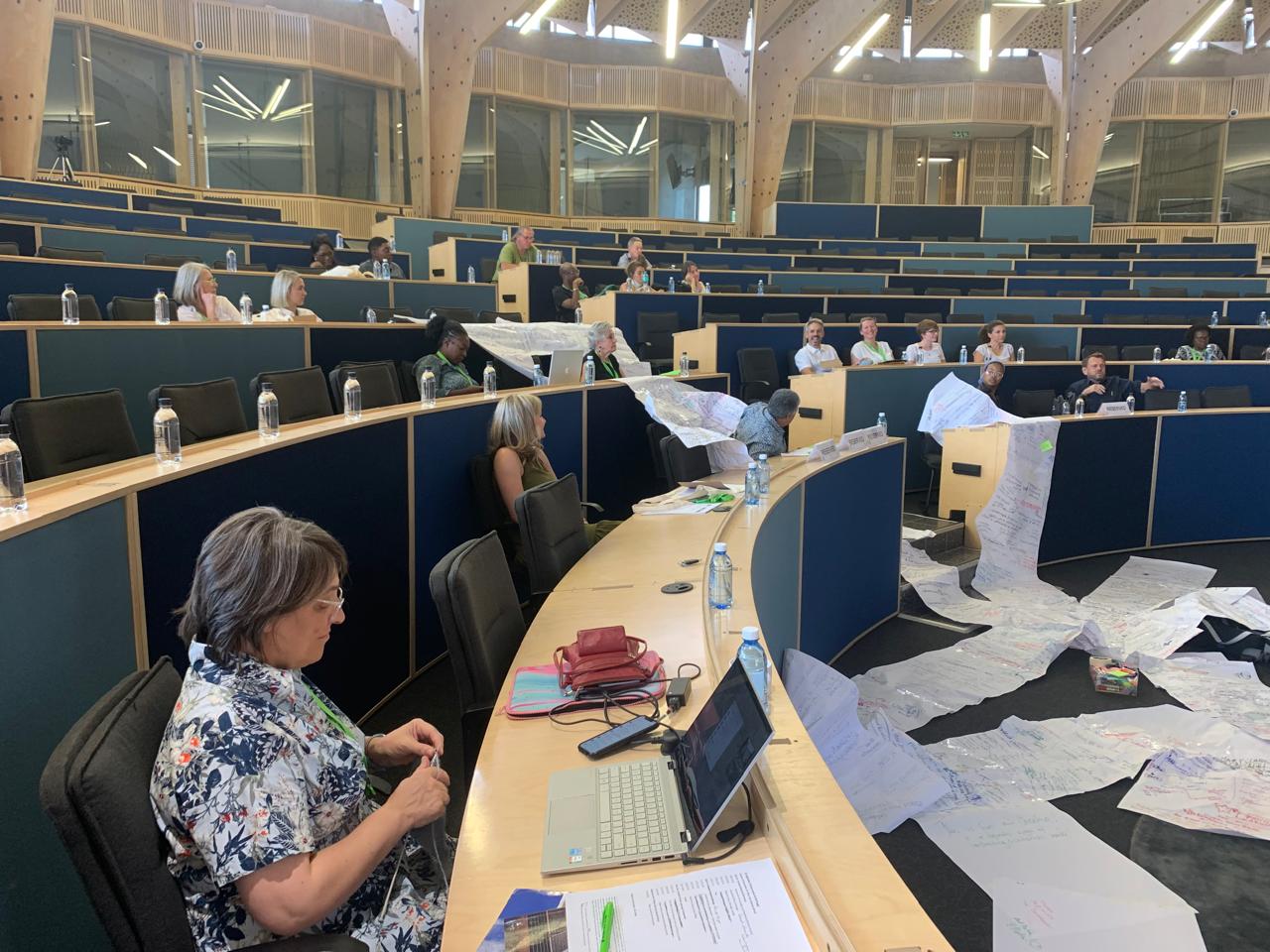
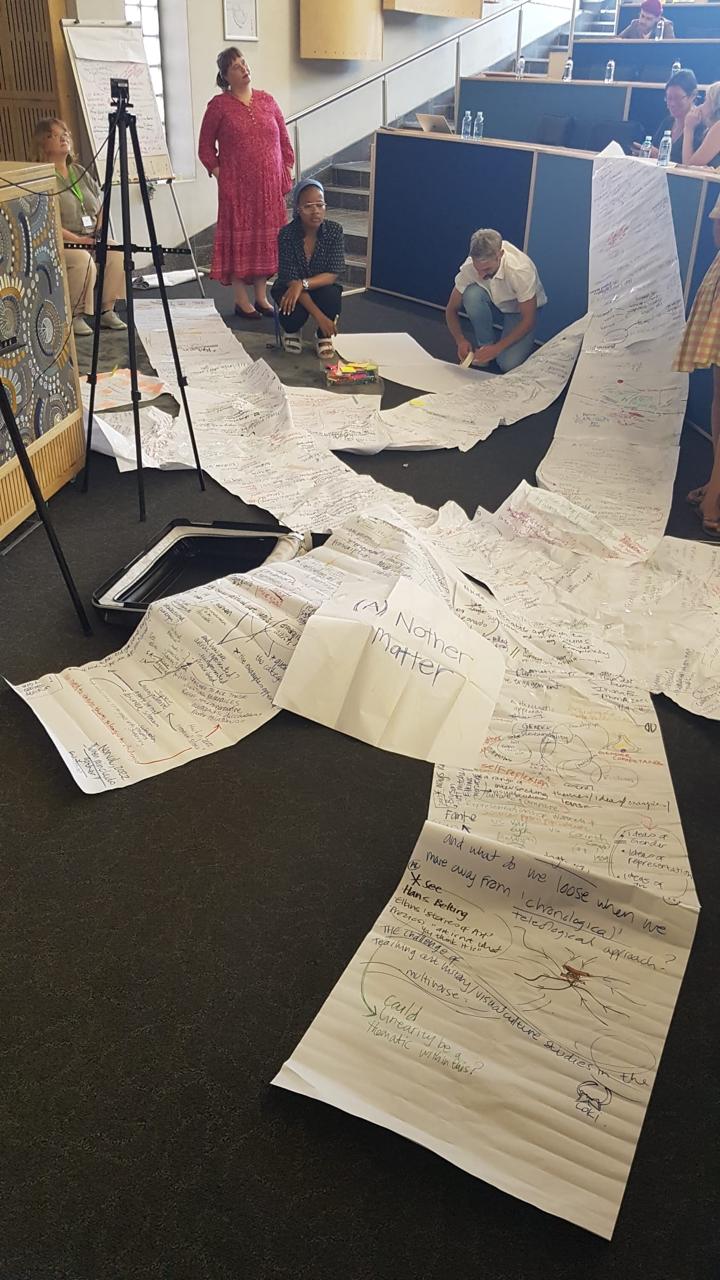
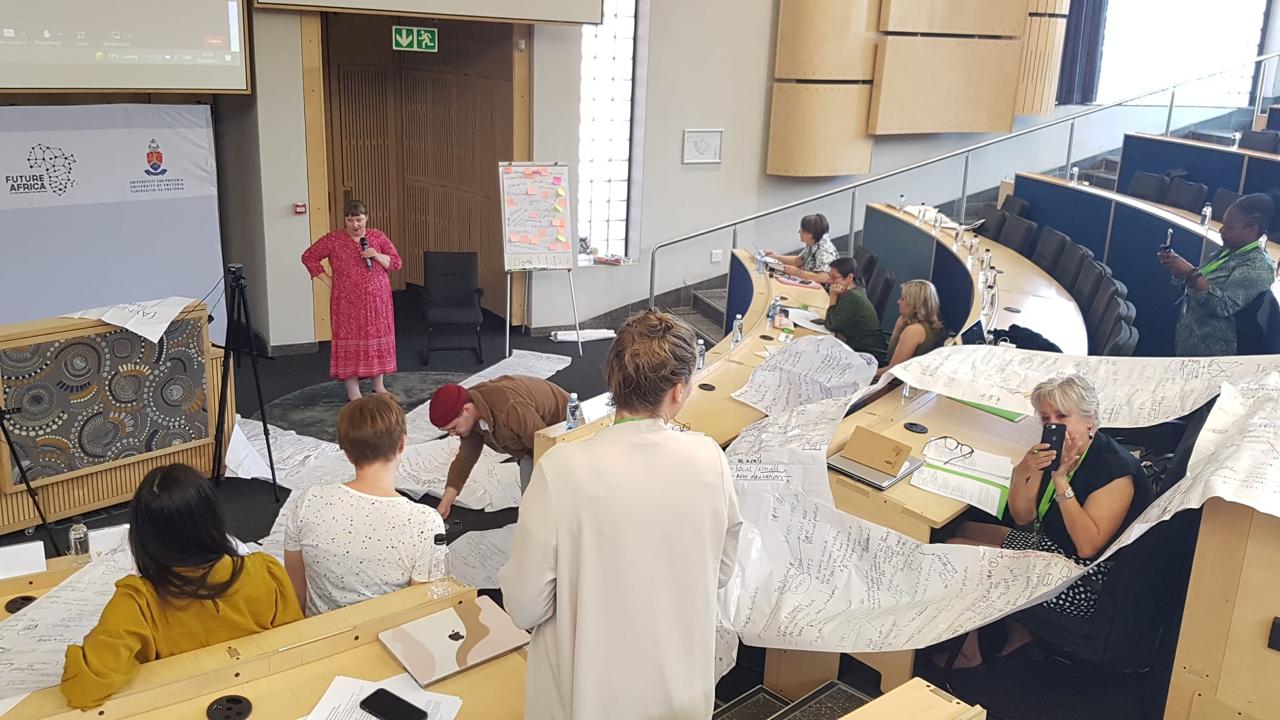
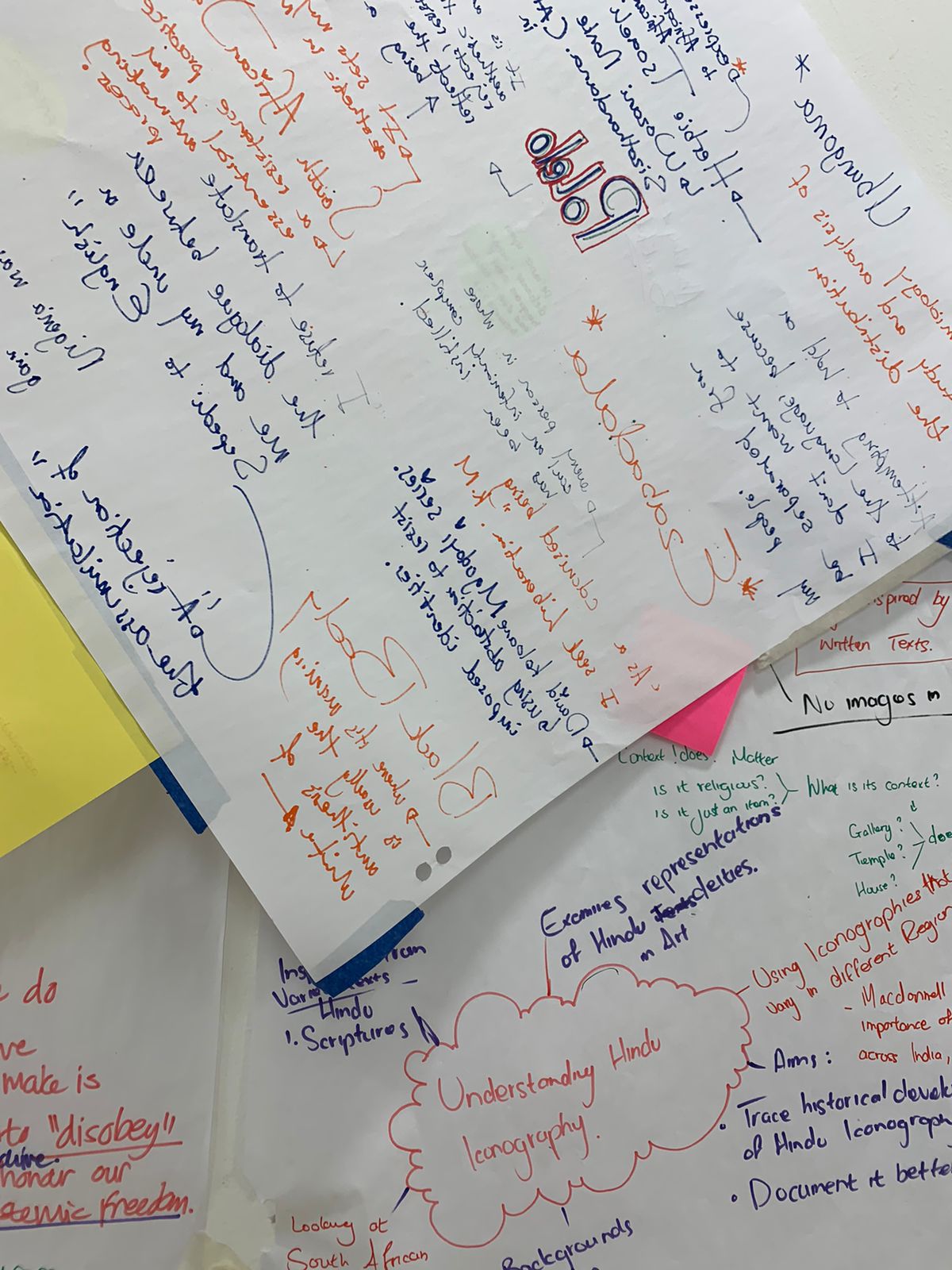
In 2023 I explored the materiality of writing at a conference, where I was asked to be a scribe, writing notes on each presentation. After 4 days of conferencing, I had 56 A1 pages of notes. I wanted to present my notes, intended to be a summation of the conference, in a manner that reflected the emergent ideas about knowledge contained in the notes. I enlisted the help of a few delegates who share my interest in making our scholarship visible in different and relevant ways, to create a sprawling, non-linear mind-web. We rolled the text in to a suitcase, which enabled me to make a performance of un-folding the text when I presented my summation of the conference. This literal, performative un-folding was a metaphor for the ways that ideas unfolded during the conference. As the paper was un-rolled and placed on the floor, over desks, up staircases, alongside delegates, I spoke about how concepts were presented and shifted, forcing us to engage and think anew in the conference. The ways that the paper twisted and turned over and sideways as it opened into the space symbolized the nature of knowledge: ideas are not always easy to live with; to grasp or control. Many concepts seem sideways when we first encounter them. The performance ended with an invitation to the audience to come and contribute to the text- change incorrect records, add detail and thoughts in response to what I had written. Asking for audience participation was an important aspect of my presentation that signaled the ways in which knowledge is communal and created in dialogue with others.
Topologies of Discourse
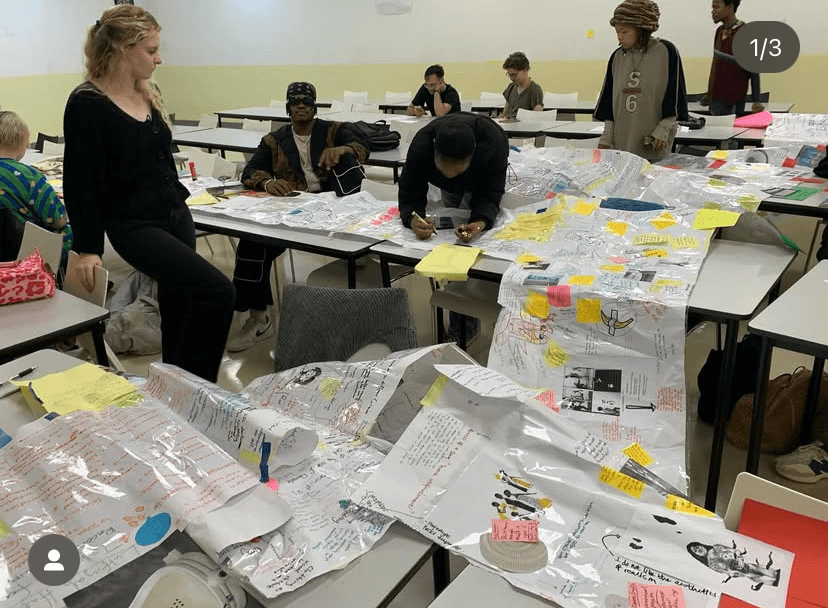
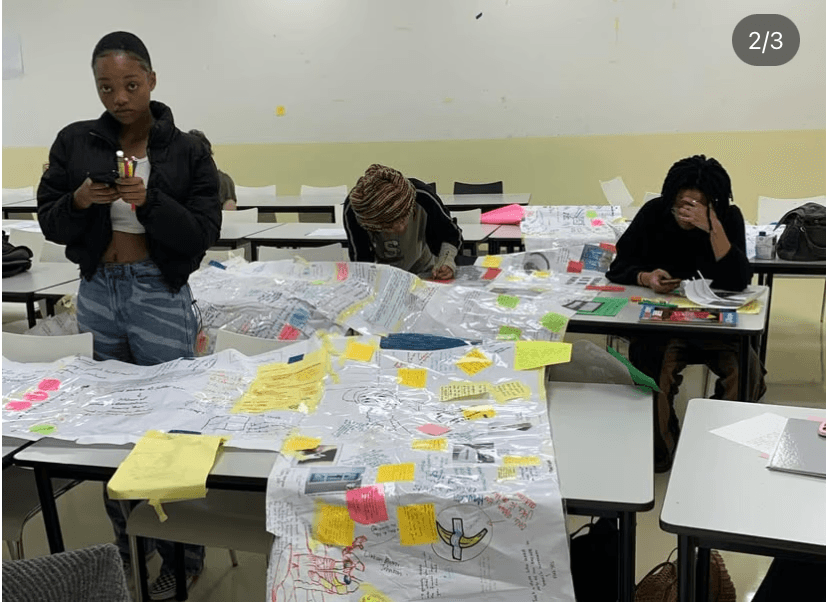
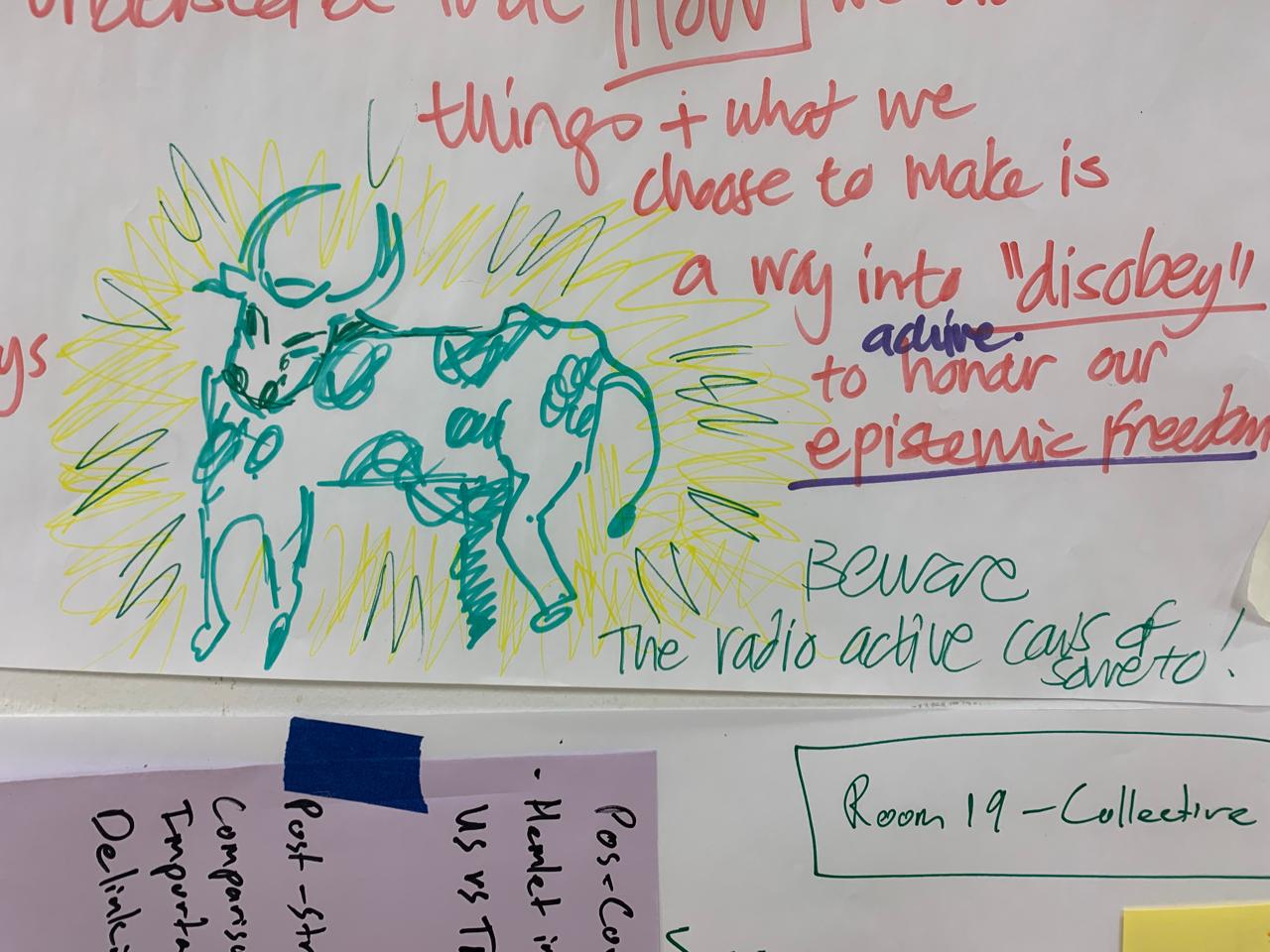
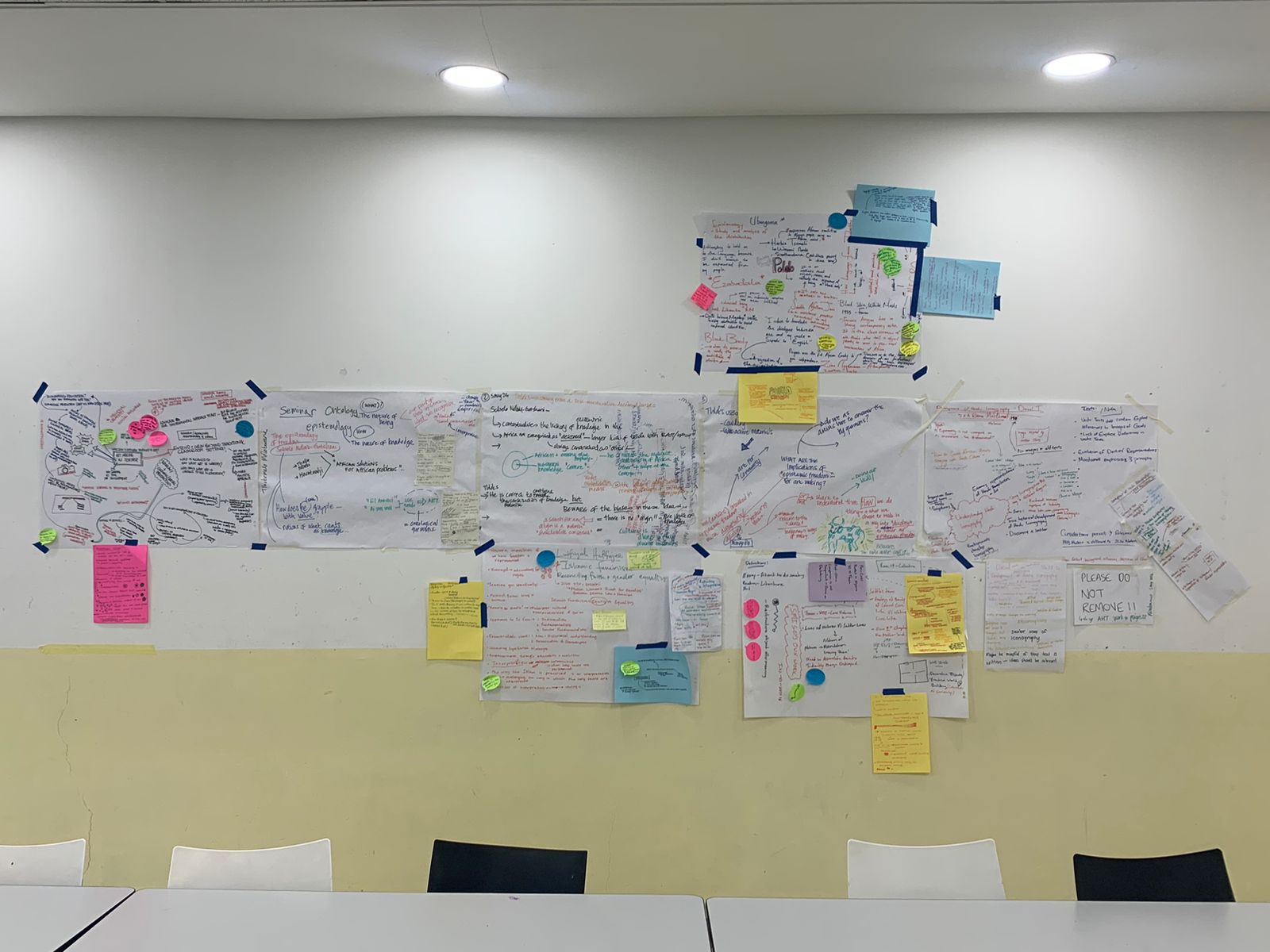
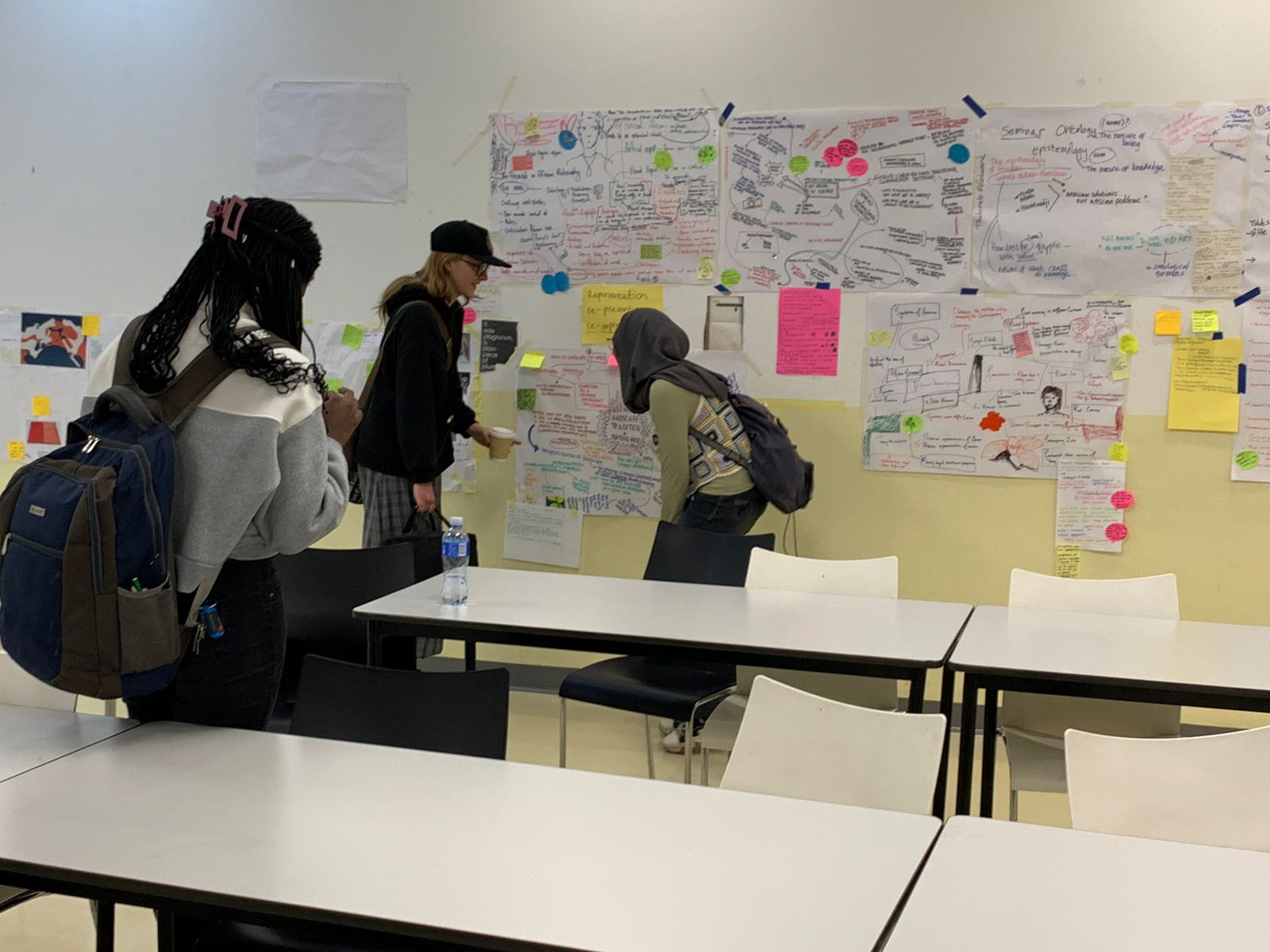
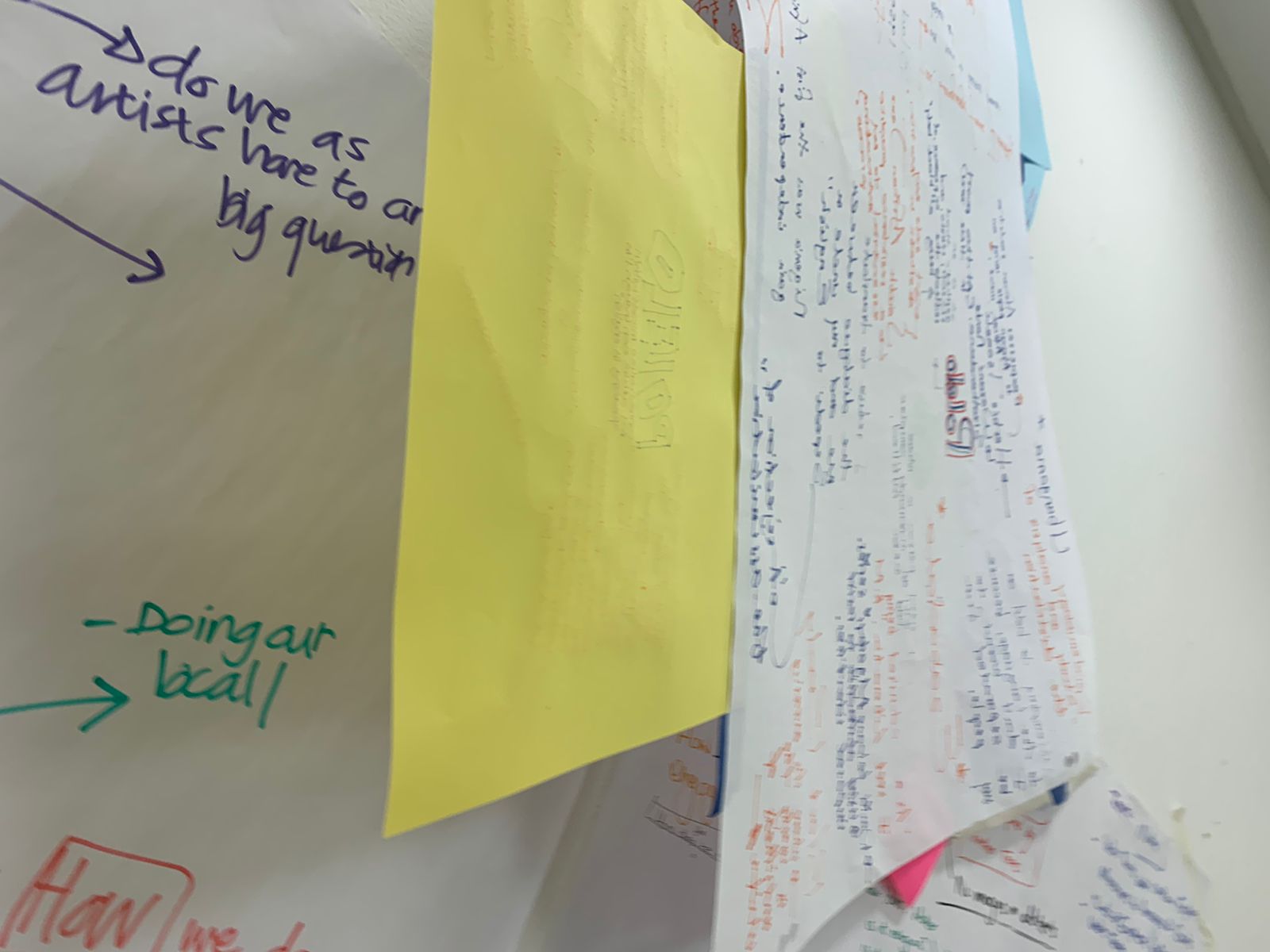
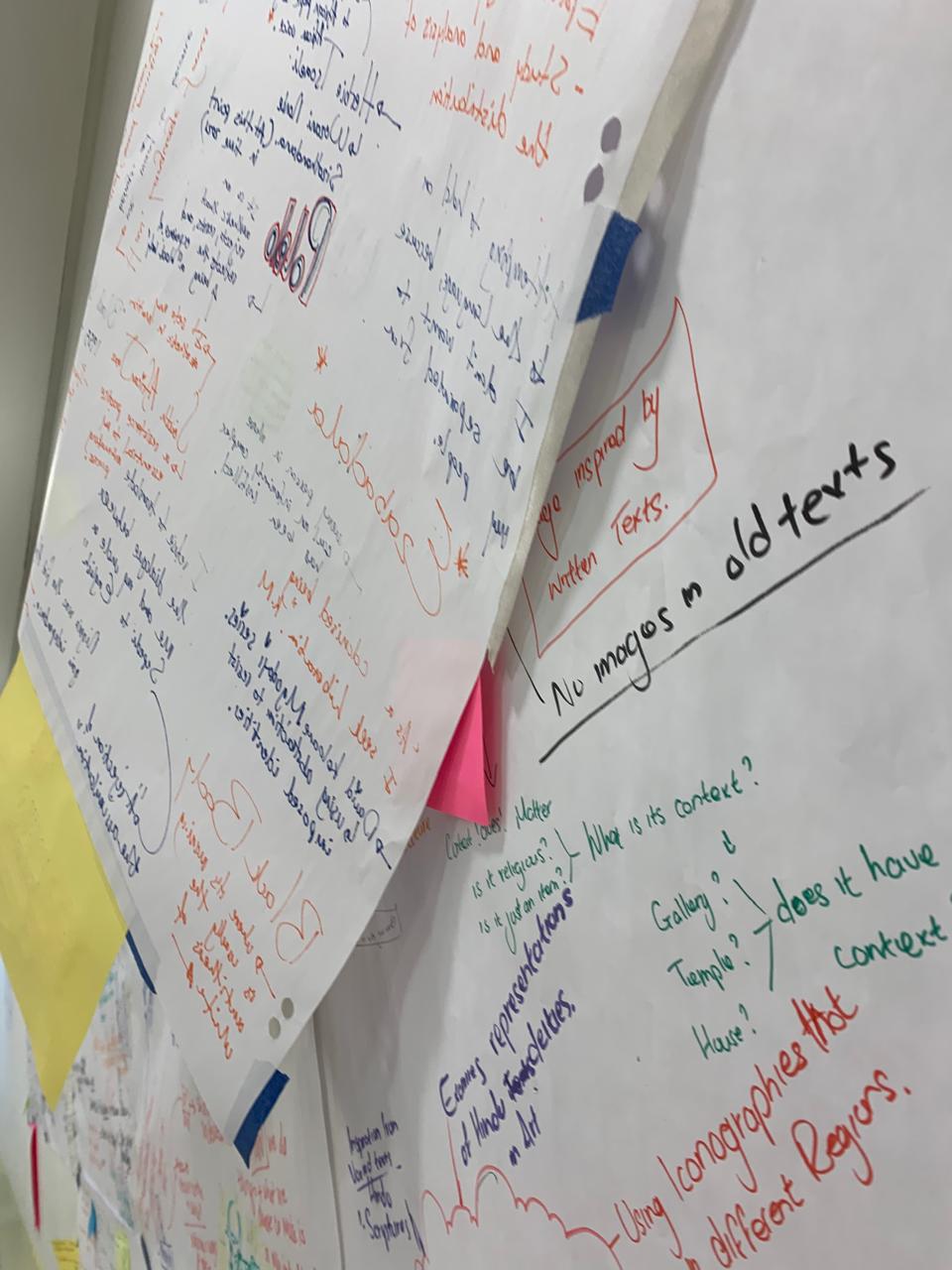
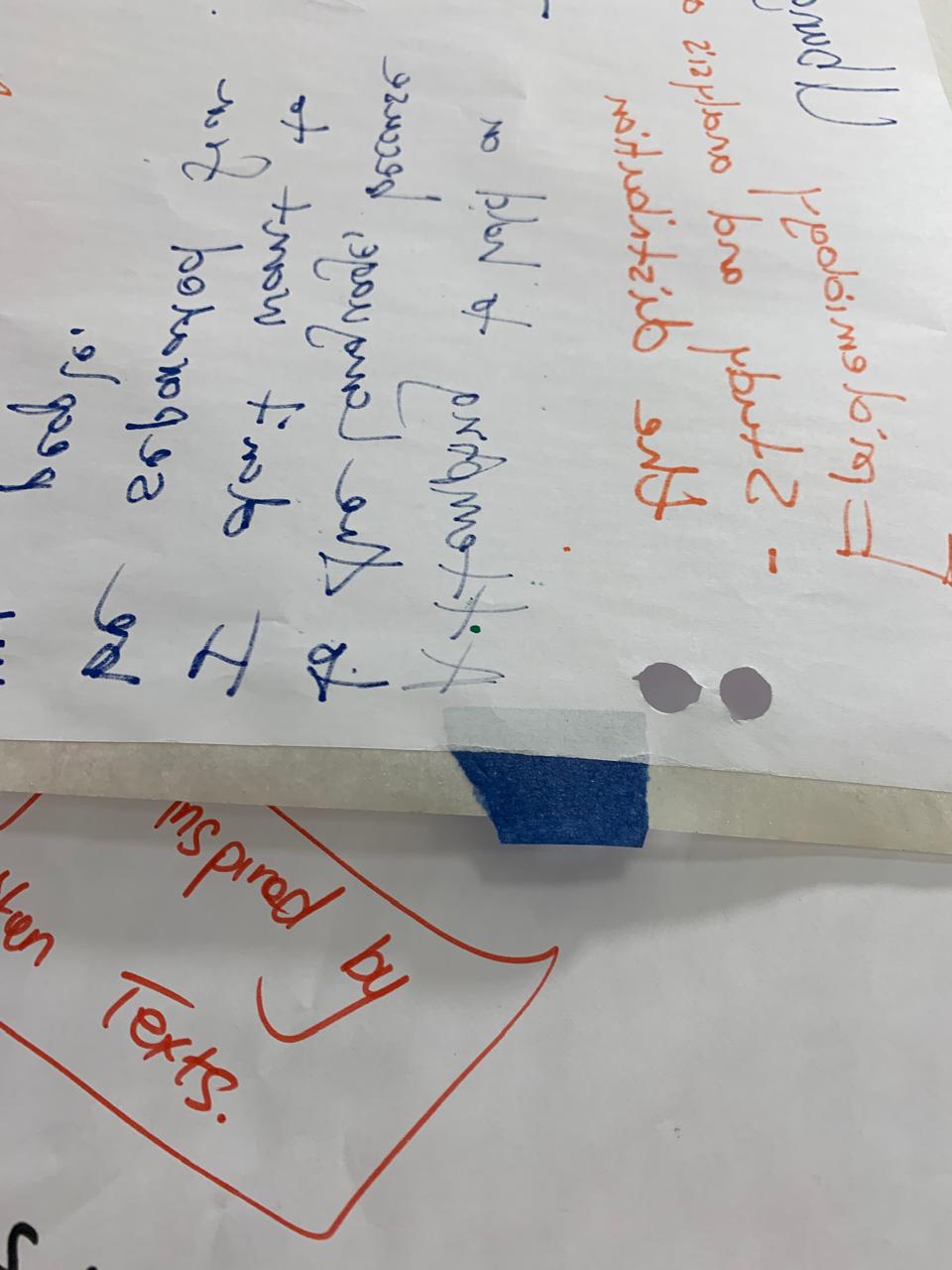
From 2024, Prof. Alison Kearney began extending the experimentations with how to record, and present knowledge in ways that correlate with the theories explored in the classroom. Prof Alison worked with the Visual Arts Honours students that she taught, to create a topological, sprawling, map of the intersecting discourses engaged with in the courses’ weekly seminars, throughout 2024. The map covered the entire seminar venue by the end of the course. This topological text was presented to the incoming Visual Art Honours students at the beginning of 2025, as a record of discourses that preceded them. The 2025 students were instructed to find their place within the discourse (situate themselves), and begin building on to the ideas they found, by adding, responding and questioning what they found. The process made tangible the ways in which discourse is created and contested and made our thinking visible. The process is on-going.